
Results
-
 £41.50
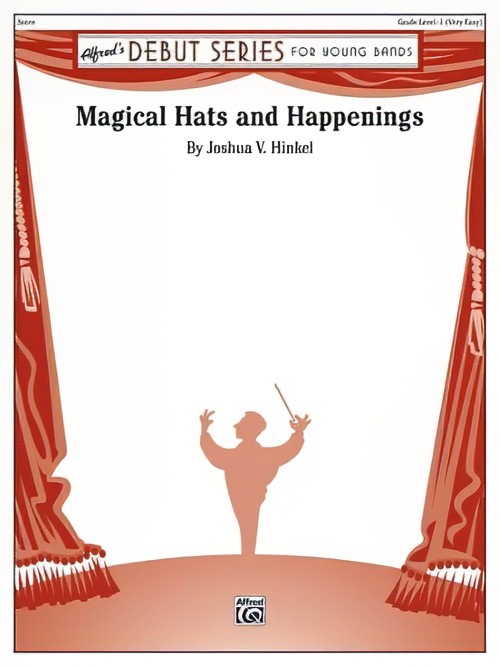
Magical Hats and Happenings (Concert Band - Score and Parts) - Hinkel, Joshua
Magical Hats and Happenings is a programmatic work that depicts a far-away mystical land where broomsticks abound and potions are brewed. Peek around any corner and you will find a wide variety of magical mayhem. A journey has begun and all sections of the band are invited. Through chromatic figures, trombone glissandos, and tasteful percussion writing, a magical world is created.Duration: 1.45
Estimated dispatch 7-14 working days
-
 £179.99
Lebuinus ex Daventria (Concert Band - Score and Parts) - Schaars, Peter Kleine
Much like a film score, Peter Kleine Schaars' composition paints colourful images while telling the story of the Anglo-Saxon monk, Lebuinus. In around 768 AD, Lebuinus founded a mission in the Dutch province of Deventer in an effort to convert the Pagan Saxons. Contrasting themes describe the Ijssel Valley, the Saxons and Lebuinus, construction on the church and its subsequent destruction in a clash with the Saxons. The Ijssel-Valley-theme returns one more time in a minor key before each of the themes come together again for one rousing finale. Let battle commence!Duration: 12.00
Estimated dispatch 7-14 working days
-
 £289.99
Atlas Symphony (Concert Band - Score and Parts) - Deleruyelle, Thierry
The Atlas Symphony for symphonic wind band is an impressive and subtle work, thematically complex, with a rich orchestration, but also great beauty. The composer was keen to draw a parallel between an atlas, where all the geographical maps of the world are collected in one book, and his score, which brings together all the facets of his musical style. Despite being written without any breaks, the symphony is structured around three main ideas. It is based upon a series of notes that will become the very essence of the piece, its building blocks. Like the works of composers of serial music, the series appears in different forms - melodic and harmonic, thematic or simply as an accompaniment. With its wealth of rhythms and contrapuntal power, this piece is a compelling concerto for orchestra. The Orchestre de la Police Nationale was the first to be attracted to this work and premiered it with excellence under the baton of composer Thierry Deleruyelle.Duration: 16:30
Estimated dispatch 7-14 working days
-
 £144.99
Pierius Magnus (Concert Band - Score and Parts) - De Haan, Jan
Pierius Magnus is a historical figure from the Friesland area of Holland. He was a farmer who became a resistance fighter against Dutch oppressors in around 1500. Whether Magnus was a hero or barbarian is still debatable, but composer Jan de Haan was fascinated by the exciting story and let it fuel his imagination. The protagonist is introduced with a capricious theme which is followed by "De Arumer Swarte Heap," the troops who took to the battlefields against the Dutch. An eerie calm takes over moments before Pier and his troops let their battle cries sound. The work ends as the disillusioned Pier retreats. A concert work overflowing with excitement!Duration: 9:00
Estimated dispatch 7-14 working days
-
 £52.95
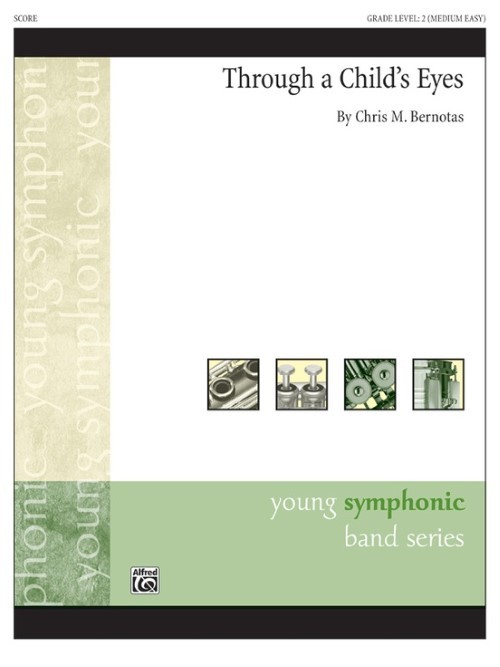
Through a Child's Eyes (Concert Band - Score and Parts) - Bernotas, Chris M.
Through a Child's Eyes is a composition with reflection on the innocence of a child, the discovery of the world around them and the peacefulness of a sleeping baby. After the somewhat bold introduction, the first theme brings a simple sense of comfort. The trumpets then stand proudly with a feeling of strength and confidence. After a climax we are led to a slightly contemplative section. The ending is filled with a recapitulation of the main theme accompanied with the music box. Rest and comfort come through with the sounding of the final chord.Duration: 3.45
Estimated dispatch 7-14 working days
-
 £4.95
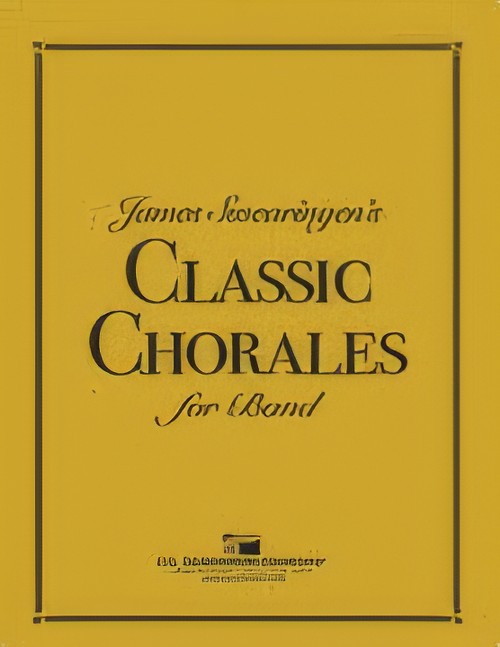
£4.95Classic Chorales for Band (Bells/Timpani) - Swearingen, James
Over the years, band directors from around the world have expressed appreciation for the many teaching opportunities that have resulted from using "First Chorales for Band" by James Swearingen. Now, sixteen of his all-time favourite hymns have been added to another collection that will further enhance the value of using quality chorales as part of your daily warm-ups. "Classic Chorales" is designed to assist you with incorporating musical objectives while allowing your students the unique opportunity to reach their fullest potential as musicians.
Estimated dispatch 7-14 working days
-
£4.95
Classic Chorales for Band (Tuba) - Swearingen, James
Over the years, band directors from around the world have expressed appreciation for the many teaching opportunities that have resulted from using "First Chorales for Band" by James Swearingen. Now, sixteen of his all-time favourite hymns have been added to another collection that will further enhance the value of using quality chorales as part of your daily warm-ups. "Classic Chorales" is designed to assist you with incorporating musical objectives while allowing your students the unique opportunity to reach their fullest potential as musicians.
Estimated dispatch 7-14 working days
-
£4.95
Classic Chorales for Band (Trombone/Baritone BC/Bassoon) - Swearingen, James
Over the years, band directors from around the world have expressed appreciation for the many teaching opportunities that have resulted from using "First Chorales for Band" by James Swearingen. Now, sixteen of his all-time favourite hymns have been added to another collection that will further enhance the value of using quality chorales as part of your daily warm-ups. "Classic Chorales" is designed to assist you with incorporating musical objectives while allowing your students the unique opportunity to reach their fullest potential as musicians.
Estimated dispatch 7-14 working days
-
£4.95
Classic Chorales for Band (1st and 2nd F Horn) - Swearingen, James
Over the years, band directors from around the world have expressed appreciation for the many teaching opportunities that have resulted from using "First Chorales for Band" by James Swearingen. Now, sixteen of his all-time favourite hymns have been added to another collection that will further enhance the value of using quality chorales as part of your daily warm-ups. "Classic Chorales" is designed to assist you with incorporating musical objectives while allowing your students the unique opportunity to reach their fullest potential as musicians.
Estimated dispatch 7-14 working days
-
£4.95
Classic Chorales for Band (1st and 2nd Bb Trumpets) - Swearingen, James
Over the years, band directors from around the world have expressed appreciation for the many teaching opportunities that have resulted from using "First Chorales for Band" by James Swearingen. Now, sixteen of his all-time favourite hymns have been added to another collection that will further enhance the value of using quality chorales as part of your daily warm-ups. "Classic Chorales" is designed to assist you with incorporating musical objectives while allowing your students the unique opportunity to reach their fullest potential as musicians.
Estimated dispatch 7-14 working days
 View Music