Results
-
 £84.99
Ecce sacerdos - Anton Bruckner
The celebrated Austrian composer Josef Anton Bruckner (1824-1896) owes his fame predominantly to his symphonies, his masses, his Te Deum, his string quintets and his devotional church music, including numerous motets. One of these is the magnificent Ecce sacerdos, which Bruckner composed in 1885. The trombones and organ support the choral parts and the harmonies are inventive and glorious. The Austrian composer and arranger Thomas Doss has made this delightful arrangement for concert band, which does justice to the impressive original work.
Estimated dispatch 7-14 working days
-
 £32.95
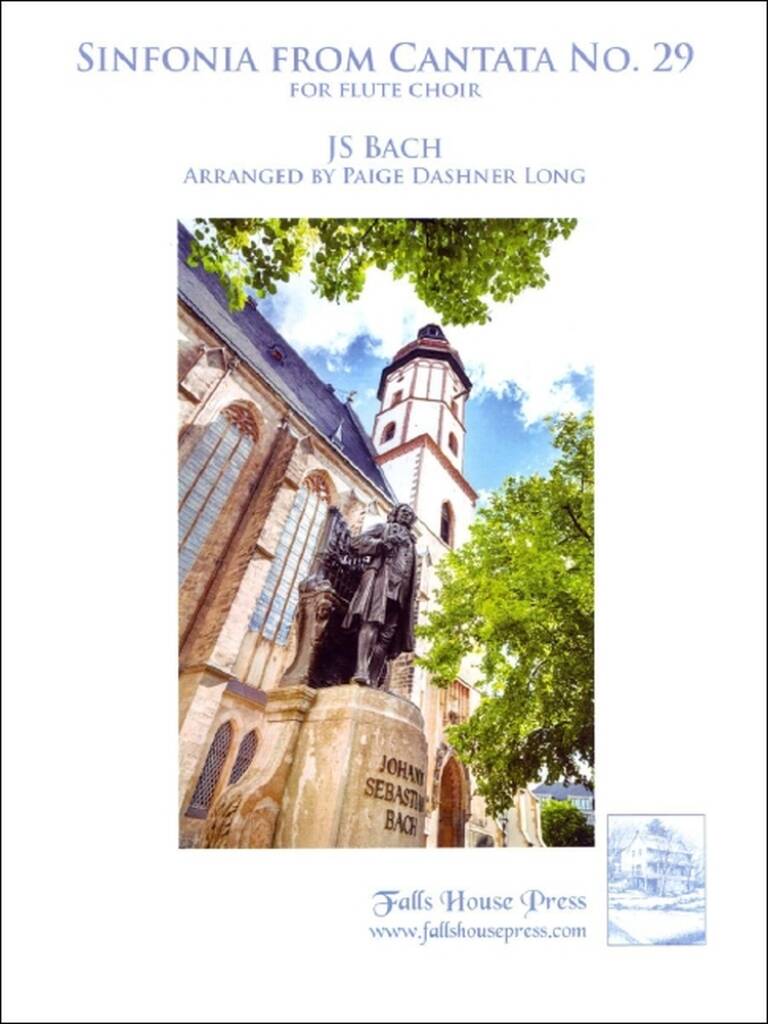
Sinfonia From Cantata No.29 - Johann Sebastian Bach
Traditionally performed by solo organ, Bach's Sinfonia from Cantata No. 29 is arranged here for flute choir, with the piccolo parts closely following how an organist would perform the music. This arrangement has interesting textural and dynamic contrast, despite few dynamic markings, which Long creates through thoughtful scoring of different flute parts playing in various registers of the flute range. This arrangement was premiered in July of 2009 by the New England Conservatory Summer Metropolitan Flute Festival Orchestra in the New England Conservatory's renowned Jordan Hall. For advanced players.
Estimated dispatch 7-14 working days
-
 £38.13
Adoration (Trumpet Solo with Wind Band) Florence Price trs. John Hanchett
Florence Price was an American classical composer, pianist, organist and music teacher. She is noted as the first African-American woman to be recognised as a symphonic composer, and the first to have a composition played by a major orchestra. Price composed over 300 works: four symphonies, four concertos, as well as choral works, art songs, chamber music and music for solo instruments. In 2009, a substantial collection of her works and papers that had been previously considered lost was found in her abandoned summer home. Amongst these was this delightful work, Adoration, which had been composed in the 1950s for organ.According to IMSLP.org, the piece "failed to meet notice or renewal requirements to secure statutory copyright with no 'restoration' under the GATT amendments" and therefore is in the public domain. A version for violin and piano by Elaine Fine has become popular. This setting for trumpet soloist with wind band has been arranged by John Hanchett.Also available as:Bb Solo with PianoCornet Solo with Brass BandTo view a video of Andrew Roe performing the work (brass band version), please visit: www.youtube.com/watch?v=_7UYlz8FzxoDifficulty Level: Medium Easy (Grade 3)Length: 3.15 minutesSheet music available from:UK - www.wind-band-music.co.ukUSA - https://satradecentral.org
In stock: Estimated dispatch 1-3 days
-
 £76.26
Temperamental (Concert Band) Fendall Hill
This work by Fendall Hill was the set test for the 2021 National Brass Band Championships of New Zealand, B Grade. Here it has been adapted for Concert Band.The composer writes: 'J.S. Bach (1685-1750) is deemed by many to be the 'Ulimate Composer'. He added an incredible proportion to the DNA of western music, and his influence is heard in the music of today. Like many artists, he was not overly recognised as a composer during his lifetime, and it took an 1829 performance of the St Matthew Passion by Mendelssohn to ignite a recognition of his place in the music world, a place he has maintained ever since.This piece starts with a similar spark of rediscovery of the music of Bach. It contains arrangements of various works, interspersed with composition based on Bach's chord structures, sections in the style of Bach, and original sections inspired by the moods created along the way.The first section explores the Toccata, and great organ works. This leads into an exploration of his choral works, and a finale based on the Preludes. The word 'Tempered' has different meanings, and all seem to apply to the music of Bach, and these appeal to the musical, engineering and spiritual aspects of my personal life.His music reaches to the humanity and divinity, it has strength, structure and order that creates frameworks in which incredible complexity reigns; and the complexity leads to a wildness, a kind of craziness that represents a range of human moods, and can change without warning. The same piece of music affects people in very different ways.I don't know if it's Bach's music, or us, but it can seem out of control and under control at the same time - the combination is highly temperamental.To view a follow-the-score video of the work please visit: https://youtu.be/6CtYZmCoWIcSheet music available from:UK: www.wind-band-music.co.ukUSA: www.solidbrassmusic.comDifficulty Level: AdvancedInstrumentation:Instrumentation:PiccoloFlute 1-2OboeBassoonClarinet in Bb 1-3Bass Clarinet in BbAlto Saxophone 1-2Tenor SaxophoneBaritone SaxophoneTrumpet in Bb 1-3Horn in F 1-4Trombone 1-2Bass TromboneEuphoniumTubaDouble BassTimpaniPercussion 1-3
In stock: Estimated dispatch 1-3 days
-
 £38.13
Celebration! (In Dulci Jubilo) (Wind Band) Kevin Norbury
This rousing and pulsating work by Kevin Norbury forms part of the suite A Renaissance Christmas, also published by BrookWright Music. It is based on three popular carols - In Dulci Jubilo, Good Christian men, rejoice! and Ding-dong merrily on high.This magnificent 13th-century melody was also a part of Michael Praetorius's collection. It is traditionally associated with the words 'Good Christian men, rejoice!' The opening is a straight transcription of the great chorale prelude for organ by J.S.Bach. After the grandeur of the opening, the tune is heard in more of a 'folky' style. A lot of related melodic material is then presented before the tune Ding-dong merrily on high is heard. After another episode of previously used music In Dulci Jubilo reappears in a joyful conclusion to the piece.Sheet music available from:UK: www.wind-band-music.co.ukUSA: www.solidbrassmusic.comDifficulty Level: Medium-EasyInstrumentation:PiccoloFluteOboeBassoonClarinet in Bb 1-2Bass Clarinet in BbAlto Saxophone in Eb 1-2Tenor Saxophone in BbBaritone Saxophone in EbTrumpet in Bb 1-2Horn in F 1-2Trombone 1-2EuphoniumTubaDouble BassTimpaniGlockenspielTubular BellsTambourineSnare DrumTenor Drum
In stock: Estimated dispatch 1-3 days
-
 £57.20
Suite - A Renaissance Christmas (Wind Band) Kevin Norbury
This magnificent festive suite was written by Kevin Norbury for the Pierre Elliott Trudeau High School Wind Symphony and features three well known carols set in a Renaissance style. Three contrasting movements comprise the work:i. Processional (Personent hodie - On this day earth shall ring)This is a short piece imagining a torchlight Yuletide procession (perhaps bearing the traditional roasted wild boar), using a well-known Christmas melody from the large collection of music compiled in the 16th century called Piae Cantiones (1582). The tune is presented twice with accompanying, related melodic material.ii. Pastorale (Quem pastores laudavere - Shepherds sang their praises o'er him)This is a 14th-century melody which was originally collected by Michael Praetorius at the end of the 16th-century. The treatment throughout is very lyrical without overly complex harmonies. The melody is heard three times with brief linking episodes and a short coda.iii. Celebration! (In dulci jubilo - In sweet celebration - Ding-dong merrily on high)This magnificent 13th-century melody was also a part of Michael Praetorius's collection. It is traditionally associated with the words 'Good Christian men, rejoice!' The opening is a straight transcription of the great chorale prelude for organ by J.S. Bach. After the grandeur of the opening, the tune is heard in more of a 'folky' style. A lot of related melodic material is then presented before the tune Ding-dong merrily on high is heard. After another episode of previously used music In dulci jubilo reappears in a joyful conclusion to the piece.Sheet music available from :UK: www.wind-band-music.co.ukUSA: www.solidbrassmusic.comDifficulty Level: MediumInstrumentation:PiccoloFluteOboeBassoonClarinet in Bb 1-2Bass Clarinet in BbAlto Saxophone in Eb 1-2Tenor Saxophone in BbBaritone Saxophone in EbTrumpet in Bb 1-2Horn in F 1-2Trombone 1-2Bass TromboneEuphoniumTubaDouble BassTimpaniGlockenspielTubular BellsTambourineSnare DrumTenor Drum
In stock: Estimated dispatch 1-3 days
-
 £69.95
Lyric Dance - Paul Okkenhaug - Ray Farr
Paul Okkenhaug was a prolific composer and organ virtuoso, but due to his own modesty and self-criticism, only a few of his compositions have been published. He has composed chamber music, orchestral music, piano music, and music for the theatre....
Estimated dispatch 5-7 days
-
 £55.00
Merry-Go-Round - Tim Paton
Programme notes from the composer, Tim Paton:I heard a recording of a fairground organ playing a fabulous concert waltz from the early 20th century. It struck me that this music was in the same league as another popular concert waltz, "Nights of Gladness". I aurally transcribed it, and set about creating an exciting piece, aiming to capture the 'fun of the fair'.
In stock: Estimated delivery 1-3 days
-
£100.00
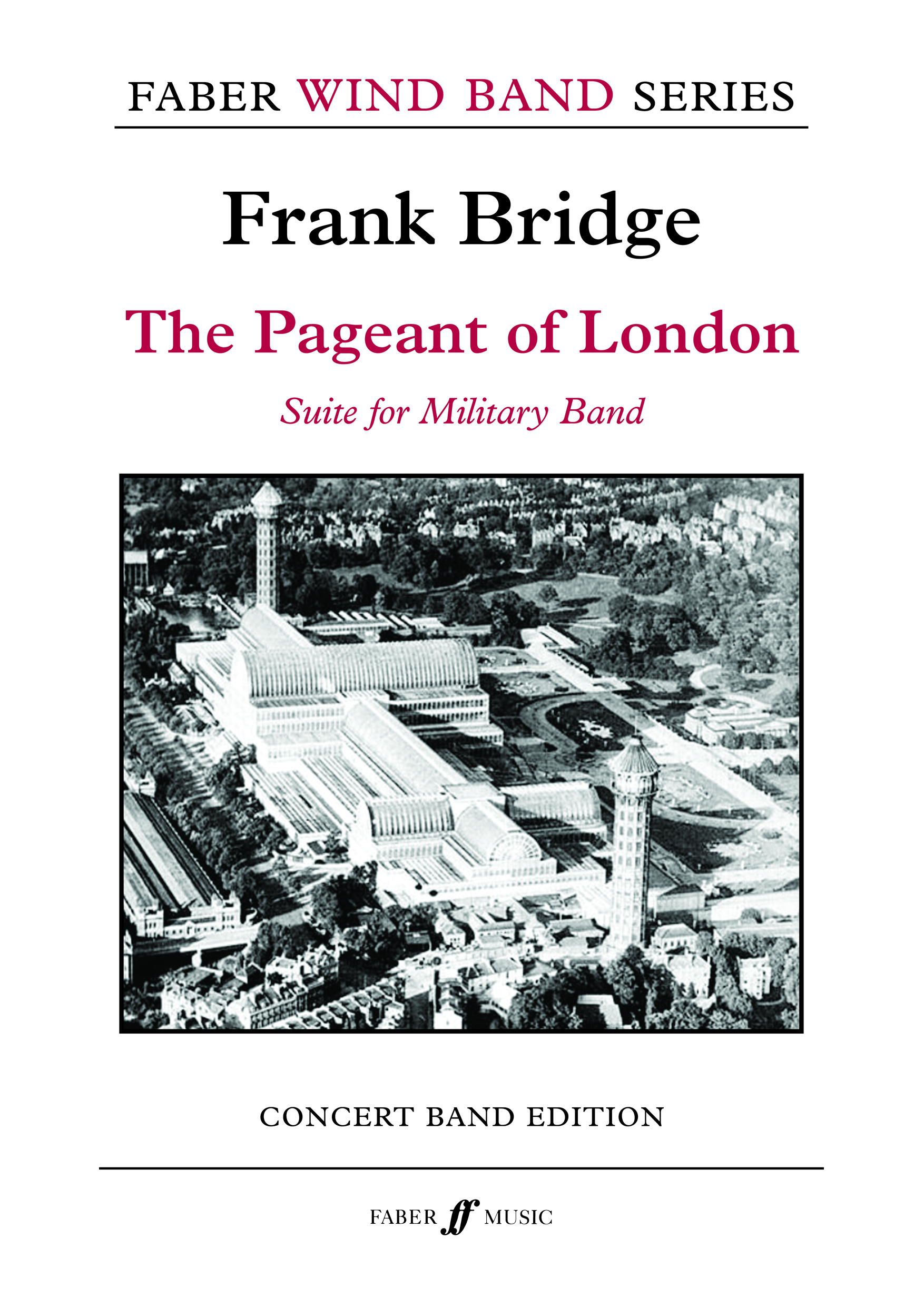
The Pageant of London - Frank Bridge
Frank Bridge was one of the finest English composers of the first half of the 20th century. The Pageant of London is his only work for wind band, comprising of two marches, one scored from Bridge's best known organ piece and including the chimes of Big Ben, plus three short renaissance pastiche items, one arranged from Playford (later used by Peter Warlock in Capriol Suite). The music is tuneful, approachable and, in the words of wind band 'legend' Timothy Reynish makes a fine alternative to Holst's two suites, which were composed around the same time. Reynish has introduced this work to concert bands right across the world. It has been performed in USA and the Far East, recorded by the celebrated Kosei Wind Orchestra of Japan and also by the BBC National Orchestra of Wales in the Chandos edition of Bridge Orchestral Music.
In stock: Estimated delivery 1-3 days
-
 £95.99
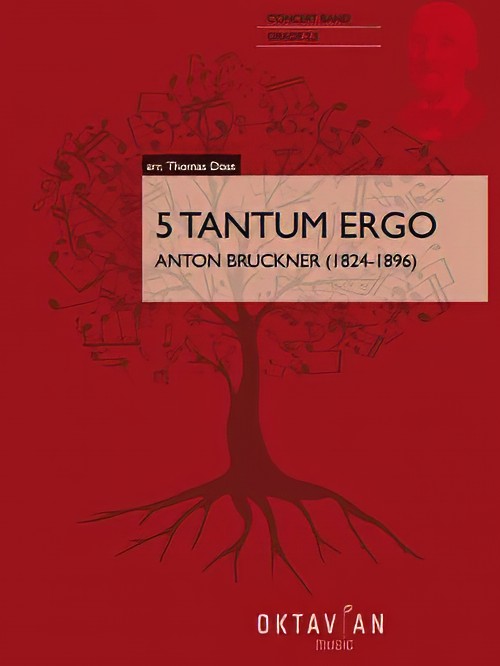
5 Tantum Ergo (Concert Band - Score and Parts) - Bruckner, Anton - Doss, Thomas
Anton Bruckner (b. 4.9.1824, Ansfelden, d. 11.10.1896, Vienna) didn't have it easy. Throughout his life, the Austrian composer was plagued by self-doubt. Anton Bruckner came from a simple, rural background. After the death of his father, he was accepted as a choirboy at the monastery of Sankt Florian in 1837. After several years as a school assistant and his own organ and piano studies, he first worked as organist in St. Florian, then from 1855 as cathedral organist in Linz. Introduced to music theory and instrumentation by Simon Sechter and Otto Kitzler, he discovered Richard Wagner as an artistic role model, whom he admired throughout his life and also visited several times in Bayreuth. In 1868 Anton Bruckner became professor of basso continuo, counterpoint and organ at the Vienna Conservatory; ten years later court organist; and in 1891 finally honorary doctor of the University of Vienna. He was considered an important organ virtuoso of his era, but had to wait a long time for recognition as a composer. It was not until Symphony No.7 in E major, composed between 1881 and 1883, with the famous Adagio written under the effects of Wagner's death, that he achieved the recognition he had hoped for, even if he was reluctant to accept it given his inclination towards scepticism and self-criticism. Anton Bruckner was a loner who did not want to follow a particular school or doctrine. He composed numerous sacred vocal works, such as his three masses, the Missa Solemnis in B flat minor (1854), the Te Deum (1881-84) and numerous motets. As a symphonic composer, he wrote a total of nine symphonies and many symphonic studies from 1863 onwards, tending to revise completed versions several times over. Bruckner's orchestral works were long considered unplayable, but in fact were merely exceptionally bold for the tonal language of their time, uniting traditions from Beethoven through Wagner to folk music, on the threshold between late Romanticism and Modernism. Hymns for four-part mixed choir a cappella (1846, St. Florian) No. 1 in E flat major (WAB 41/3): Quite Slow No. 2 in C major (WAB 41/4): Andante No. 3 in B flat major (WAB 41/1): Slow No. 4 in A flat major (WAB 41/2): Slow Hymn for five-part (SSATB) mixed choir and organ No. 5 in D major: Solemnly They are simple works, completely subordinate to their liturgical use, which nevertheless already show numerous characteristics of personal expression. These small pieces were able to stand up to the harsh scrutiny of the mature master: in 1888, Bruckner subjected them to a revision in which he made only minor corrections.Duration: 11.00
Estimated dispatch 7-14 working days
 View Music
 Listen to MP3