
Results
-
 £75.00
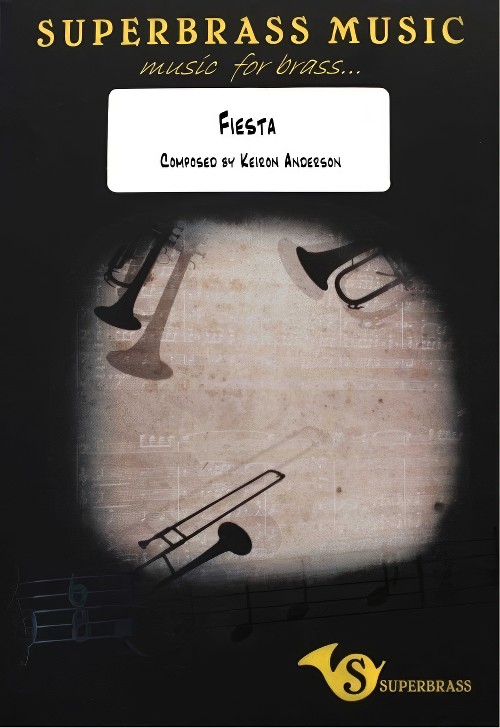
Fiesta (Concert Band - Score and Parts) - Anderson, Keiron
This piece is a celebration and can be played at any happy occasion. It was written to celebrate 30 years of the Nottingham Symphonic Wind Orchestra in 2017. The music grows from syncopated rhythms and a five note motif which is use to form melody and chords. There is a strong rhythmic undercurrent in percussion and in the interplay between sections. The motif is clearly heard in the flutes and clarinets in an imitative section before the key changes to form a second theme on the oboe then the flute. These secondary themes are still formed from the original motif before the music recapitulates the multi time signatures from earlier in the piece. The relentless pace drives the music to a flourish of upper woodwind and a syncopated brass coda. Duration: 4.30
Estimated dispatch 7-14 working days
-
 £77.50
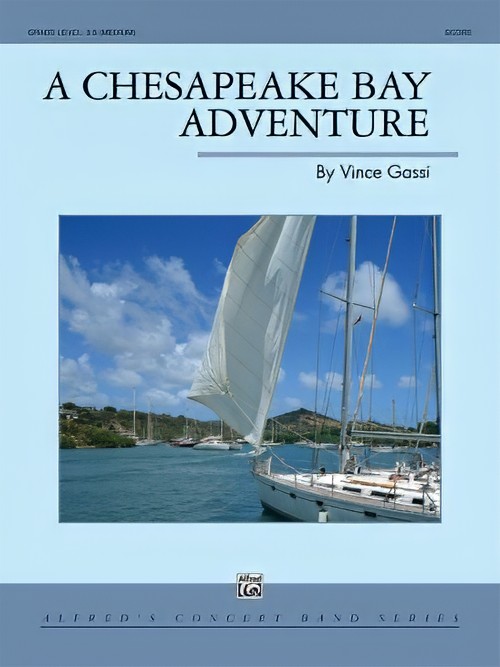
A Chesapeake Bay Adventure (Concert Band - Score and Parts) - Gassi, Vince
This pieces takes its inspiration from the rich maritime history of the Chesapeake Bay - from colonial lighthouses to Civil War Ironclads; from its vital role in the Underground Railroad to Blackbeard and other real life pirates, Adventure is paramount as swashbuckling themes are developed in the opening and closing sections of this work and beautifully contrasted with the haunting lyrical section reminiscent of Oh Shenandoah.Duration: 5.15
Estimated dispatch 7-14 working days
-
 £84.99
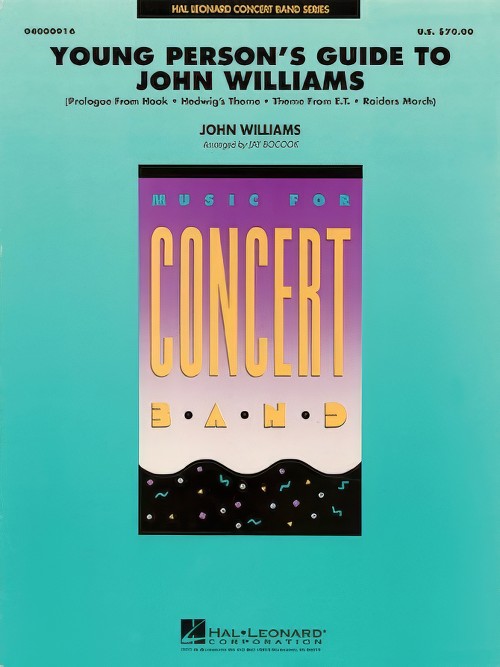
Young Person's Guide to John Williams (Concert Band - Score and Parts) - Bocook, Jay
Young-at-heart moviegoers of all ages have been treated to the masterful movie themes of John Williams for decades. Here is a magnificent collection of some of his most memorable melodies from the silver screen.Includes:Prologue from HookTheme from E.T.Hedwig's ThemeRaiders March
Estimated dispatch 7-14 working days
-
 £72.99
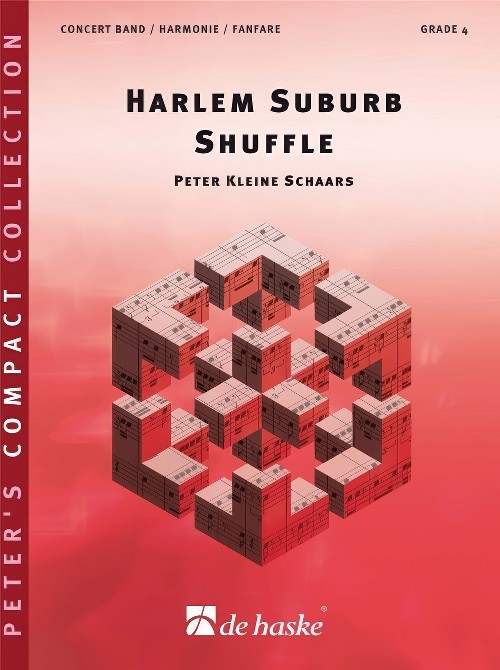
Harlem Suburb Shuffle (Flexible Ensemble - Score and Parts) - Schaars, Peter Kleine
From the beginning of the Middle Ages, we have known performance practices in which the duration of the notes can differ from the actual notation. In some cases, binary written melodies were performed in a ternary way. This is also the case in the present-day shuffle: the written quavers are performed in a long-short system in which the ratio is 2:1. In other words, the performance practice is based on a triplet feel. In this composition, all ingredients of the shuffle are featured: a vigorous swing rhythm, a walking bass, the successions of thirds in the accompaniment and the frequent use of triplets. To make sure that the binary written rhythms in the accompaniments are performed in the correct ternary manner, Peter Kleine Schaars has notated the melody themes in triplets as much as possible. Thus, this composition is a very useful exercise for the swing development of your ensemble. Additionally, the work is a treat to listen to, so your audience will really appreciate this up-tempo big band like composition. All ternary rhythmic cells 17 till 24 pass in revue, further more much attention had been paid to a correct performance of cell 4 in swing feel.Duration: 3.00
Estimated dispatch 7-14 working days
-
 £407.00
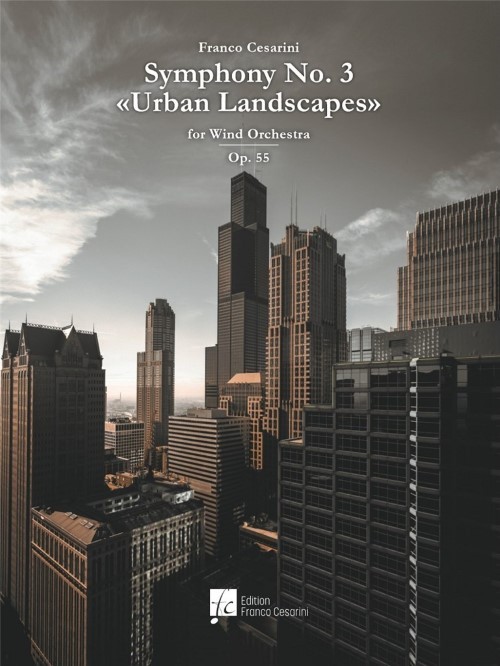
Symphony No.3 (Urban Landscapes) (Concert Band - Score and Parts) - Cesarini, Franco
Fascinated by the beauty of Chicago, Franco Cesarini has translated his emotions into music: this is how Symphony No. 3 "Urban Landscapes" Op. 55, was born, a musical portrait of this metropolis overlooking Lake Michigan. The composition is divided into three movements: The Wrigley Building from Dawn to Noon, Blue Silhouette and Cloud Gates, which by sharing the same thematic material arranged in cyclical form, strengthen the overall cohesion of the piece. The first movement, preceded by a short slow introduction in which the main theme is presented in an almost dreamlike form, metaphorically represents the city at dawn. The sudden change of time symbolizes the start of activities with all its noises and sounds: you can hear the bell that announces the closing of the subway doors, the sound of cars speeding by, the siren of a patrol car. If the first movement represents the day, the second introduces a nocturnal environment: a melancholic melody played by the English horn anticipates a more animated tempo depicting melodies coming from jazz clubs. Powerful fanfares that take up the second theme of the first movement introduce the third movement. In this finale, the role of the two themes is reversed compared to the first movement and one takes the place of the other in a kind of games of mirrors. Symphony No. 3 "Urban Landscapes" Op. 55: a sumptuous musical portrait of the "Windy City". Duration: 27.00
Estimated dispatch 7-14 working days
-
 £76.99
Freedom Forever (Concert Band - Score and Parts) - Fiala, Gunther
The fanfare-like piece Freedom Forever deals with the chances and possibilities that arise with freedom and is uses two famous quotes from the 1948 Universal Declaration of Human Rights and from Jean-Jacques Rousseau as a basic idea. The piece alters two themes in different styles representing the different faces of freedom as such. A fantastic and reflective opener or closing piece for your concerts! Duration: 3.45
Estimated dispatch 7-14 working days
-
 £59.00
New Frontier (A Celebration for Band) (Concert Band - Score and Parts) - Swearingen, James
Right from the start, the captivating sounds of percussion and powerful chords lay the groundwork for an exciting and energetic work that is sure to inspire one and all. Each instrument has been scored with special attention, and you'll find the overall musical content to be filled with themes that sing "from the heart." The middle section includes an optional solo for that gifted flutist. You can be assured that this piece will be very popular with your talented musicians. A guaranteed winner! Duration: 4.45
Estimated dispatch 7-14 working days
-
 £64.99
Hans Zimmer: Movie Milestones (Concert Band - Score and Parts) - Zimmer, Hans - Brown, Michael
Over the past three decades Hans Zimmer has created some of the most dynamic and memorable movie themes to hit the silver screen. With styles ranging from excitement and intensity to delicate and whimsical, here's an effective medley for the concert stage featuring familiar melodies from Driving Miss Daisy, Gladiator, Madagascar, Crimson Tide, The Lion King and Pirates of the Caribbean.
Estimated dispatch 7-14 working days
-
 £79.50
Sparkle (Concert Band - Score and Parts) - Harbinson, William G.
Sparkle glistens with the energy of new life. Built from staccato ostinati, relentless rhythms, biting harmonies, and soaring themes, the work shines with brilliance and power. From the first measure to the last, the work drives forward with fire and intensity to the powerful ending.Duration: 7.15
Estimated dispatch 7-14 working days
-
 £94.99
A Baroque Triptych (Concert Band - Score and Parts) - Beringen, Robert van
In his own distinctive style, Robert van Beringen has composed a very unique fantasy on three themes by the famous Baroque composers Johann Sebastian Bach and George Friedrich Hndel. Van Beringen used Bach's chorale Brich an, o schnes Morgenlicht ('Break forth, O Beauteous Heavenly Light') from his Christmas Oratorio and the recitative Behold, a Virgin shall conceive, and bear a son, and shall call his name Emmanuel, God with Us from Hndel's Messiah. A perfect way to say Merry Christmas in music!Duration: 5:00
Estimated dispatch 7-14 working days
 View Music