
Results
-
 £332.70
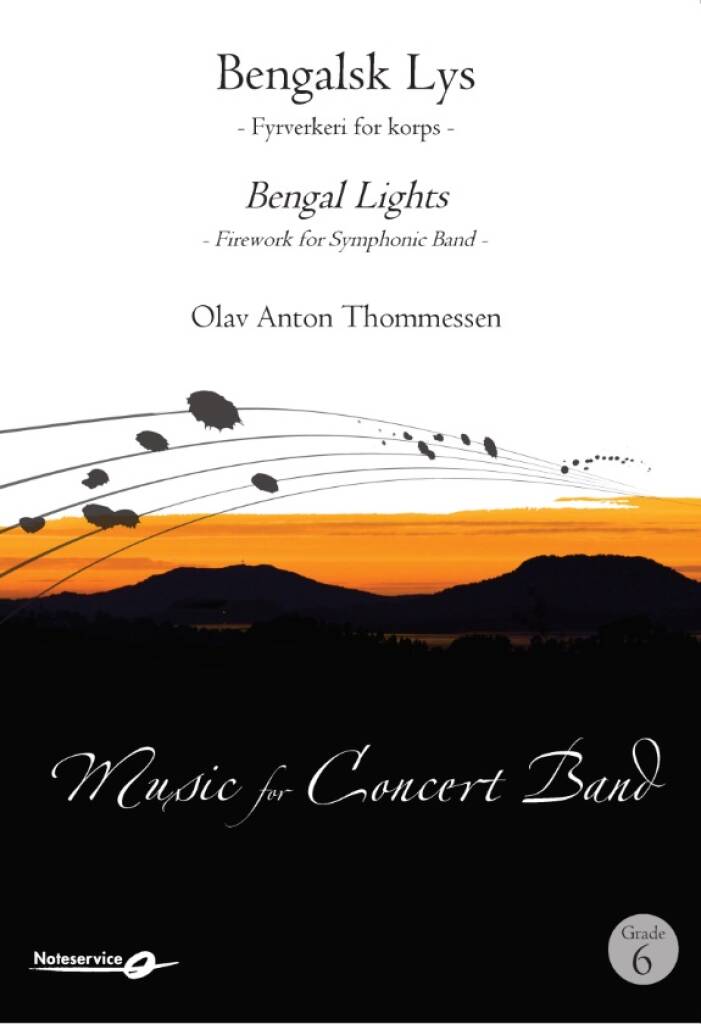
Bengal Lights - Olav Anton Thommessen
The richness of the music of the sub-contient is an eternal inspiration, showing music to be the fusion and balance of opposites: improvisation and calculation, freedom and form, rhythm and melody.Indian musical thinking has acted through thecenturies as a model for articulating thought through sound.I have based my piece on an Indian temple dance in which a short motivic nugget generates garlands and trails of sonic colour.The raga-form is maintained, with anintruduction comprizing a presentation of the scale-material, out of which the sonic nugget is forged.The work was premiered by The Norwegian Navy Band Bergen conducted by Peter Szilvay in 2007.This newversion was edited by thecomposer in 2015.
Estimated dispatch 7-14 working days
-
 £57.50
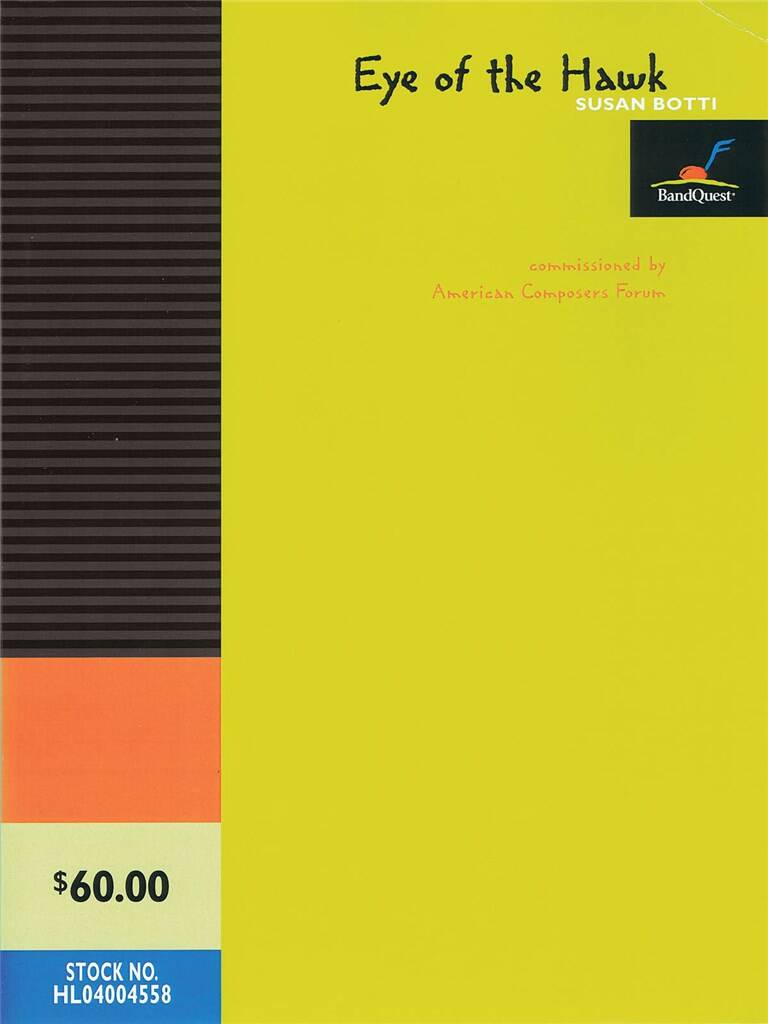
Eye of the Hawk - Susan Botti
Eye of the Hawk was inspired by the beautiful and majestic Hudson Valley. I wanted to base the piece on something that would resonate with the band who would be premiering it ... my local, exceptional, middle school band. The hawkbecame our spirit animal, and represented to me many of the qualities that are inherent in a young person of that age - bold, instinctive, elegant - a fierce creature who owns the sky. The music conveys power, freedom, andconfidence. Just like the students. -Susan Botti. A free downloadable interdisciplinary curriculum for teaching Eye of the Hawk is available for download at www.BandQuest.org. Learn more on YouTube! BandQuest, an exciting series of new music and accompanying curricula forband, is a program published by the American Composers Forum. The series was started as a response to feedback from music educators that there is a pressing need for new, fresh band music. The heart of this program is new workswritten by a diverse group of leading American composers who have created challenging pieces that are a true departure from standard middle school repertoire. Every BandQuest project includes a residency component in which thecomposer works collaboratively with a middle school as they create their new piece.Many BandQuest pieces are accompanied by an interdisciplinary curriculum designed to assist students as they learn the music and to integrate eachpiece with non-music studies. Visit www.bandquest.org to learn more about this innovative series, and email [email protected] to request a free downloadable audio catalog.
Estimated dispatch 7-14 working days
-
£137.70
Mountain Suite - Geir Sundbø
Long walks in the mountains of Telemark has inspired the composer to write this original suite for young bands. The mountains are impressive and dramatic, but also make you feel calm and with a sense of freedom. The 4 movements are a praise to thisbeautiful nature.
Estimated dispatch 7-14 working days
-
 £83.50
As Spirits Take Flight - Earl
Uplifting and bright, this fine overture was written for the Salt Lake Symphonic Winds. Images of flight are suggested through the composer's use of rhythm and tempo. The middle section has solo lines for trumpet and clarinet and is beautifully scored utilizing the many different colors available to the wind medium. Various cross cueings allow the conductor/director freedom to tailor the piece to fit a particular ensemble. An excellent choice for high school and community bands alike.
Estimated dispatch 7-14 working days
-
 £98.99
American Spectacular - Rob Romeyn
"American Spectacular" presents many patriotic favorites in a shimmering arrangement by Rob Romeyn! The opening features brief snippets from many patriotic favorites before moving into "The Battle Cry of Freedom", "When Johnny Comes Marching Home", a particularly sensitive and creative treatment of "Shenandoah", and a fresh up-tempo treatment of "The Star-Spangled Banner". The ending is powerful and strong, sure to bring your audience to their feet. Technical demands are modest, and all sections have interesting melodic sections to play. This patriotic flag waver is a winner! Top-notch!This work is not yet in print. Please check back later to view the conductor score and for purchasing information. In the meantime, please enjoy this recording performed by The Washington Winds, conducted by Edward S. Petersen.
Estimated dispatch 7-14 working days
-
£78.99
An Irish Farewell - Larry Daehn
The lovely old tune on which this composition is based is know by a variety of names: "Farewell! But Whenever You Welcome the Hour," "To Rodney We Will Go," and "Moll Roone."The "Andante e rubato" used from the outset of the piece, gives conductors as much freedom as they might desire. Wonderful lyrical writing and a beautiful tribute to that special someone.
Estimated dispatch 7-14 working days
-
£109.99
Remember The '80
This is the follow-up to Filip Sandras's top-selling hit Remember the 70s". He has arranged the following hits for this version: What's another year", popularised by the version by multiple Eurovision Song Festival winner Johnny Logan, Josephine" by Chris Rea, Alive and Kicking" by the Simple Minds and Freedom" by 80s superband Wham!
Estimated dispatch 7-14 working days
-
£59.95
North Star - Peter Terry
The North Star appears to the naked eye as a single bright star in a circle of apparent darkness. This has made it a beacon and a guide to explorers and travelers. North Star is a dramatic fanfare for band that celebrates the courageous exploration of the unknown in search of personal discovery and freedom. Composer Peter Terry continues to write interesting music for even the youngest of band musicians.
Estimated dispatch 7-14 working days
-
£126.50
North Bridge Portrait - Stephen Bulla
Contrasting colors and stylistic shifts trace the historic events surrounding "the shot heard 'round the world" in this challenging and significant new concert band work by Stephen Bulla. A rhapsodic adventure, NORTH BRIDGE PORTRAIT takes us from the merry atmosphere of the pre-revolutionary town through foreboding militant sounds. The fife-and-drum melody, "Washington's March", leads inexorably to the historic beginning of the American colonies' struggle for freedom.Vivid images combine to make this descriptive audience-pleasing composition a memorable experience for all that attend your performance. Historic and unique!
Estimated dispatch 7-14 working days
-
£69.99
An Irish Lullaby - Stephen Bulla
What can be more charming than a comely Irish folk melody? This is music that allows the band to play in the rubato style, with much room for expression. Found in an old British publication and simply called "Irish Air," this endearing arrangement is a rhapsodic treatment that takes fragments of the melody and develops them into a large symphonic work. The freedom of tempi allows you to work with your band in a sensitively conducted way that only a beautiful piece like this will allow.There is always room on a concert program for at least one lush, melodic contrast piece. Perhaps this one is for you. It's so difficult to describe a thing of real beauty. Please listen tothe demo recording and hear it for yourself.
Estimated dispatch 7-14 working days
 View Music