
Results
-
£76.99
Russian Dance - Andrew Watkin
Music occupies an important role in the cultural life of Russia. Russian Dance is based on a famous traditional song and reflects the characteristic elements of this expansive country. This composition develops over a steady tempo using varied and colourful effects to bring pleasure to musicians and audience alike.
Estimated dispatch 7-14 working days
-
 £105.10
Postcard From Baghdad - Dirk Brossé
Sir Dirk Bross, music director at the Philadelphia Chamber Orchestra, is a versatile composer of orchestral and symphonic repertoire, chamber music, film & musical. His compositions are performed worldwide by the most prominent orchestras and soloists. About the new series of 10 "Musical Postcards" for wind band, Dirk says the following: "Composing is a commitment; it is my life's mission. For me composing means creating a vacuum around myself and allowing myself to be submerged by impressions. It is a continual struggle between fantasy and reality, between dream and reality. Out of chaos of sounds and emotions I try to order my thoughts by juggling shreds of melodies, original chords, striking sound colours and alternating rhythms. Melody, harmony, rhythm and sound colours are finally balanced to generate a harmonious universe. This series of ten 'Musical Postcards' are a reflection of my travels, thoughts, discoveries and musical career so far, which has brought me around the globe. I look forward to you joining me on this voyage of discovery..."
Estimated dispatch 7-14 working days
-
 £86.00
Postcard From Kampala - Dirk Brossé
Sir Dirk Bross, music director at the Philadelphia Chamber Orchestra, is a versatile composer of orchestral and symphonic repertoire, chamber music, film & musical. His compositions are performed worldwide by the most prominent orchestras and soloists. About the new series of 10 "Musical Postcards" for wind band, Dirk says the following: "Composing is a commitment; it is my life's mission. For me composing means creating a vacuum around myself and allowing myself to be submerged by impressions. It is a continual struggle between fantasy and reality, between dream and reality. Out of chaos of sounds and emotions I try to order my thoughts by juggling shreds of melodies, original chords, striking sound colours and alternating rhythms. Melody, harmony, rhythm and sound colours are finally balanced to generate a harmonious universe. This series of ten 'Musical Postcards' are a reflection of my travels, thoughts, discoveries and musical career so far, which has brought me around the globe. I look forward to you joining me on this voyage of discovery..."
Estimated dispatch 7-14 working days
-
 £76.40
Postcard From Benares - Dirk Brossé
Sir Dirk Bross, music director at the Philadelphia Chamber Orchestra, is a versatile composer of orchestral and symphonic repertoire, chamber music, film & musical. His compositions are performed worldwide by the most prominent orchestras and soloists. About the new series of 10 "Musical Postcards" for wind band, Dirk says the following: "Composing is a commitment; it is my life's mission. For me composing means creating a vacuum around myself and allowing myself to be submerged by impressions. It is a continual struggle between fantasy and reality, between dream and reality. Out of chaos of sounds and emotions I try to order my thoughts by juggling shreds of melodies, original chords, striking sound colours and alternating rhythms. Melody, harmony, rhythm and sound colours are finally balanced to generate a harmonious universe. This series of ten 'Musical Postcards' are a reflection of my travels, thoughts, discoveries and musical career so far, which has brought me around the globe. I look forward to you joining me on this voyage of discovery..."
Estimated dispatch 7-14 working days
-
 £73.00
Postcard From Vienna - Dirk Brossé
Sir Dirk Bross, music director at the Philadelphia Chamber Orchestra, is a versatile composer of orchestral and symphonic repertoire, chamber music, film & musical. His compositions are performed worldwide by the most prominent orchestras and soloists. About the new series of 10 "Musical Postcards" for wind band, Dirk says the following: "Composing is a commitment; it is my life's mission. For me composing means creating a vacuum around myself and allowing myself to be submerged by impressions. It is a continual struggle between fantasy and reality, between dream and reality. Out of chaos of sounds and emotions I try to order my thoughts by juggling shreds of melodies, original chords, striking sound colours and alternating rhythms. Melody, harmony, rhythm and sound colours are finally balanced to generate a harmonious universe. This series of ten 'Musical Postcards' are a reflection of my travels, thoughts, discoveries and musical career so far, which has brought me around the globe. I look forward to you joining me on this voyage of discovery..."
Estimated dispatch 7-14 working days
-
 £86.00
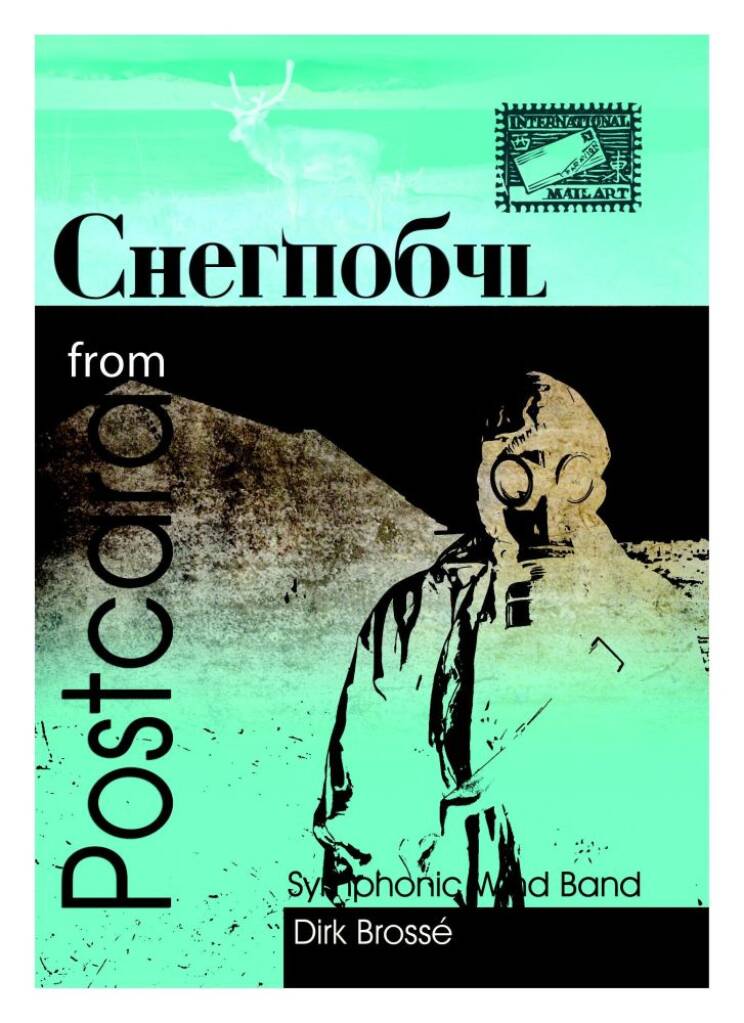
Postcard From Chernobyl - Dirk Brossé
Sir Dirk Bross, music director at the Philadelphia Chamber Orchestra, is a versatile composer of orchestral and symphonic repertoire, chamber music, film & musical. His compositions are performed worldwide by the most prominent orchestras and soloists. About the new series of 10 "Musical Postcards" for wind band, Dirk says the following: "Composing is a commitment; it is my life's mission. For me composing means creating a vacuum around myself and allowing myself to be submerged by impressions. It is a continual struggle between fantasy and reality, between dream and reality. Out of chaos of sounds and emotions I try to order my thoughts by juggling shreds of melodies, original chords, striking sound colours and alternating rhythms. Melody, harmony, rhythm and sound colours are finally balanced to generate a harmonious universe. This series of ten 'Musical Postcards' are a reflection of my travels, thoughts, discoveries and musical career so far, which has brought me around the globe. I look forward to you joining me on this voyage of discovery..."
Estimated dispatch 7-14 working days
-
 £64.99
Smooth Classics
Featuring captivating grooves, soothing melodies and catchy riffs, this medley showcases some of the best-known smooth favorites through the years. A great change of pace number for any concert program. Includes: Street Life (The Crusaders), Songbird (Kenny G), What A Fool Believes (Doobie Brothers) and On Broadway (George Benson).
Estimated dispatch 7-14 working days
-
 £121.00
Commemoration and Celebration - Robert E. Foster
Based on J. S. Bachs well-known chorale Sheep May Safely Graze, this work is dedicated to commemorating and celebrating the life and memory of Claude T. Smith. The full, rich scoring effectively utilizes the colors and tonal resources of the modern symphonic band while projecting youthful rhythmic energy.
Estimated dispatch 7-14 working days
-
 £71.50
Predator - Robert E. Foster
Predators are things that prey on others for their existence and come in a variety of forms, both real and imaginary. This predator is one of the scariest of all, that of the imaginary kind, and the music adds to its fearsome presence. The suspenseful sounds are dark and sinister, leading our imaginations to create a menacing image far scarier than any that exist in real life. The music evokes images of this fearsome creature as he prowls an imaginary landscape, striking fear into listeners as he searches for his next victim!
Estimated dispatch 7-14 working days
-
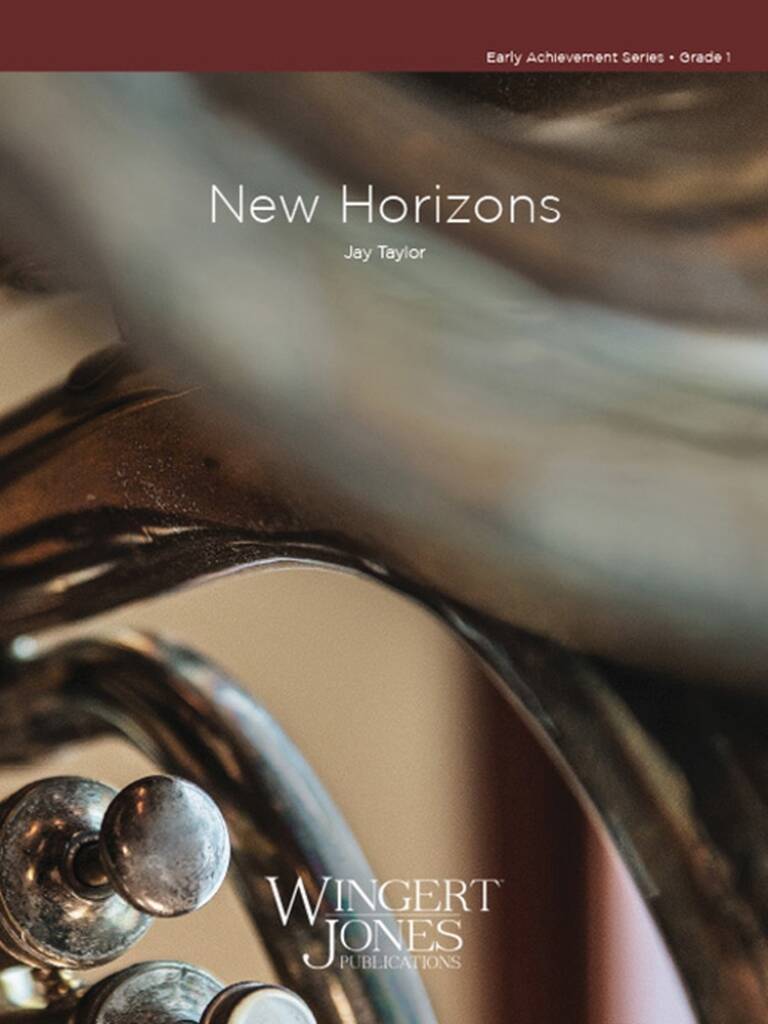 £54.99
New Horizons - Jay Taylor
An impressive work for beginners to play on their very first concert. This majestic work is carefully written so young players can learn quickly while sounding confident and accomplished. The music conveys the feeling of excitement at the start of a new experience - like the exuberance of that very first concert, or the beginning of their journey in life - growing and exploring new horizons.
Estimated dispatch 7-14 working days
 View Music