
Results
-
 £102.99
The Beauty of Belisia (Concert Band - Score and Parts) - Appermont, Bert
Belisia is the old Merovingian name of the Belgian town of Bilzen who commissioned this composition. It is also the composer's place of birth. The work has two main themes. The melancholic theme in a minor key refers to the many ravages the town has suffered through the years and the second theme, stately and heroic, represents the inner strength and courage of the proud inhabitants of this town.Duration: 5:30
Estimated dispatch 7-14 working days
-
 £79.99
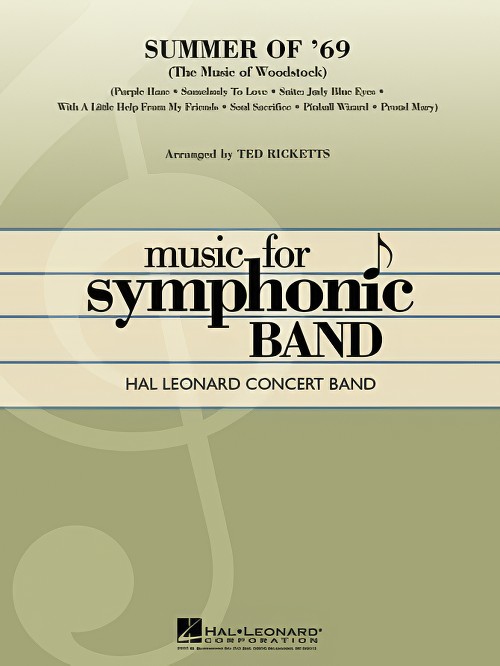
Summer of '69 (The Music of Woodstock) (Concert Band - Score and Parts) - Ricketts, Ted
In 1969, the legendary 3-day music festival defined a generation and gave us unforgettable musical performances. Included in this powerful medley are: Soul Sacrifice (Santana), Proud Mary (Creedence Clearwater Revival, Pinball Wizard (The Who), Somebody to Love (Jefferson Airplane), With a Little Help from My Friends (Joe Cocker), Suite: Judy Blues Eyes (Crosby, Stills, Nash & Young), and Purple Haze (Jimi Hendrix). This is just like being there - without the mud!
Estimated dispatch 7-14 working days
-
 £104.99
Festival Variations (Concert Band - Score and Parts) - Nijs, Johan
Festival Variations is a one-movement concert work by the Belgian composer Johan Nijs. Many lively themes are featured, appearing in a series of diverse variations. The introduction, majestic and proud leads into the initial theme, which immediately creates a festive atmosphere. In the slow, attractive middle part, the band catches its breath for a while. A swift passage finally concludes the work in a fitting manner. A truly festive set of variations.Duration: 6:45
Estimated dispatch 7-14 working days
-
 £57.50
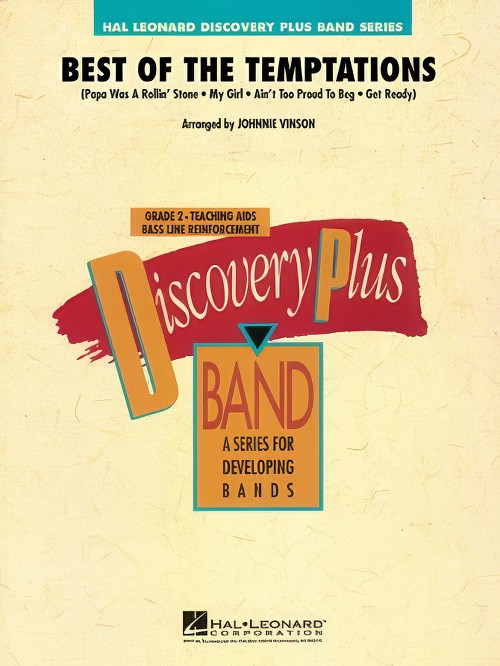
The Temptations, Best of (Concert Band - Score and Parts) - Vinson, Johnnie
No group did more to help establish the Detroit Motown sound of the '60s than the Temptations. Here is a medley of their biggest hits arranged for young players. Includes: Ain't Too Proud to Beg, Papa Was a Rollin' Stone, My Girl and Get Ready.
Estimated dispatch 7-14 working days
-
 £87.50
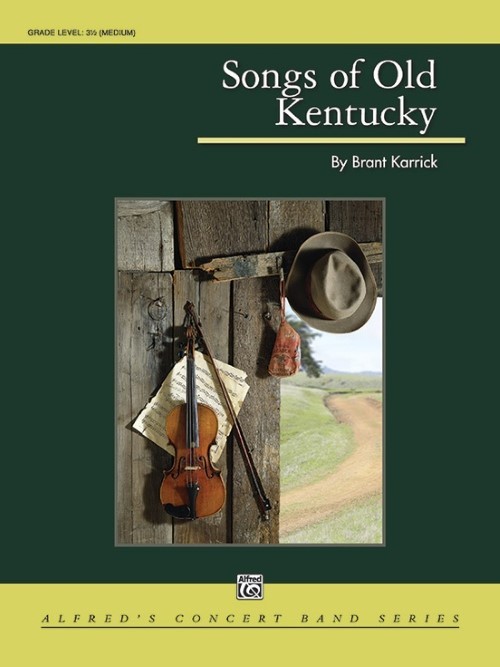
Songs of Old Kentucky (Concert Band - Score and Parts) - Karrick, Brant
The Kentucky mountaineers have preserved a proud heritage of traditional ballads and other old Scottish and English folk songs brought to America by their ancestors. Borrowing from this wonderful genre of folk songs, this outstanding setting of John Riley, The Lonesome Scenes of Winter, Sourwood Mountain, Frog Went-a-Courting, and Loving Hannah is destined to become a band classic. Skillfully scored and imaginative in setting, Songs of Old Kentucky provides a charming vehicle for expressive playing. A delightful addition to your next concert! Duration: 6:30
Estimated dispatch 7-14 working days
-
 £53.95
Evangeline: Two Cajun Songs (Concert Band - Score and Parts) - Story, Michael
Characterized by a French dialect, the Cajun people have an equally distinct musical tradition. Michael Story's Evangeline: Two Cajun Folk Songs captures the spirit and enthusiasm of these proud people. Presented in two separate movements, the diversity of the Cajun music heritage is pronounced. Duration: 4.00
Estimated dispatch 7-14 working days
-
 £58.50
Starlight Memories (Concert Band - Score and Parts) - Jenkins, Darren W.
Starlight Memories was commissioned by and written for the Olathe Civic Band in Olathe, Kansas. It was dedicated to the memory of Ed Badsky, who resurrected the group from a 50 year absence in the mid 1980's. Mr. Badsky was a pillar of the Olathe Band community. He was instrumental in starting Olathe's Band program from its beginnings in the 1960's to what is now a thriving and vibrant program that a proud and supportive community enjoys. Mr. Badsky was also a prominent jazz saxophonist who performed in the Kansas City area on a regular basis during his career. The work itself is meant to reflect and celebrate this man's life and accomplishments. It contains two short alto saxophone solos and its harmonies are "jazz" influenced. The work's title is based upon a local theater at which Mr. Badsky frequently performed. Duration: 4.00
Estimated dispatch 7-14 working days
-
 £79.50
Moravian Folk Rhapsody (Concert Band - Score and Parts) - Sheldon, Robert
This work for band is a setting of several delightful Moravian folk dances. "Stoji hruska v oudoli" is a fast-paced two-step dance. "Rozluc se Ancicko" features a clarinet solo in a mournful, yet lilting, slow 6/8 melody. "Preskoda nastokrat" is a highly rhythmic piece in a moderate tempo that features a brief double reed/piccolo section. "Ma zlata maticka" begins with an unaccompanied alto saxophone solo, then includes a folk dance that begins slowly and increases in tempo. "Vojaci jedou" is a proud and uplifting march in 3/4 time. "U Kltera pole" ends the rhapsody with a lively 2/4 dance that builds to a rousing conclusion. Performers and audiences alike will enjoy the wonderful colors and tonality of this charming music from the Czech Republic.Duration: 9.20
Estimated dispatch 7-14 working days
-
 £57.50
Freedom (Concert Band - Score and Parts) - Smith, Michael W. - Bocook, Jay
From the all instrumental CD by Michael W. Smith, here is a masterful setting of the title cut for concert band. This music is dignified and proud, yet in a contemporary setting.
Estimated dispatch 7-14 working days
-
 £50.50
Fantasy on an English Carol (The Holly and the Ivy) (Concert Band - Score and Parts) - Story, Michael
We're proud to offer you a vision from Michael Story based on the revered carol "The Holly and the Ivy." Literally every section has a chance with the melody. The first statements are developed with intriguing harmonies and textures. A fantasy for sure.Duration: 2:15
Estimated dispatch 7-14 working days
 View Music