
Results
-
 £72.99
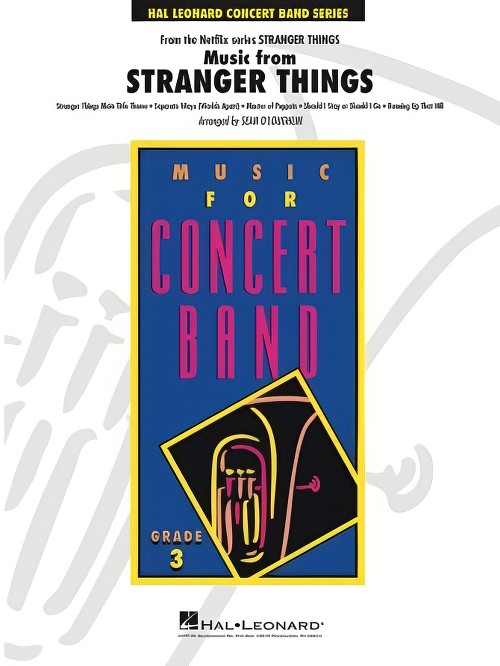
Stranger Things, Music from (Concert Band - Score and Parts) - O'Loughlin, Sean
The popular TV series Stranger Things has reminded us of some of the great songs from the 1980s! With songs supporting key moments in the storyline, here is an emotion-packed medley of classic rock hits along with the iconic theme.Includes:Stranger Things Main ThemeShould I Stay or Should I GoMaster of PuppetsSeparate Ways (Worlds Apart)Running Up That Hill
Estimated dispatch 7-14 working days
-
 £64.50
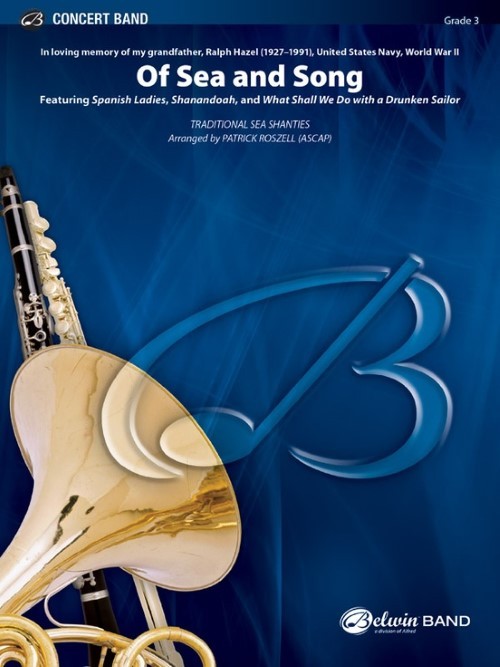
Of Sea and Song (Concert Band - Score and Parts) - Roszell, Patrick
As the title suggests, this medley is comprised of sea songs. Educational, yet entertaining, this arrangement will make a great selection at your next contest or concert.Duration: 3:45
Estimated dispatch 7-14 working days
-
 £118.00
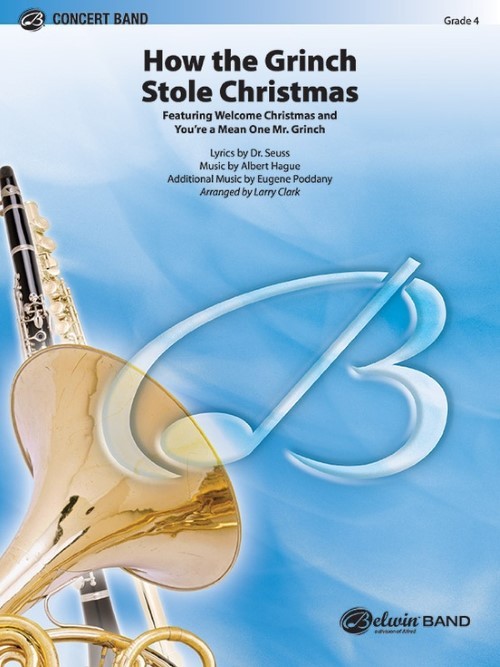
How the Grinch Stole Christmas (Concert Band - Score and Parts) - Clark, Larry
Of all the Dr. Seuss stories, possibly none is more delightfully charming than the take on that mean old man who disliked Christmas so much that he stole all the presents, the toys and the Christmas trees. As should befall any villain, he is transformed and his heart "grew three times its size." This is a superior holiday medley with two great songs and wonderful incidental music. Seasonally spectacular! Duration: 5.00
Estimated dispatch 7-14 working days
-
 £134.99
Best Songs Ever Wind Band Set (Score & Parts)
This fantastic medley will bring great joy to all those who remember these super hits. Some of your audience may like Bill Haley and some Michael Jackson, but they are all sure to sing-along when it comes to the Village People hit YMCA ! 0:08:18
Estimated dispatch 7-14 working days
-
 £186.20
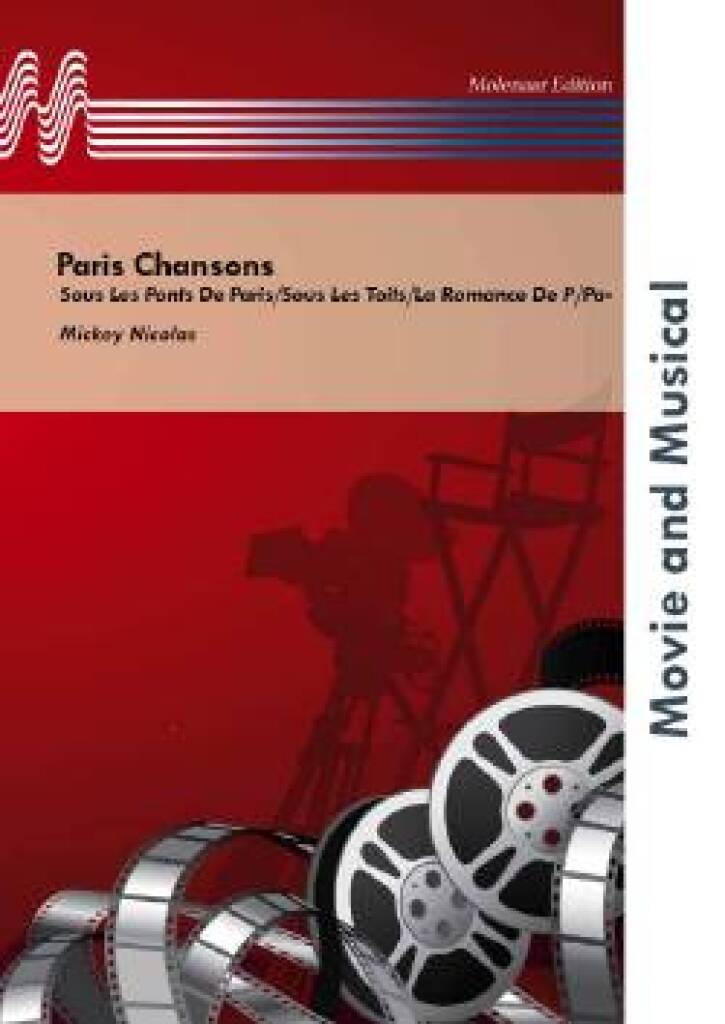
Paris Chansons - Mickey Nicolas
The French composer Mickey Nicolas (Laon, 1938) was conductor at the famous Paris cabaret 'Le Lido' for many years. He already expressed his great love for the Eiffel Tower City by composing 'Listening to Paris'. With 'Paris Chansons' (Paris Songs) he wrote a splendid medley with fine arrangements of famous French songs that glorified the French capital and spread its reputation all over the world. This nice anthology of immortal French songs contains the following songs: 'Sous les Ponts de Paris', 'Sous les Toits de Paris', 'La Seine', 'Sur les Quais du Vieux Paris', 'Mademoiselle de Paris', 'Pigalle', 'Moulin Rouge', 'Paris', 'La Romance de Paris', 'Paris je t'aime d'Amour' and 'Paris Reine du Monde'. This composition will bring some Parisian atmosphere in the concert hall.
Estimated dispatch 7-14 working days
-
 £186.20
La Inmortal - Ferrer Ferran
A game of chess took place in London between two great masters, Anderssen (English) and Kiesevitzki (Russian). That game was regarded as one of the most beautiful ever played in history. That was the reason why it was christened with the name of 'The Immortal One'. In that game, Anderssen sacrificed important pieces, such as the Queen, to achieve the spectacular checkmate. What would happen if that game got humanised in our imagination through the work of music? Great castles, cavalry, pawns as warriors divided into two Kingdoms that fight to get independent. At the start, the fighting troops fall in at a great open area to defend their fortresses and castles (introduction). The brasswind and drums calls work the start of the battle... Meanwhile, a great calm reigns in the castle foreboding the mighty outcome. The king and queen, unaware of the war, are dancing in the mirrors room but they are interrupted after the warning given about a new attack. Courage and sacrifice are reflected in the image of the queen, who finally sacrifices her life to save her people. She fights with all her strength but falls dead at the battlefield. The king, in revenge, gathers all his men and comes out to fight the cruel, bloody, final battle. The final apotheosis represents the songs of praise for the fallen at the battle.
Estimated dispatch 7-14 working days
-
 £122.50
Bryan Adams
Bryan Adams is one of the most successful rock singers of modern times with his raspy voice and his ability to sing rock songs as skilfully as expressive ballads contributed to his fame. Wolfgang Wssner, a great fan of Bryan Adams, has made a selection of the most appealing and successful songs by the Canadian singer and arranged them to form a medley for concert band. The medley includes the following titles: Everything I Do, I Do it for You from the movie Robin Hood, The Best of Me, Please Forgive Me and Summer of '69. This mixture of ballads and rock songs will ensure everyone will leave your concert humming one of their favourite Bryan Adams hits.
Estimated dispatch 7-14 working days
-
 £130.10
Boudewijn Harmonie (Drijvers) - Boudewijn de Groot
With this medley 'Boudewijn' arranger Gerhart Drijvers pays a tribute to one of the greatest composers of original Dutch songs. Indeed, in collaboration with Lennaert Nijgh, Boudewijn de Groot wrote numerous fine songs for other artists as well as for himself. In this medley you can hear successively the songs 'Strand' (Beach), 'Beneden alle peil' (No level at all), 'Mijnheer de President' (Mister President), 'Tante Julia' (Aunt Julia) and, of course, 'Avond' (Evening). Thanks to these great successes 'Boudewijn' will not only be an extremely popular concert piece for all Dutch speaking audiences, but any audience.
Estimated dispatch 7-14 working days
-
£64.99
Wyndham Marziale - Paul Curnow
The musical heritage of the United States is rich with folk songs from across the country. We can understand a great deal about society, culture and traditions through these folk songs. The folk tune used in this work has had many lives, from early church singing to pub songs to a marching song.
Estimated dispatch 7-14 working days
-
 £115.60
Our Last Summer - Benny Andersson
An exciting arrangement where almost all players have a bit of the melody line. There are many opportunities to give individual musicians soloistic challenges. Any bandmember should find something interesting in this piece. It will be possible to add vocals to the arrangement. A lovely melody with great expressions.Our Last Summer" is a song by the Swedish pop group ABBA from their seventh studio album, "Super Trouper," released in 1980. The song is indeed featured in the musical "Mamma Mia!", a little bit shortened and with small changes in the lyrics. The musical premiered in London's West End in 1999 and is a duet performed by the characters Harry Bright and Donna Sheridan, reflecting on their past romance during a summer spent in Paris.The song is primarily sung by Bjrn Ulvaeus, with backing vocals provided by Agnetha Fltskog and Anni-Frid Lyngstad, the female members of ABBA. Their harmonies contribute to the song's nostalgic and wistful atmosphere. The lyrics vividly describe the memories of the summer spent together, including scenes of walking along the Seine River in Paris and listening to French songs. The song also touches on the passage of time and the realization that the summer romance has ended.While not released as an official single in most countries, "Our Last Summer" still received considerable airplay and became a fan favorite. It charted in some European countries and has remained popular among ABBA fans over the years.
Estimated dispatch 7-14 working days
 View Music