
Results
-
 £126.50
Beating Beats - Jan Van der Roost
Beating Beats rhythmically is a rather special piece: more conventional metres are manipulated in such a way that the listener (without score) may be confused and even misled at various points! The 'regular four beat accents in a 4/4 measure for example are often not adhered to, giving the impression of a different metre altogether. However, at the same time it may be that some instruments do follow this "normal" 4/4 metre, thus confusing everyone - performers and listeners alike! On one hand, it is a "simple" piece with very playable and melodic themes, but their mysterious rhythmic makes it not only sound more complicated, but also makes for a greater challenge for both players and the conductor! As is mostly the case with Jan Van der Roost's works, the orchestration is both colourful and contrasting, with every section of the modern wind orchestra used equally. All in all, it's a work full of surprises with some unexpected harmonies and special melodic lines but above all, with metrical and rhythmical sure to catch you unawares!
Estimated dispatch 7-14 working days
-
 £171.00
Passacaglia and Fugue in C-minor BWV 582 - Johann Sebastian Bach
The Passacaglia is a set of instrumental variations based on an ostinato bass. Bach's Passacaglia and Fugue in C-minor for organ represents the pinnacle of what had been achieved in this compositional form at that time. In Franco Cesarini's arrangement for large wind orchestra, the particularly careful interpretation of the original piece enables him to exploit all the sound colors at his disposal, and in this sumptuous guise Bach's work also takes on a grandiose dimension, albeit tinged with late-Romanticism. The exposition of the beautiful theme begins in the bass part, immediately creating a solemn and serious atmosphere which is accentuated by the intensely pathetic character of the first variations. Up to the tenth variation it remains confined to the bass, but in subsequent ones it also passes to the soprano and alto register. The integrity of the theme is also embellished with elegant arpeggios, in whose lower and higher extensions the theme can be distinguished. Towards the end it returns to the bass in an impressive thickening of the polyphonic texture that swiftly re-establishes the key of C-minor. The "Thema fugatum" which follows immediately does not constitute a Fugue in its own right, rather it is nothing but the twenty-first and most extensive variation of the Passacaglia. This time Bach uses only the first half of the theme, superimposing a rhythmic countersubject that considerably enlivens the entire development of the composition. The polyphonic discourse becomes increasingly dense, until the building tension peaks in a powerful "Neapolitan sixth" chord, followed by a sudden pause. This culminating moment then leads to the coda and final cadence on a bright C-major chord.
Estimated dispatch 7-14 working days
-
 £99.99
Hidden Light - Kevin Houben
Hidden Light - Loyalty Among Friends, was composed on the occasion of the 75 year membership of Mr Leo Knoben at the Royal Brass Band 'Eendracht Waubach'. (NL)From pride and admiration for this exceptional jubilee , but also out of gratitude for his many years of commitment as musician and member of the board, the association chose to have a memorable work written.That assignment resulted in the wonderful choral Hidden Light, for which composer Kevin Houben based himself on the following emotions and oppositions: small vs majestic, submissive vs royal and simplicity vs glory.The work starts in a very modest, dark atmosphere, after which the composition develops into a grand and lofty sound with broad melodies, exploring the full richness and colors of the 'symphonic' wind band.The interesting variety in orchestration - the small , intimate setting at the beginning and the following broad, majestic tutti passages - makes the work very varied, grateful to perform and to listen to.With Hidden Light Kevin Houben has again created an expressive and powerful composition that is highly reflective in nature. This emotional work is a tribute to an exceptional man who has been there for 'his' orchestra all his life, with a warm heart for 'his' musicians. Each musician will recognize the connection and the passion for music in this piece.
Estimated dispatch 7-14 working days
-
 £57.50
Shakespeare Meets Godzilla - Robert Buckley
This inventive and entertaining piece is a mash-up of two entirely different music styles - Renaissance music and classic horror music. Danger is afoot! Shakespeare, armed with only his quill, must stop an enormous creature from destroying his Globe Theatre. As in an epic film score, the music underpins and adds drama to the heroic tale. The effective orchestration and artful interplay between the two music styles gives this piece the colorful sound and intensity of a much more advanced piece.
Estimated dispatch 7-14 working days
-
 £53.50
Castles and Crowns - Robert Buckley
Heroic and regal, this colorful concert opener for young ensembles will spark the imagination and energize any performance. Featuring majestic fanfares, powerful percussion and dramatic contrasts, this work is skillfully scored so that developing players will sound their best. A vibrant processional with a medieval twist!
Estimated dispatch 7-14 working days
-
 £407.00
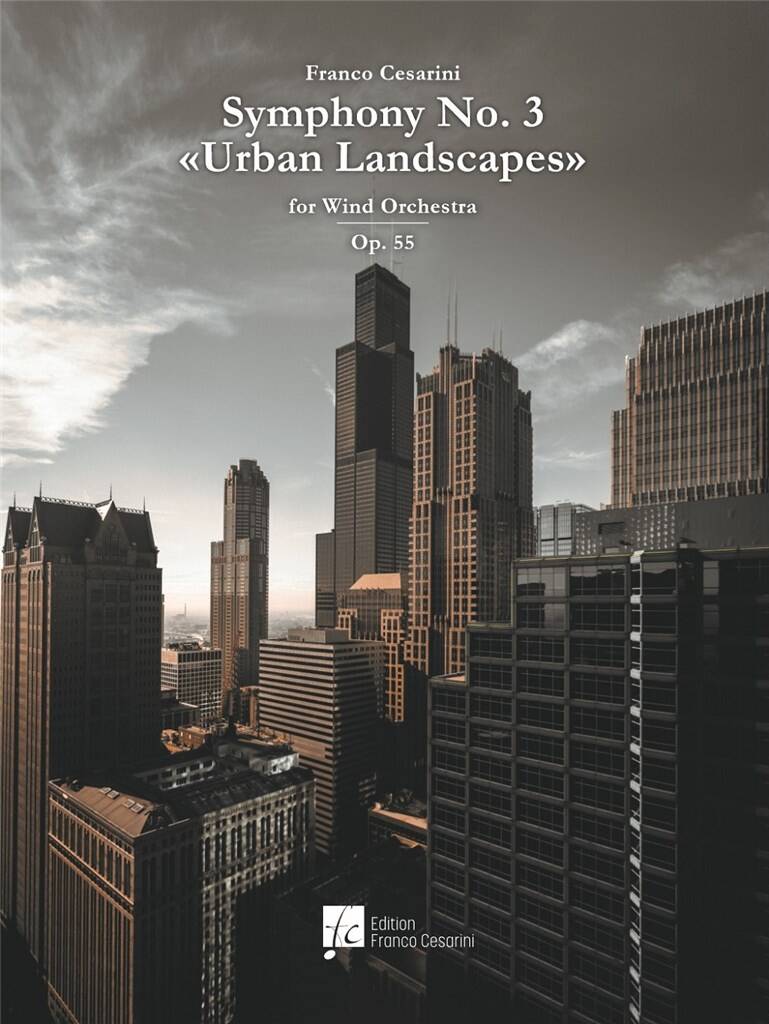
Symphony Nr. 3 Urban Landscapes Op. 55 - Franco Cesarini
Fascinated by the beauty of Chicago, Franco Cesarini has translated his emotions into music: this is how Symphony No. 3 "Urban Landscapes" Op. 55, was born, a musical portrait of this metropolis overlooking Lake Michigan. The composition is divided into three movements: The Wrigley Building from Dawn to Noon, Blue Silhouette and Cloud Gates, which by sharing the same thematic material arranged in cyclical form, strengthen the overall cohesion of the piece. The first movement, preceded by a short slow introduction in which the main theme is presented in an almost dreamlike form, metaphorically represents the city at dawn. The sudden change of time symbolizes the start of activities with all its noises and sounds: you can hear the bell that announces the closing of the subway doors, the sound of cars speeding by, the siren of a patrol car. If the first movement represents the day, the second introduces a nocturnal environment: a melancholic melody played by the English horn anticipates a more animated tempo depicting melodies coming from jazz clubs. Powerful fanfares that take up the second theme of the first movement introduce the third movement. In this finale, the role of the two themes is reversed compared to the first movement and one takes the place of the other in a kind of games of mirrors. Symphony No. 3 "Urban Landscapes" Op. 55: a sumptuous musical portrait of the "Windy City".
Estimated dispatch 7-14 working days
-
 £76.99
Off the Edge - Alex Shapiro
What happens when a composer who loves the pop music of the '80s and '90s hangs out in dance clubs blasting house music from the 2010s? Off the Edge offers a 140 bpm-thumping, EDM-jumping clue, from the wide-open mind of thecomposer who brought the band world Paper Cut and Tight Squeeze. Off the Edge will make an ensemble of any size and personnel sound like a party! To perform the piece, you'll need an audio system capable of playing the prerecordedaudio tracks from a laptop computer via a small digital audio interface connected to an audio mixer. Download information is provided in the printed piece. Dur: 3:20
Estimated dispatch 7-14 working days
-
 £244.99
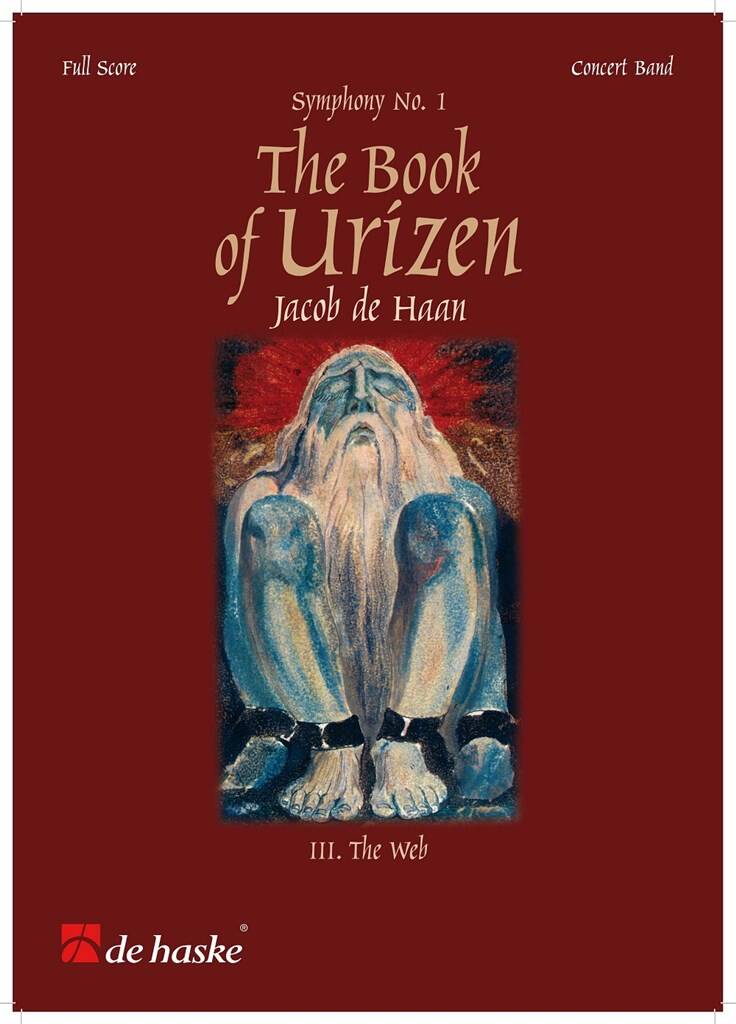
The Book of Urizen III - Jacob de Haan
The Book of Urizen is Jacob de Haan his first Symphony for concert band, solo soprano, and a male narrator in which sound collages of expressions are used. The piece is inspired by the compelling visionary poem of the samename (which the poet illustrated himself) by the Englishman William Blake (1757-1827). The Vision, first movement and The Creation, second movement of The Book of Urizen are available by following editionnumber: DHP 1043551. The Web, the third movement of The Book of Urizen is available by the following edition number: DHP 1125252. Download the audio samples from the 'Attachments'.
Estimated dispatch 7-14 working days
-
 £110.00
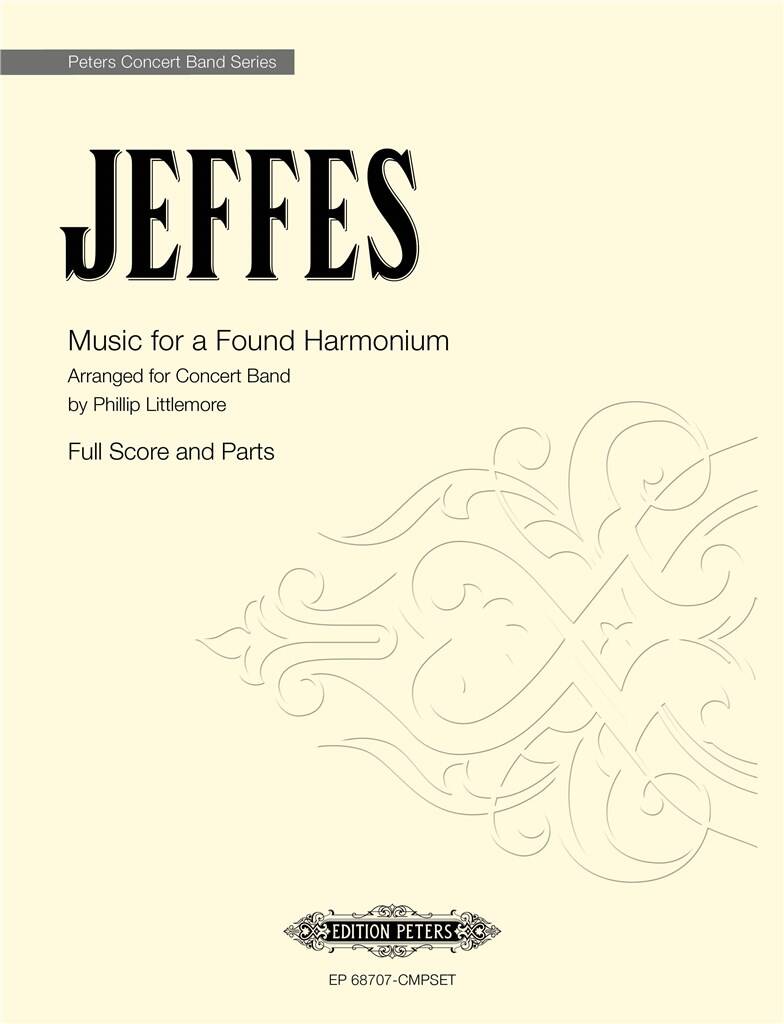
Music for a Found Harmonium - Simon Jeffes
The Penguin Cafe Orchestra, founded by Simon Jeffes, created an instantly recognisable sound world, beautifully crafted to convey simple wonder and joy. Phillip Littlemore's arrangement for concert band of their famous Music for a Found Harmonium perfectly captures the exuberance of this uplifting music. Band Grade: 4
Estimated dispatch 7-14 working days
-
 £224.99
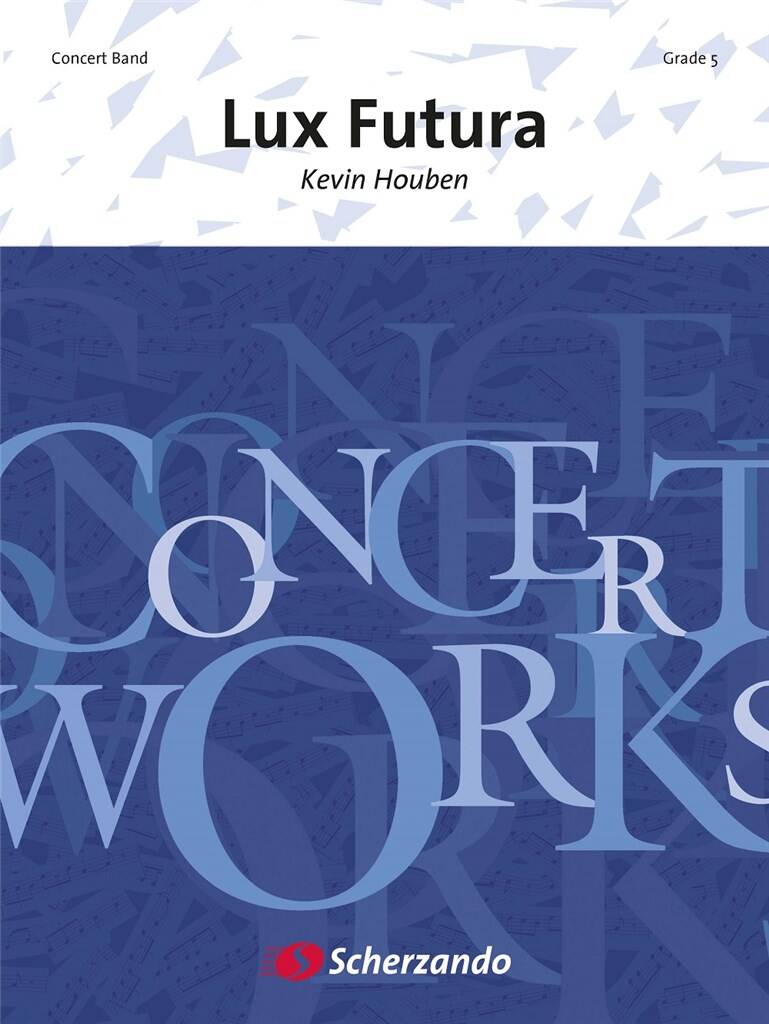
Lux Futura - Kevin Houben
Lux Futura (Light of the Future) was commissioned by the Royal Wind Orchestra Delft and is inspired by the letters 'D-E-L-F-T' using the letter notation system by Bla Bartk. In this 'Delft' cell, there is referral to the 'Trinitas', the bourdon bell of the Old Church in Delft, that only tolls during a funeral of a member of the Dutch Royal Family. The Delft melody switches to the 'Agneta March', which is a reference to the history of the Royal Wind Orchestra Delft. Further on the love theme, played by the bass instruments represents the love of the inhabitants for their city throughout space and time. In the middle movement, the beauty of the city is depicted by the coranglais (English horn) solo, as an ode to the lovely city of Delft. When performed, one can choose to use sound city samples recorded in Delft to create a truly magnificent spectacle. The three samples can be downloaded from websites www.halleonardeurope.com or www.kevinhouben.be.
Estimated dispatch 7-14 working days
 View Music