
Results
-
 £109.99
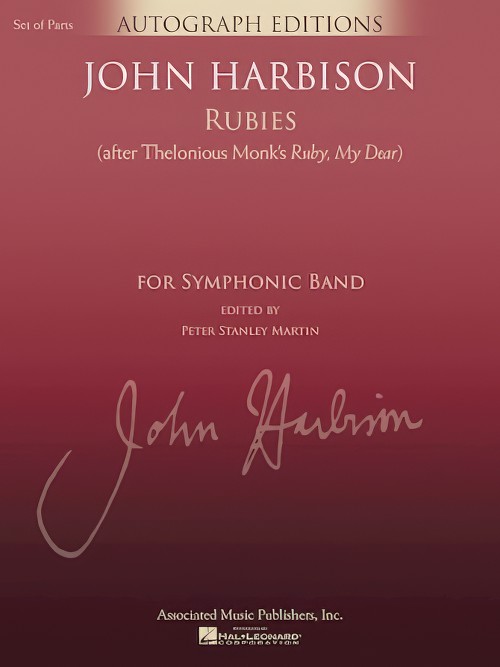
Rubies (After Thelonious Monk's Ruby, My Dear) (Concert Band - Score and Parts) - Harbison, John - Martin, Peter Stanley
Composer John Harbison writes: "Rubies is a version of Thelonious Monk's Ruby, My Dear, which he composed while still in his teens. When I was invited by the Seattle Symphony to make a short piece reflecting my first musical passions, my thoughts were of Bach and Monk. Since I had recently made some Bach-like chorale preludes, I chose to make a version of Monk's tune, first in a chamber-musical, contrapuntal manner, then in the grand orchestral style I had always heard lurking there." Duration: 5:30 (Recorded live by the Rutgers Symphony Band - Peter Stanley Martin, guest conductor)
Estimated dispatch 7-14 working days
-
 £57.50
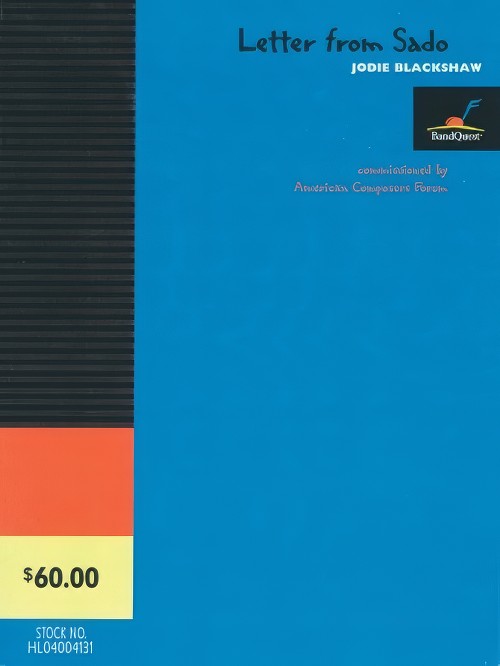
Letter from Sado (Concert Band - Score and Parts) - Blackshaw, Jodie
Letter from Sado is an exciting piece for young band designed to draw out the musicality in young players. With a focus on interpretation of an ancient haiku poem with natural imagery, performers are invited to become decision makers about specific sections in the music. Their decisions include ideas regarding tempo, dynamics and articulation in order to represent a wild stormy sea and a still starry night.
Estimated dispatch 7-14 working days
-
 £60.99
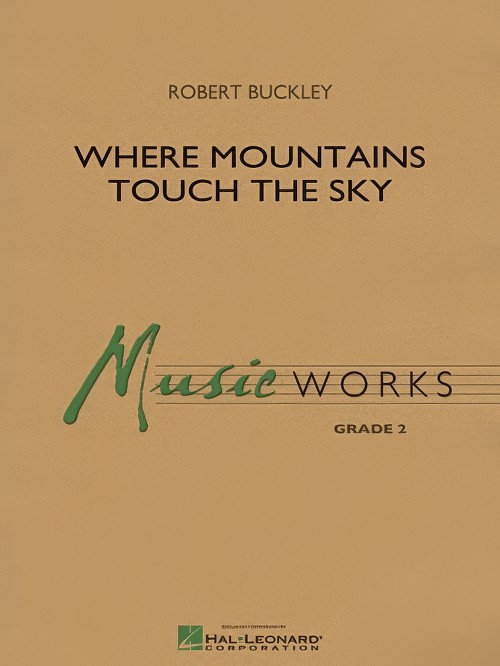
Where Mountains Touch the Sky (Concert Band - Score and Parts) - Buckley, Robert
With sensitive scoring and use of colours and textures, this descriptive piece sounds more advanced and sophisticated than its grade level would suggest. Where Mountains Touch the Sky is a tone poem inspired by springtime in the alpine meadows of British Columbia. While the lofty peaks are still covered with snow, the rivers are flowing and the meadows are coming alive with wildflowers. This lyrical work begins quietly and peacefully, building steadily to a soaring climax before returning to a soft and reverent conclusion.Duration: 3:00
Estimated dispatch 7-14 working days
-
 £60.99
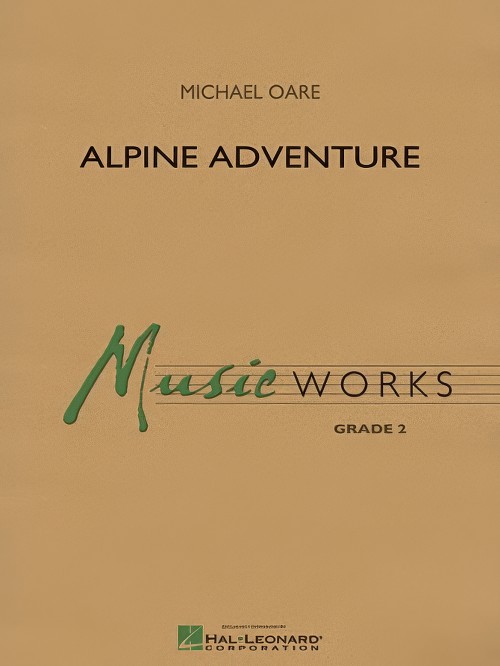
Alpine Adventure (Concert Band - Score and Parts) - Oare, Michael
Portraying the thrill and speed of alpine skiers navigating the demanding Super-G (super giant slalom) downhill course, Alpine Adventure is composed using a single fast tempo and takes the listener through a variety of stylistic moods. The opening and closing segments feature a driving, syncopated style while the middle section features a more lyric melody in 3/4, but still at the energetic, fast pace. An exciting ride for players and listeners alike.Duration: 2:40
Estimated dispatch 7-14 working days
-
 £39.99
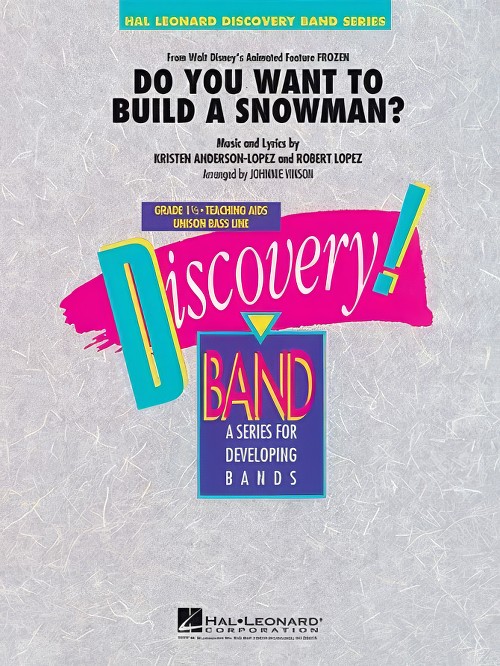
Do You Want to Build a Snowman? (from Frozen) (Concert Band - Score and Parts) - Anderson-Lopez & Lopez - Vinson, Johnnie
One of the most popular songs from the hit movie Frozen, here is a skilfully arranged version for young players that's easy to learn and still maintains all the flavour and charm of the original.
Estimated dispatch 7-14 working days
-
 £84.99
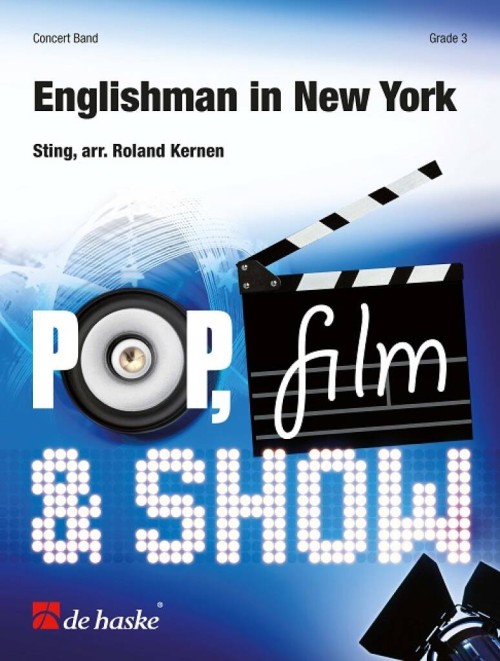
Englishman in New York (Concert Band - Score and Parts) - Sting - Kernen, Roland
Sting's song about an Englishman who lives in New York but still sees himself as an outsider became a huge hit for the singer-songwriter and has gone on to be a true classic. The central message 'Be yourself, no matter what they say' is as timeless and universal as the melody of the song, which in Roland Kernen's wind band arrangement is sure to delight your audience.Duration: 3.45
Estimated dispatch 7-14 working days
-
 £80.95
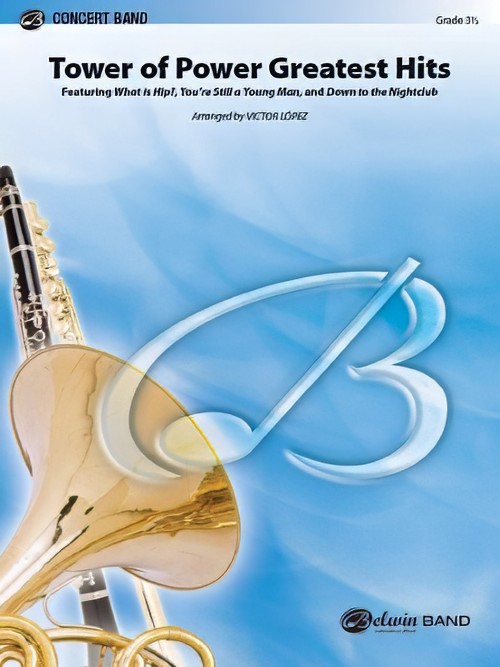
Tower of Power Greatest Hits (Concert Band - Score and Parts) - Lopez, Victor
Want to know what's hip? Well, this three-tune medley is it! Give your students and audiences a taste of some real "funky" music and don't be surprised if your audience gets up to dance. Including What Is Hip?, You're Still a Young Man, and Down to the Nightclub, this is nostalgia at its best!Duration: 5:45
Estimated dispatch 7-14 working days
-
 £69.95
Triumphant! (Concert Band - Score and Parts) - Wiffin, Rob
This vivacious and tuneful overture was written for Rob Wiffin's friends in the Chiltern Concert Band. One of the tunes is actually based on the rhythm of the names of some of the stalwart members who were in the band when Rob Wiffin conducted it in the early 1990s and are still there now.In compositional terms this piece is in the light vein of Chase the Sun and High Spirits, featuring a fanfare opening that reappears towards the end, a slow middle section and a number of bright melodies, mostly built around the interval of a third.Duration: 7.20
Estimated dispatch 7-14 working days
-
 £51.95
My Generation (Concert Band - Score and Parts) - Townshend, Peter - Wagner, Douglas E.
Written by Peter Townshend, guitarist and back-up vocalist for The Who, who are still performing this classic driving rock tune on every concert! From the 1965 album of the same name, this song has been recognized by Rolling Stone Magazine in eleventh place on their list of the "500 Greatest Songs of All Time." Good for many more generations, be sure to program this solidly scored classic tune on your next concert. Duration: 2.30
Estimated dispatch 7-14 working days
-
 £60.50
Academic Festival Overture Op.80 (Concert Band - Score and Parts) - Brahms, Johannes - Story, Michael
Although conceived as a comical academic musical representation by its renowned composer, this overture is lyrical and exciting. There are opportunities for your students to present sudden stylistic changes and tempo shifts which permit for both performance and teaching. It is still used in a variety of settings (even in its comedic intent) in films and on the more serious concert stage. This arrangement includes generous cuing to accommodate incomplete instrumentations. Classic, familiar and even humorous, it is a sure winner for your developing band.Duration: 3:45
Estimated dispatch 7-14 working days
 View Music