
Results
-
 £45.54
Joyful Is The Morning Sun (Concert Band - Score and Parts)
This exuberant and uplifting chorale by Matt Conaway will make bands of all ages sound fantastic. The melodies are simple and memorable, and the full, rich scoring will help even bands with reduced instrumentation sound warm and complete. An excellent addition to your next concert or festival program.
Estimated dispatch 7-14 working days
-
 £69.99
Patriots of Pageantry (Concert Band - Score and Parts) - Hosay, James L.
A majestic festival of sound! An ideal choice for your band's first festival experience, Patriots of Pageantry includes tutti scoring as well as call-and-response interchanges between the sections. The fanfare and procession in a stately tempo brings to mind the imperial castle guards and antiphonal brasses from high upon battlements as the noble family promenades on a joyous day of celebration. The music encourages a full sound and smooth, tasteful articulations from your young band. Resplendent!Duration: 2.45
Estimated dispatch 7-14 working days
-
 £53.95
Celtic Voyage (Concert Band - Score and Parts) - Donahue, Melanie J.
Inspired by the many hardships of the Irish immigrants, this piece brings hope of a new world, a new lease on life and a second chance. The piece begins with the sound of the ocean in the background (played by the ocean drum) while a solo flute plays the main theme. As the piece develops the theme represents several scenes: first, the knowledge that life needs to change due to the famine and hardships of the time; second, the immigrants begin their move to America; third, the arrival in America and seeing the statue of Liberty, which is the climactic moment of the piece; and finally, ending with the same idea in the beginning of the piece but now as memory and longing for Ireland.Duration: 3.30
Estimated dispatch 7-14 working days
-
 £84.50
Buffalo Dances (Concert Band - Score and Parts) - Smith, Robert W.
The lake region around Buffalo, Minnesota, is one of great geographic beauty and historic significance. Originally part of the region known as the Big Woods, the area was covered with hardwoods that were so thick in their overlapping branches, it was difficult to see the road ahead or sky above. The white elm trees grew to six feet in diameter and up to majestic heights of over one hundred feet.The Dakota People lived and prospered in this area between the lakes for 300 years. Buffalo was a favourite hunting and fishing ground for the Dakotas until the arrival of the first European fur traders and settlers. The richness of the natural resources served as a catalyst for modern development, which led to the very progressive region that continues to grow to this day.Buffalo Dances honours the natural beauty, Native-American heritage and the modern prosperity of Buffalo. Beginning with a majestic fanfare, the piece continues with flowing, Native-American inspired melodies over driving rhythmic figures. The centre of the piece is comprised of a simple original hymn song that reflects on the natural beauty of the region. Accompanied by the sounds of Native-American dance, the intensity returns. If one listens carefully the sound of snorting buffalo can be heard amid the festive atmosphere before the return of the concluding fanfare.
Estimated dispatch 7-14 working days
-
 £191.99
Sunrise at Angel's Gate (Concert Band - Score and Parts) - Sparke, Philip
This piece depicts the refined beauty of the Grand Canyon at sunrise and sunset. These are the best times to view the Canyon with the sun low in the sky casting shadows that give depth and form to the vast panorama. Angel's Gate is one of the many named rock formations in the canyon. The composer has tried to depict the sights and sounds of dawn, birdsong in the early morning sky and the gradual revelation of the Canyon itself as sunlight reaches into its rocky depths.Towards the end of the piece, to the sound of a tolling bell, we are however reminded of the dangers that the beauty of the Grand Canyon so cleverly hides.Duration: 10:40
Estimated dispatch 7-14 working days
-
 £179.99
El Golpe Fatal (Concert Band - Score and Parts) - Brosse, Dirk
With the sound of trumpets and a long drum roll Dirk Bross takes you to the splendour of the opening ceremony of a bullfight! The rhythm and the use of South American percussion instruments convey a festive atmosphere whilst broad lines and bright colours describe the solemn nature of this event. The imaginary bull is received with great acclaim with the full band playing. Two contrasting themes represent the heroic matador and the condemned bull. The audience cheers as the bull collapses and strong final chords round off the triumph of the matador. The final quiet notes give a feeling of melancholy reflecting the sad end of this story.Duration: 13:45
Estimated dispatch 7-14 working days
-
£84.99
Bread and Games Wind Band Set (Score & Parts)
Panem et Circenses', Bread and Games were essential for keeping the citizens of ancient Rome in check. While the bread was meant for the poorest among the Romans, the Games were Popular Pastime Number One for everybody.There were different kinds of games, such as chariot races (especially popular with female spectators), or wild-beast fights, where lions, tigers, bulls or bears were set on one another or even on human beings. Most popular, however, were the Gladiator fights. In 'Bread and Games' William Vean depicts one of the many fights in the antique Colosseum. 1. Entrance of the Gladiators: By powerful bugle-calls the attention of the people was asked for, after which the Gladiators entered the Arena at the sound of heroic marching-music.2.Swordfight: We can hear that the fights were not mere child's play in this part.On the contrary, they were a matter of life and death and were fought accordingly.3.Mercy of the Emperor: Sometimes a wounded gladiator could be fortunate, depending on the mercy of the audience. Waving one's handkerchief meant mercy, a turned-down thumb meant no pardon. The Emperor had the right to take the final decision, but he usually complied with the wish of the majority of the public. 4.Lap of Honour: Gladiators were mainly selected among slaves, convicted criminals, or prisoners of war. Consequently, winning was very important, as it would mean fame, honour and sometimes even wealth. A lap of honour, therefore, was the winner's due reward. 06:00
Estimated dispatch 7-14 working days
-
£137.99
Odyssee Wind Band Set (Score & Parts)
The Odyssee tells the story of Odysseus, the undaunted hero. In times long ago the blind poet Homer wrote this famous epic. The "Odyssey" follows the "Iliad", the story of the bloody war between the Greek and the Trojans. This battle ends after ten years thanks to the Odysseys famous trick. the Trojan Horse. The Odyssey is not a war epic, but a story about perseverance, loyalty, adventure, and the survival instinct of its ingenious hero. In The Odyssey, Homer describes how Odysseus, the king of Ithaca, had to endure another ten years of affliction after the ten years of war in Troy before he could finally return to his home land. During those years, his wife, Penelope, had to try and keep her many admirers away. These men not only wanted het hand but also the kingship. To prove her husbands worth, she played a trick: "As soon as I have finished weaving this shroud for my father-in-law, Laertes, I will choose one of you to become my husband", she promised them. But during the night, she secretly loosened what she had woven during the day, prolonging the time until Odysseus would finally return. After twenty long years, when he finally stood at the door, she wondered: Is this really my husband? Is he an imposter? Cunningly, she asked him to move the bed, because only she and her husband know that the bed was immovable and was build around an old three trunk! Odysseus was deeply moved: this really was his wife, his Penelope! Nearly three thousands years later, the loyalty and strength of this character, and all the dangerous adventures that Odysseus survived thanks to courage and intelligence, still moves us today. Odyssee by Jan Bosveld is not just an adventure story, but rather a characteristic piece in which memories of Homers story can be heard. The composition opens with a firm, stirring theme describing our hero, Odysseus, in detail: This man is not to be taken lightly. The further development of this short introduction completes this character sketch: trustworthy, perseverant, and a genius. After that we can picture Odysseus on the lonely beach of Ogygia. Do the trumpets depict his memories of the war of Troy? Does he think of his wife, as we recognise the weaving loom of Penelope in the murmuring eighth? In the solemn, plaintive part that follows, we can imagine Penelope feeling lonely, sitting in the womens room with her servants.One of the girls plays the harp, but that does not clear the sombre atmosphere. Then we can imagine seeing the sorceress Circe, who changed Odysseus men into swine. After she gives a simple magic sign something follows that reminds us of the sound of pigs grunting. Then the Odysseus theme resounds: the hero comes to savi his comrades. Assisted by Hermes, he forces Circe to lift the spell. The piece ends the same way as it began, with an animated theme: Odysseus is still the same, undefeated and not to be taken lighty! 07:45
Estimated dispatch 7-14 working days
-
 £57.50
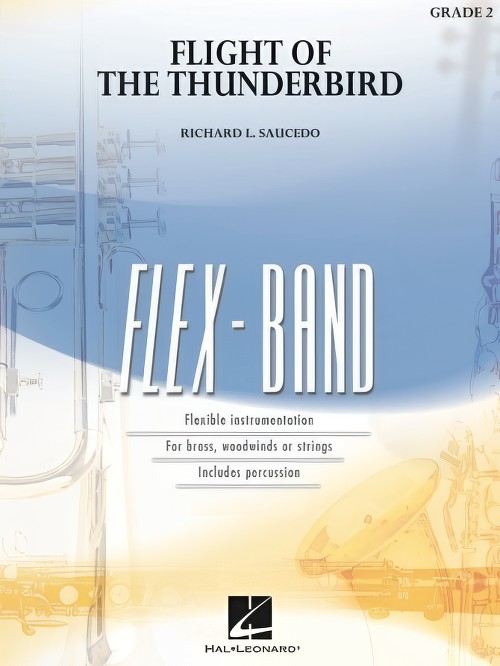
Flight of the Thunderbird (Flexible Ensemble - Score and Parts) - Saucedo, Richard L.
First published in 2004, Richard Saucedo's Flight of the Thunderbird has remained a popular choice for contest and festival for younger players. Skilfully scored in this new edition for flexible instrumentation, this exciting work in one tempo will sound great with an ensemble of any size.
Estimated dispatch 7-14 working days
-
 £50.50
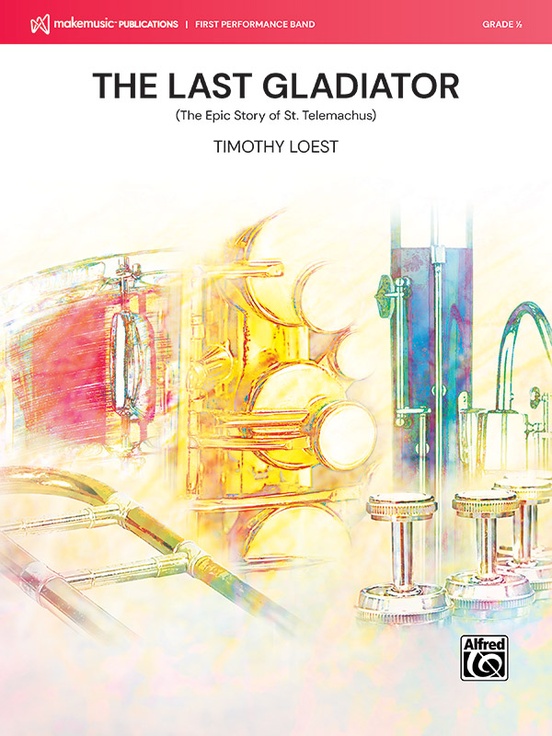
The Last Gladiator (Concert Band - Score and Parts) - Loest, Timothy
The Epic Story of St. TelemachusExperience the brutal energy of the Roman Colosseum in this larger-than-life work by Timothy Loest. Heart-pounding drums and sword-clashing sound effects tell the heroic story of St. Telemachus, a frail monk whose bravery brought the gladiatorial games to an end. Exhilarating and epic, The Last Gladiator will absolutely be a student and audience favourite!Duration: 1.00
Estimated dispatch 7-14 working days
 View Music