
Results
-
 £248.99
Three Movements - André Waignein
These three movements for piano and band depict three stages of a musical journey. We set off on a long journey through the world of musical virtuosity in the style of Liszt : grand, lustrous and lyrical. The second stage is a peaceful stroll, the start of a dream. The colours are like a tender caress and the piano sketches transparent arabesques. This splendid impressionistic journey ends in two bright pink drops which evapore just in time before the third and last movement explodes.The last movement is driven forward by a raging rhythm, as relentless as a war-dance. In a confrontation between the soloist and the orchestra all the inner strength of the composer comes to thesurface so that the musicians in the end are breathless... but all the same, no less satisfied.
Estimated dispatch 7-14 working days
-
 £137.99
An English Sea Song Suite - Philip Sparke
The four tunes used in this suite have been made universally popular in Sir Henry Wood?s Fantasia on British Sea Songs, which is an ever-present ingredient in The Last Night of the Proms.He introduced this colourful suite into the Proms in 1905,to celebrate the centenary of Nelson?s brilliant victory at Trafalgar, when ?Britannia? really did ?rule the waves?. Bring the excitement of The Last Night of The Proms to any concert with this stirring new edition.
Estimated dispatch 7-14 working days
-
£332.99
Tales & Legends - Etienne Crausaz
This three-movement work by the Swiss composer Etienne Crausaz reflects three true stories and fascinating legends from the Middle Ages. The first movement tells the dramatic story of the 'witch' Catherine 'Catillon' Repond (1662-1731). She was the last woman ever to be executed for sorcery. In the second movement, the famous court jester Girard Chalamala occupies centre stage. This jester, the last one at the castle of Count Greyerz, could make everyone laugh. The third movement tells the story of Count Michael. He went down in history as a spendthrift bon-vivant. His burden of debt became so high that he did a moonlight flit and never came back!
Estimated dispatch 7-14 working days
-
 £179.99
Spartacus - Jan Van der Roost
Spartacus is a "Symphonic Tone Poem" with 3 joints. Each section has its own melodical materials, however: in the final movement the main theme from the second section returns in a 'grandioso'-tutti. The last bar but one recaptures the 'oriental' atmosphere of the very beginning. The first section (= from the beginning till J) builds up a climax by repeating and accumulating some melodical and rhythmical stuctures. The oriental character of the melodical fragments refers to the origin of the Roman slaves. The second section evokes the love between Spartacus and his loveby giving a peaceful atmosphere. The mean theme (presented the first time at letter L) has a broad andwide character and refers slightly to filmmusic. In this part of the composition, a special attention is given to the orchestration. The final section is more agressive and martial and refers to the revolt of the slaves against the Roman oppressors. In the middle of this movement, an accumulation of the 12 tones symbolizes the crucifixion of the slaves: the english horn resumes partly the cadenza of the flute (at letter J), as if he wants to show again the eternal love between Spartacus and his love a very last time ... The theme at the third bar of letter T is actually based on the 2nd theme of this section (which starts at the fifth bar of letter R), but has been worked out rhytmically.
Estimated dispatch 7-14 working days
-
 £149.99
Jericho - Bert Appermont
Jericho is the musical translation of the well-known story from the book of Joshua about the capture of the city of Jericho by the Israelites.Part 1 depicts the cruel journey through the desert to Canaan, the promised land. An emotional lamentation for the yearning for a home, for the end of a roaming existence.The capture of Jericho is the theme of part 2. The city cannot be captured immediately and Jehovah orders an impressive army to march around the city for six days. On the seventh day, they marched around the city seven times and the priests blew their trumpets and the people cried so loud that the walls of Jericho came tumbling down. The Jews stormed the city and drove theinhabitants away. The music clearly reveals the marching army and you can hear the walls falling down with a tremendous noise. However, there is quite some artistic freedom in the actual story.A majestic and grand melody subsequently evokes the triumphant emotions that emerged as the fortified city fell (part 3).Following a personal and romantic interpretation, the scene ultimately ends in a typical Jewish feast (part 4) whereby the virtuosity of melodies played by the woodwinds and the passionate rhythms refer to traditional Jewish music. All themes are repeated in this last part in various forms, often simultaneous and in duelling counterpoint. The piece ends with fragments from the main theme of part 1 in major: peace and quiet return at last.
Estimated dispatch 7-14 working days
-
 £159.99
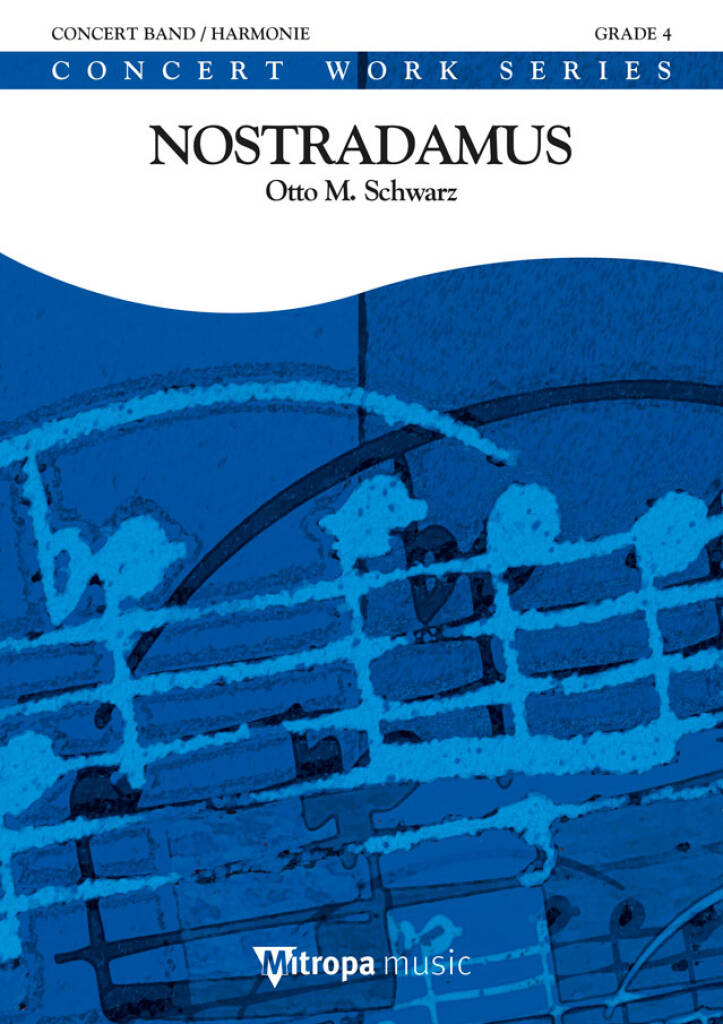
Nostradamus - Otto M. Schwarz
Nostradamus is probably the best-known prophet of the last 1000 years. He lived at the time of the Inquisition and his predictions and medical therapies as a physician caused him to face the wrath of the church forcing him to flee many times. Following the loss of his family to the plague he devoted himself to clairvoyancy. He predicted many events in history in coded form and although there are many ways to interpret these, many are believed to be accurate and Nostradamus is still considered to be a unique personality. Whether he is denounced as a charlatan or promoted as a myth he has surely moved humankind with his prophecies.Otto M. Schwarz, soundtrack composer since2001, wrote a cinematographic work about this man, who is probably the best-known prohet of the last 1000 years.
Estimated dispatch 7-14 working days
-
 £66.95
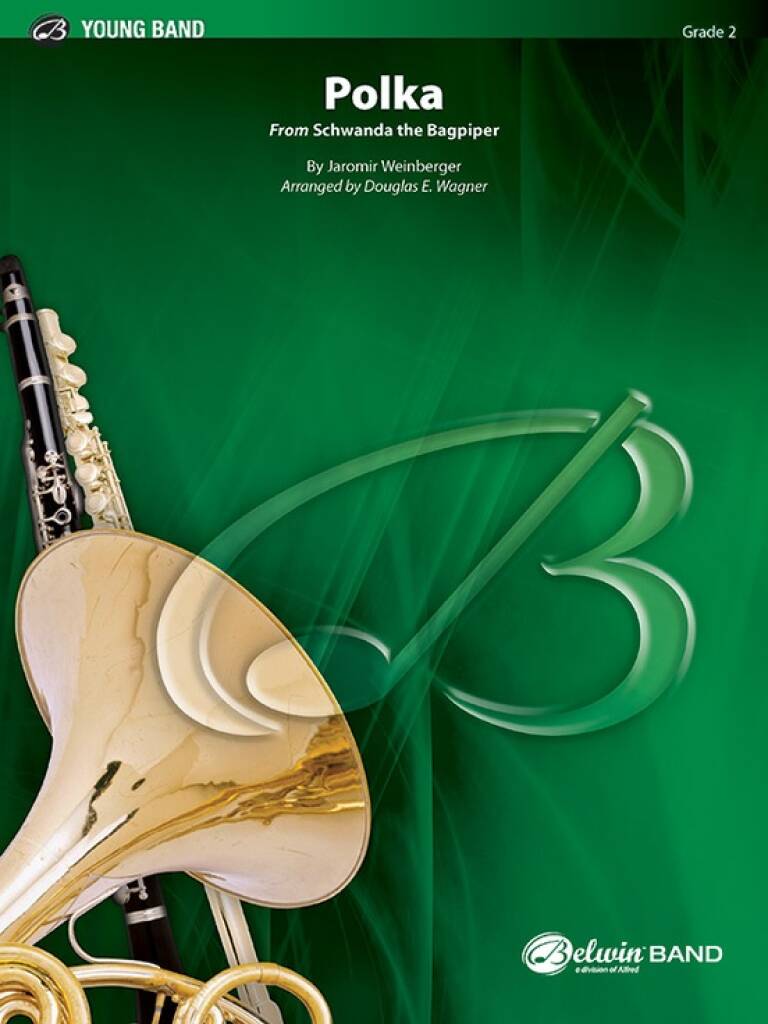
Polka: From Schwanda the Bagpiper - Douglas E. Wagner
A true classic of the concert band repertoire, the upper-end transcription of this excerpt from Czech composer Jaromr Weinberger's folk opera Schwanda the Bagpiper has appeared on countless concert programs and contest lists for the past nine decades. At long last, this cheerful work is available in a solid scoring for younger players, expanding its appeal to many more ensembles and audiences. Arranged from the original orchestral score, all parameters of this level have been observed for ease of preparation. (2:00)
Estimated dispatch 7-14 working days
-
 £73.50
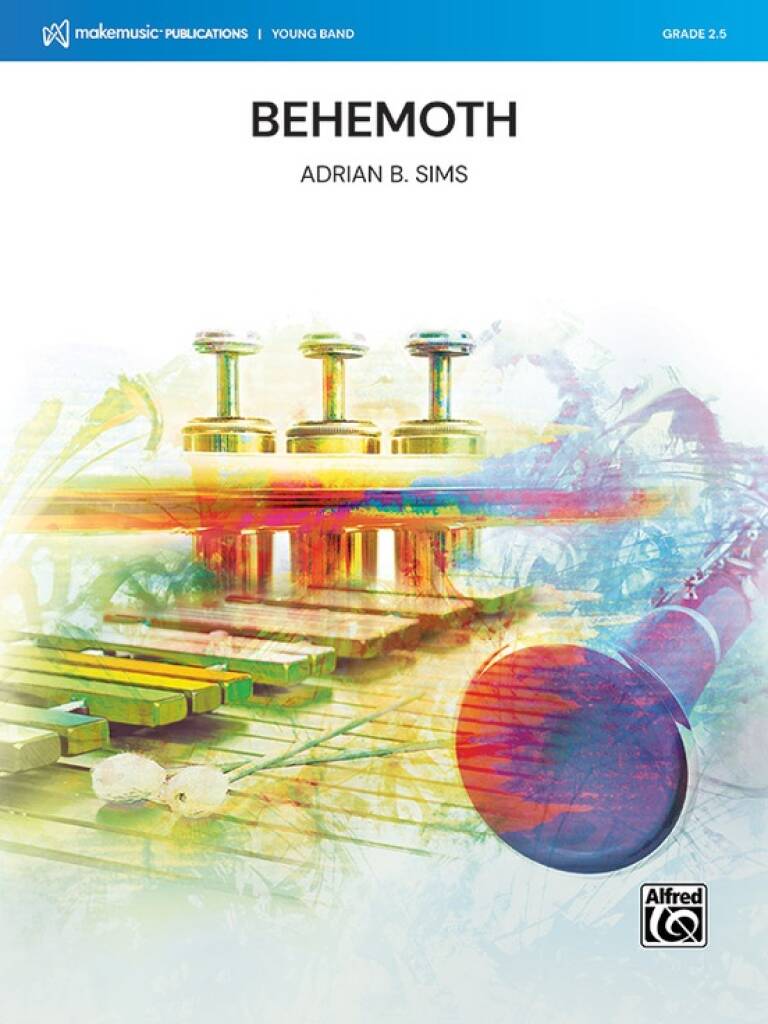
Behemoth - Adrian B. Sims
This ominous soundtrack underscores an adventurer's search and eventual battle with a large, monstrous creature. From the opening distant lines to moments of pure adrenaline and raw power, Behemoth constantly embraces danger before a heroic last stand results in victory. An amazing and intense work by Adrian B. Sims! (3:00)
Estimated dispatch 7-14 working days
-
 £244.00
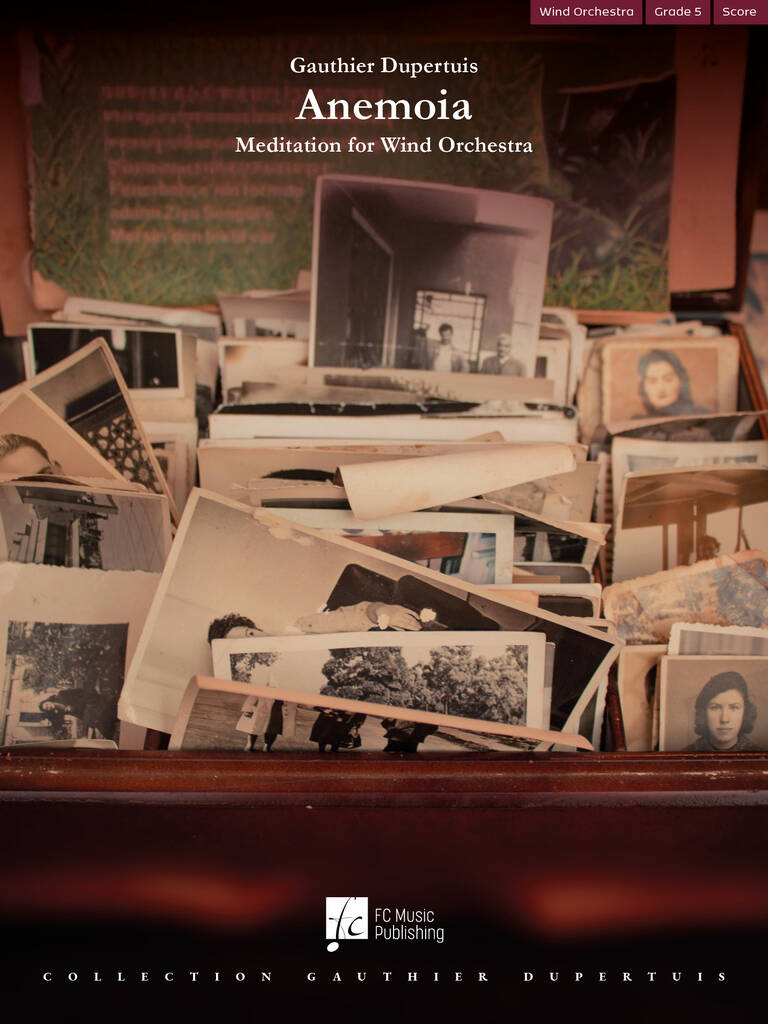
Anemoia - Gauthier Dupertuis
Gauthier Dupertuis wrote Anemoia as part of his master's thesis at the Lausanne University of Music. It is dedicated to the most significant figure in his musical life: his teacher Jean-Claude Kolly.Anemoia is the name given to the feeling of nostalgia that one feels for a time that has never known. This emotion often translates into the uneasy sensation of having lost something important or of not living at the right place or time. Fascinated by this concept, Gauthier Dupertuis tried to translate it into music oscillating between exaltation, anguish and nostalgia.The piece is formed by two movements: (Un)desired sorrow and Behind the glass of time. The first movement initially evokes the feeling of unease one feels when suddenly struck by anemoia. It then evolves into majestic atmospheres, marking our admiration for times gone by. The second movement treats anemoia in a more melancholic way.The premiere took place on 6th December 2024, during Jean-Claude Kolly's last concert as a conductor of the Concordia de Fribourg, marking thirty years spent conducting this wind orchestra.
Estimated dispatch 7-14 working days
-
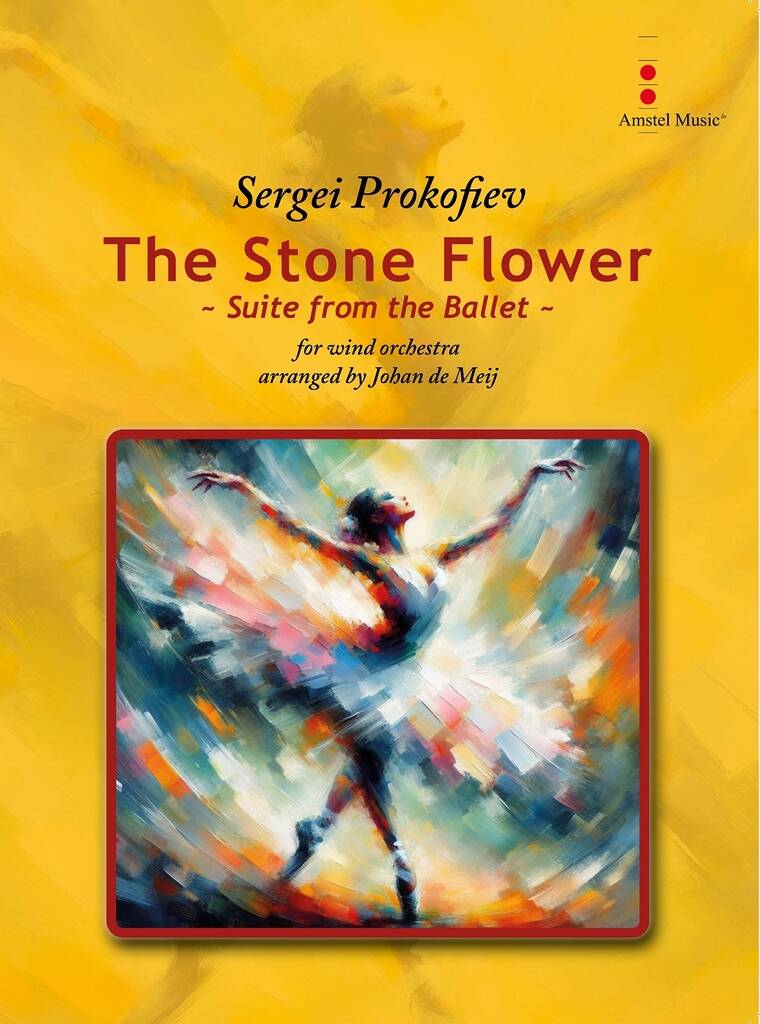 £179.99
The Stone Flower - Serge Prokofieff
Sergei Prokofiev's The Stone Flower (opus 118) is his eighth and last ballet, composed between 1948 and 1950. His most famous ballets are Romeo and Juliet, Cinderella and Le Pas d'Acier.The Stone Flower is based on a Russian folk tale from the Ural Mountains. The premiere of the work took place in 1954, one year- after the dead of the composer. The ballet's storyline, rich with myth and legend, is set against the backdrop of the mystical Ural Mountains and centers on themes of love, artistry, and the conflict between material wealth and spiritual fulfillment.In 1951, Prokofiev arranged five movements from the ballet which were later published as the Wedding Suite (opus 126). The movements are:I. Amorous DanceII. Dance of the fiance's girlfriendsIII. Maiden's DanceIV. Ceremonial DanceV. Wedding Dance
Estimated dispatch 7-14 working days
 View Music