
Results
-
 £84.99
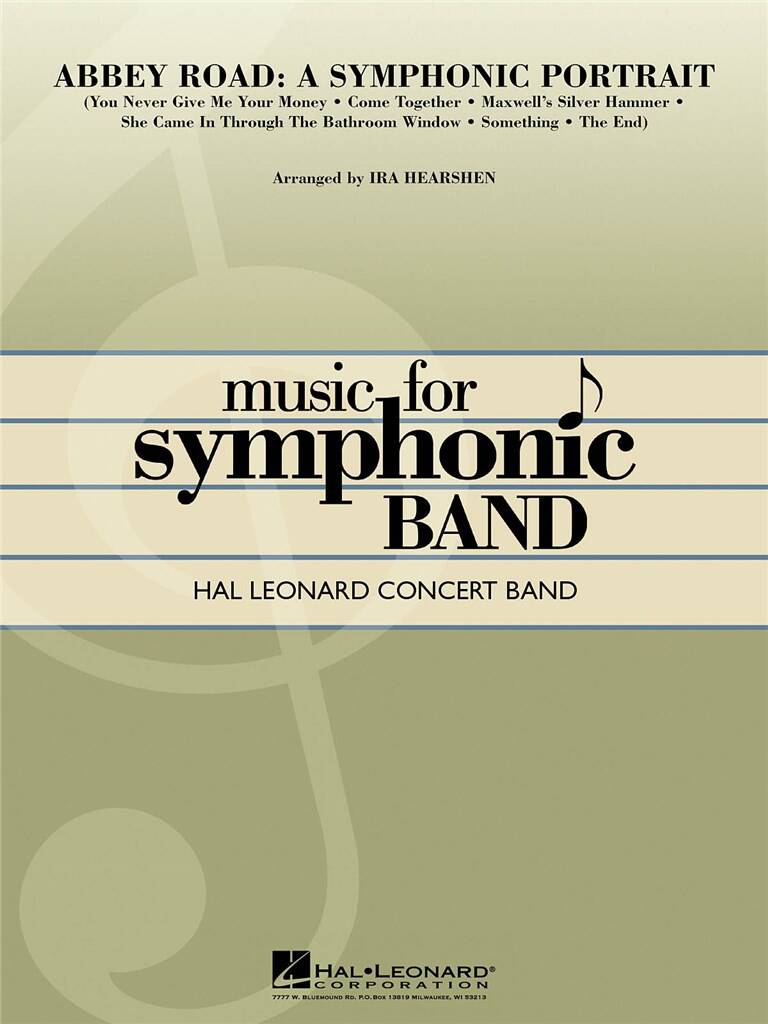
Abbey Road - A Symphonic Portrait
The Beatles' landmark album Abbey Road was the last one recorded by the band and is considered by many to be their best. This dynamic and creative setting for band includes: Come Together, Something, Maxwell's Silver Hammer, SheCame in Through the Bathroom Window, You Never Give Me Your Money and The End. Sure to become a classic!
Estimated dispatch 7-14 working days
-
 £137.99
Bilbo the Hobbit - Maxime Aulio
Originally written by the great English writer J.R.R. Tolkien (1892-1973), The Lord of the Rings has encountered new-found popularity recently with the release of three ?huge-hit? motion pictures. With Bilbo the Hobbit we enter the lands of Middle-earth during the Third Age, some decades before The Lord of the Rings trilogy. Fascinated by the works of the masters of film music, Maxime Aulio structured this work in their way. When the end credits roll, Maxime?s music displays all the basic characters and passages of the novel. From the landscapes of the Shire to Middle-earth, the Great Dragons to Gandalf the Wizard, Bilbo Baggins tells us his story through light and virtuosoarabesques in the solo part. Bilbo the Hobbit is a wonderful addition to the french horn repertoire and one to be a sure-fire hit with horn players everywhere.
Estimated dispatch 7-14 working days
-
 £84.99
Kein Schner Land - Gerald Oswald
Kein schner Land is surely one of the best-known of all German folk songs. The song recounts the story of a group of friends who spend a happy evening singing.The arrangement by Gerald Oswald begins with an evening mood, followed then by the theme in various instruments and in different forms. After a grandioso, the composition returns to the evening mood. Kein schner Land is a timeless folk song that we still take to our hearts even today.
Estimated dispatch 7-14 working days
-
£84.99
Railroad Ramble - Peter Kleine Schaars
This composition was commissioned by the Concert Band of the NS (the Dutch railroad company) and is intended as an opening piece, bringing the band and the audience on track for an exciting concert! The ascending chords over theostinato bass of the introduction represent the energetic pulling away of the train. The main theme in 10/8 time makes one drift away in the rhythm of full speed. The clownish middle section reflects the seemingly disorderlyactivity in a station hall during rush hour. This is followed by a reprise of the main theme and the introduction, which brings this fascinating musical rail journey to an end.
Estimated dispatch 7-14 working days
-
 £85.50
The Chimes of Liberty - Goldman
One of the best known marches by march master Goldman in a brilliant arrangement by Loras Schissel. Perfect as a contest march for better school bands and not simplified in any way.
Estimated dispatch 7-14 working days
-
 £84.99
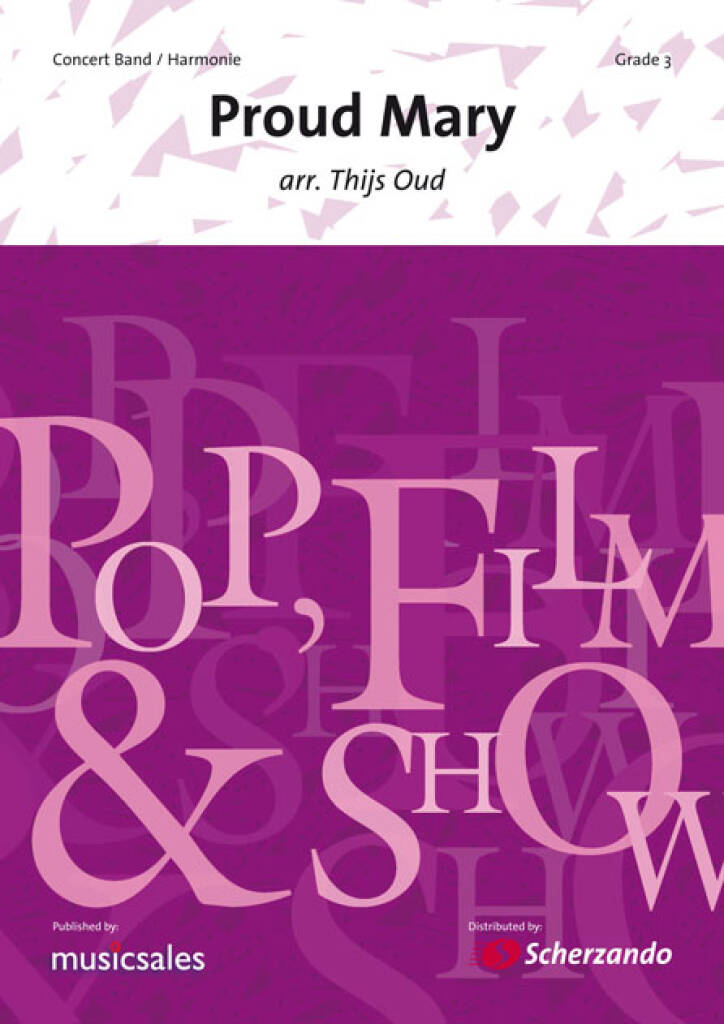
Proud Mary
At the end of the 1960s the group Creedence Clearwater Revival wrote many successful numbers, many of which were covered by various artists. Proud Mary - one of their best known songs was covered many times and this arrangement by Thijs Oud is based on Tina Turner's performance. For the musicians this is a fantastic piece to play. Each section has a challenging, yet satisfying part. For the audience this well-known and stirring number is a smash!
Estimated dispatch 7-14 working days
-
 £137.99
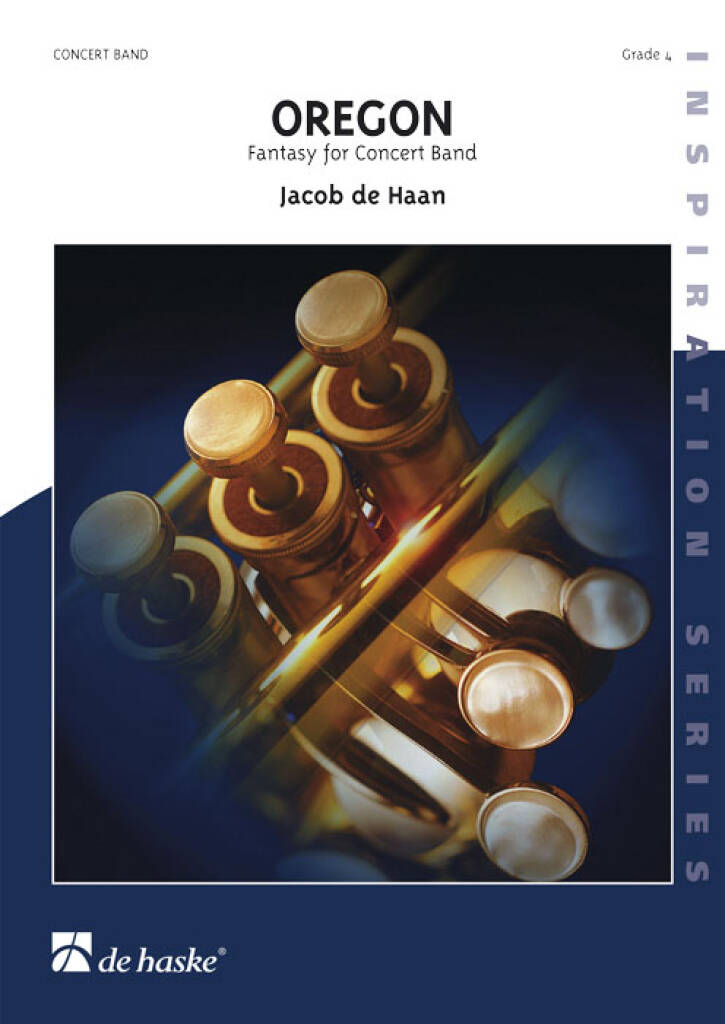
Oregon - Jacob de Haan
This fantasy tells the story of Oregon, one of America's north-western states. Traveling by train on the Northern Pacific Railroad, the listener is taken through the fascinating Oregon landscape. Indians, cowboys, golddiggers and hooded wagons will file past on this adventurous journey. The piece has some similarities with a soundtrack of a movie. Various melodies, which could be the main themes of a movie, pass the review.The piece begins in a slow movement, introducing the first theme in minor. Then we hear in the following fast movement the trombones imitate the train, whistling the steam-flute. We hear the characteristic minor theme again, but now in different variants(also in major). The rythmic structure of "western" stile and rock succeed each other. This is leading to the slow movement, where the signals of horns and trumpets introduce a wonderful vocal melody. After this characteristic melody, the fast movement appears shortly again, the trombones whistling the steam-flute again (now in major). We hear also some musical elements, that plays a part in the following Presto. Barchanges, jazzy chords, interesting rhytmic patterns (with bongo) and an original theme are the characteristics of this Presto. After this, the horns announce the last section of the piece. Interesting is the fact that we hear in this Allegro section a variant of the vocal melody in the slow movement. Also the Presto theme returns shortly, followed by the Allargando, which is a grand characteristic end of a soundtrack. The movie of our travelling fantasy has come to an end.
Estimated dispatch 7-14 working days
-
 £137.99
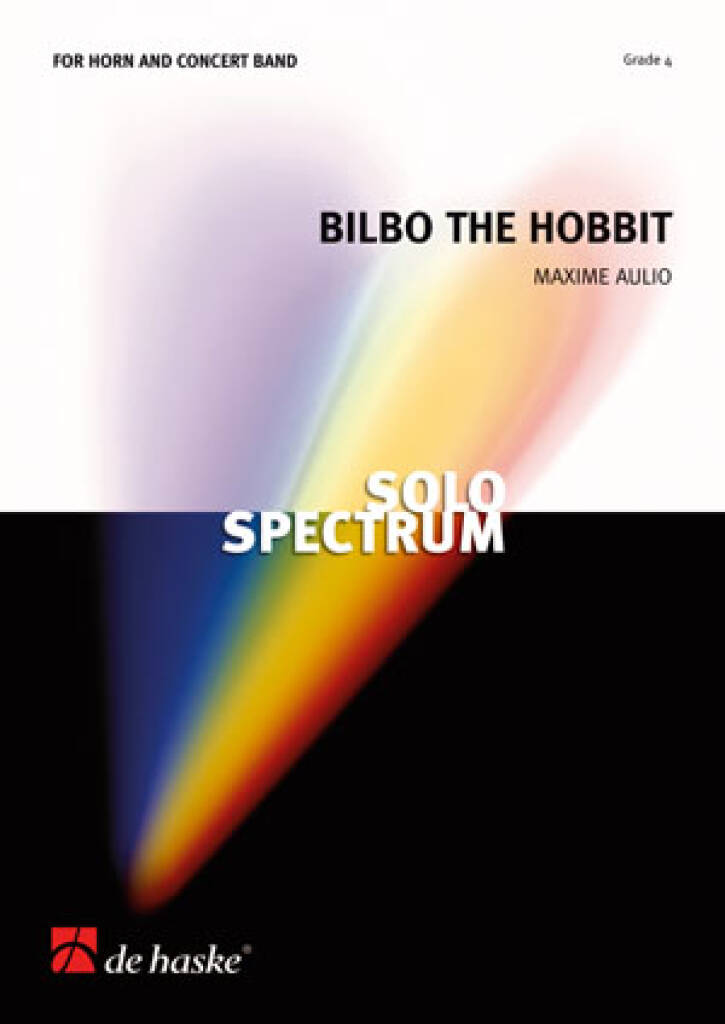
Bilbo the Hobbit
Originally written by the great English writer J.R.R. Tolkien (1892-1973), The Lord of the Rings has encountered new-found popularity recently with the release of three ?huge-hit? motion pictures. With Bilbo the Hobbit we enter the lands of Middle-earth during the Third Age, some decades before The Lord of the Rings trilogy. Fascinated by the works of the masters of film music, Maxime Aulio structured this work in their way. When the end credits roll, Maxime?s music displays all the basic characters and passages of the novel. From the landscapes of the Shire to Middle-earth, the Great Dragons to Gandalf the Wizard, Bilbo Baggins tells us his story through light and virtuosoarabesques in the solo part. Bilbo the Hobbit is a wonderful addition to the french horn repertoire and one to be a sure-fire hit with horn players everywhere.
Estimated dispatch 7-14 working days
-
 £64.99
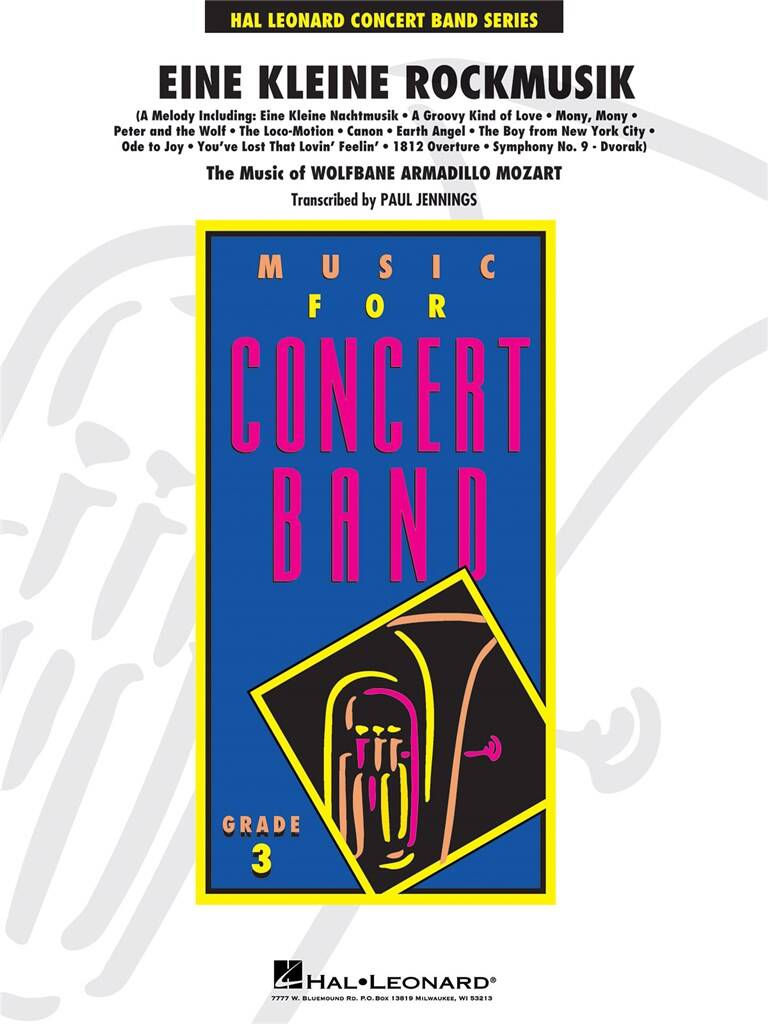
Eine Kleine Rockmusik - Wolfgang Amadeus Mozart
By the time the Mozart family tree had blossomed into the twentieth century, there was very little genius left in the bloodline. Unfortunately, though, at least one unscrupulous descendant, Wolfbane Amarillo Mozart, decided to capitalize on the family name by becoming a rock and roll composer. His only real talent seems to be plagarism, but your students and audiences will have a ball unraveling his zany conconction.
Estimated dispatch 7-14 working days
-
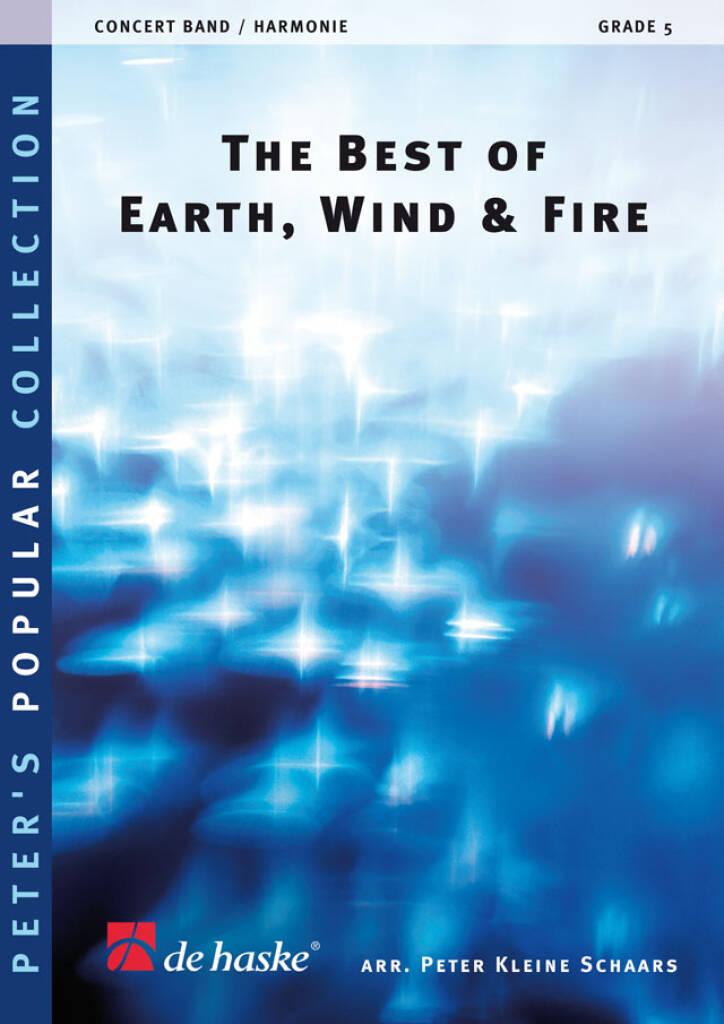 £118.99
The Best of Earth, Wind & Fire
Earth, Wind & Fire was formed by jazz drummer Maurice White, whose aim was to mix various music styles to produce a unique sound. Combined with excellent song writing and fine performances this sound made Earth, Wind & Fire one of the most influential soul groups of the seventies. In subsequent decades they experienced varying success but this medley reflects the heyday of this legendary group. In his job as staff arranger with the Royal Marine Band of the Dutch Navy, Peter Kleine Schaars wrote many top class arrangements. The talent of the musicians in the band made it possible to write in such a way that they closelyresembled the original works. Consequently this medley shines just like the original versions by Earth, Wind & Fire. Four famous songs have been used: 'In the Stone', 'Got to Get You into My Life', 'After the Love Has Gone' and 'September'.
Estimated dispatch 7-14 working days
 View Music