
Results
-
 £72.95
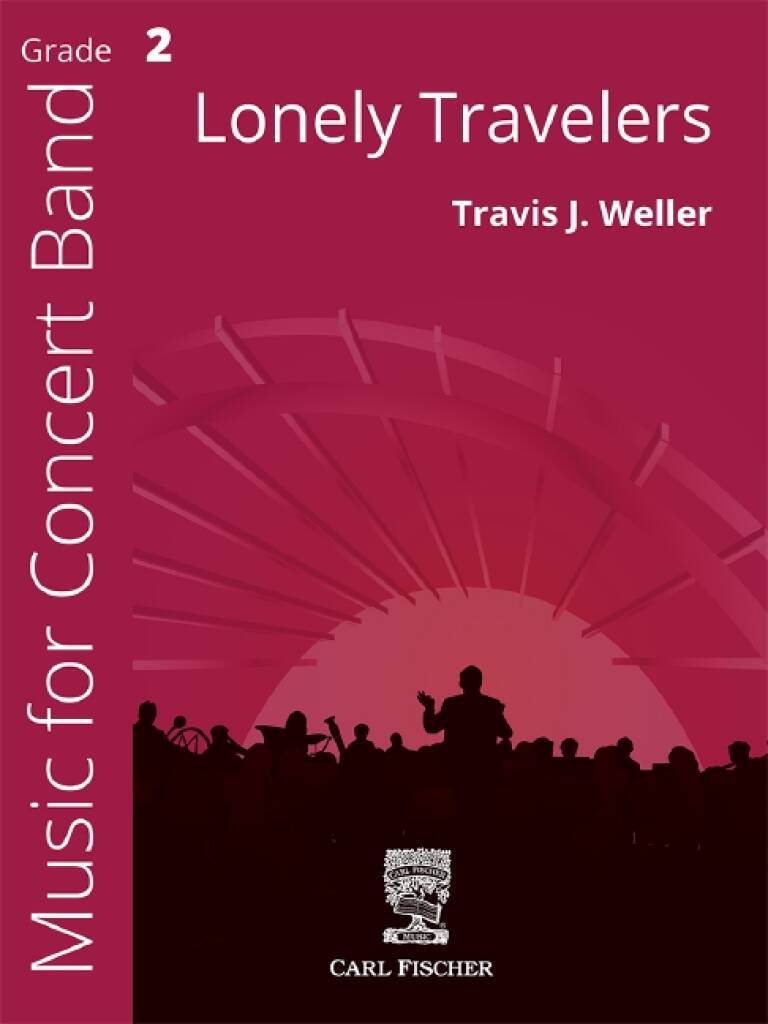
Lonely Travelers - Travis Weller
Layering two songs which speak to the idea of searching for something beyond your current situation, this is an excellent piece for teaching an ensemble to blend so they can hear each other and not be individually heard. Using 900 Miles and The Wayfaring Stranger for compositional material, thematic elements from both are interwoven into the overall musical fabric. 900 Miles' lonely railroad worker is heard in woodwind train whistle effects and the homesickness of The Wayfaring Stranger, as heard in the movie "1917", is effectively portrayed by a moving treatment using long tones with a continuing rhythmic accompaniment. A strong concert, contest or festival choice, this work offers cross-curricular opportunities as well.
Estimated dispatch 7-14 working days
-
£84.50
March in The Shadows - Ed Kiefer
If you are looking for a different type of march to play this coming year, look no further. Here is a serious, yet quirky little march from composer Ed Kiefer for young bands. Beginning very quietly and in a minor key, it reminded the composer of something lurking in the shadows, hence the title. We know your students will like it.
Estimated dispatch 7-14 working days
-
 £89.95
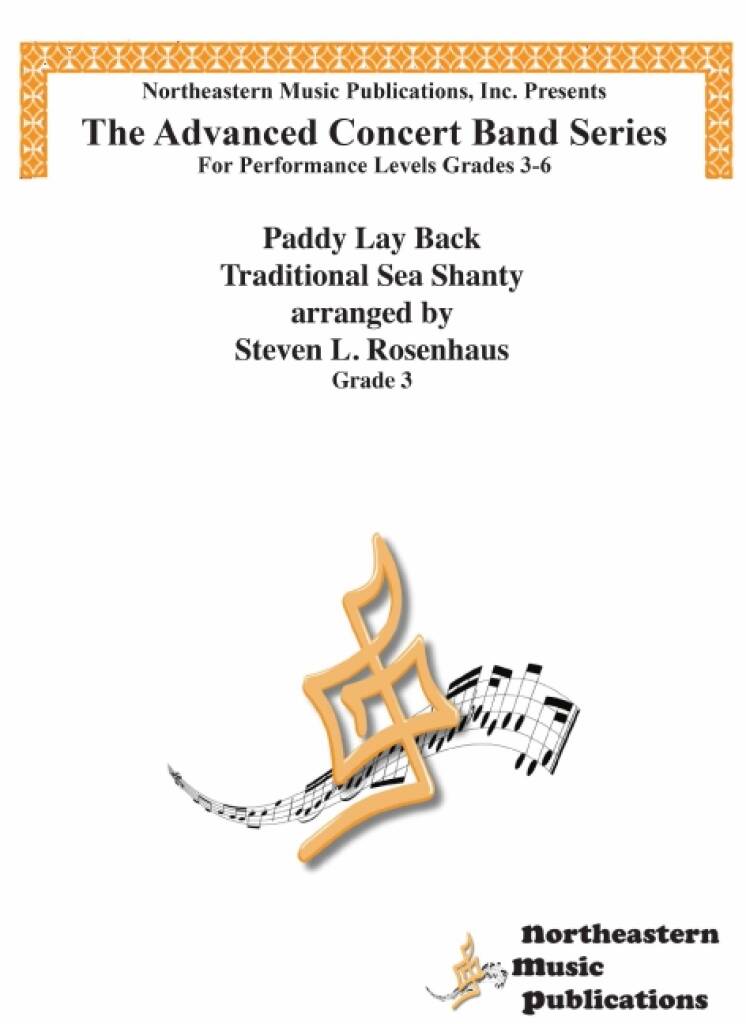
Paddy Lay Back
Sea shanties (or chanties) are songs sung by sailors to keep them synchronized (and mentally interested) while doing the hard labor of sailing. "Paddy Lay Back" is a capstan shanty, a capstan being a vertically-axled rotating machine used to raise and lower a ship's anchor. Sailors would rotate the capstan by pushing poles radiating from it, with three or four men working a pole. The song would help them keep momentum; if not, something could slip. Not only would the anchor drop uncontrolled, but the capstan would spin quickly and the poles could throw and harm the sailors. 1st trumpet's highest note is G. 1st & 2nd clarinets cross the break
Estimated dispatch 7-14 working days
-
Fragile Oasis - Peter Meechan
Fragile Oasis is the name of a collective who describe themselves as "...a grass-roots participatory initiative that connects the shared perspective of astronauts from different countries and cultures with people on Earth, encouraging all to work together so that our planet is not only visibly beautiful, but beautiful for all".Many involved in the project are astronauts on the International Space Station (I.S.S.), who post, on their website (http://www.fragileoasis.org) many different details of their experiments, photos from space, and some incredible video footage of our Earth.One such time lapse video (a video made up many still images) was posted on their website by astronaut Ron Garan (http://www.fragileoasis.org/blog/2011/11/coming-back-down-to-our-fragile-oasis-2/) in 2011. It is made up of images taken from the I.S.S. of what Garan described as "...a couple of laps around our Fragile Oasis before coming back down [to Earth]" and features all kinds of amazing views from space.Each of the five sections of this work relate to an aspect of the video - either something literal or something more metaphorical. The opening section, i: The lights from Above, is a musical description of the view of the Aurora Australis from above the lights. The second section, ii: The Storm from Above (part i), is also a musical portrayal of portions of the video clip - in this case the many lightning storms we see from above. The storms that are so powerful on Earth appear as small bolts of electricity dancing through the clouds.The third section, iii: Freya, has its roots in personal family tragedy. The name Freya derives from a Norse goddess who was associated with both beauty and love, and in this central section I wanted to write music that not only acknowledged how fragile life itself is, but that every day of it counts and should be celebrated.iv: The Storm from Above (part ii) is a again a reference to the lightning storms, but also to the huge hurricanes we see in the video. It leads us to the final section, v: The Oasis from Above - a description of the size and grandeur of Earth, our Fragile Oasis.Fragile Oasis is dedicated to Natalie Youson, in friendship.The original wind orchestra scoring was completed in 2014, and was revised in 2017 with the editorial advice of Robert Ambrose whose support of this work I am eternally grateful for.This wind orchestra scoring was completed in 2014 and was commissioned by a consortium of the following bands:Agrupacin Msico-Cultural "Las Musas" de Guadalupe (Murcia) - Dr. Jos Ibez Barrachina - SpainBand of the Coldstream Guards - Major Darren Wolfendale - UKBorge Musikkorps - Sverre Stakston Olsrud - NorwayThe Brooklyn Wind Symphony - Jeff W. Ball, Artistic Director - USADunshan Symphonic Wind Orchestra - Adrian Schneider - ChinaKoninklijke harmonie Ste. Cecilia Zele - Bart Picqueur - BelgiumMusikgesellschaft Emmen - Manuel Imhof - SwitzerlandUniversity of Saskatchewan Wind Orchestra - Dr. Darrin Oehlerking - Canada
Estimated dispatch 5-14 working days
-
£69.95
Toccata - Score and Parts - Wilfred Heaton
Program NotesToccata - Oh the blessed Lord was first conceived as a brass sextet and remained in that form until the early 1970s when it was amplified to full brass band instrumentation. Now its further amplification to Wind Band it is hoped that it will be enjoyed by an even greater audience and many more performers.Whilst it is not easy to play, the music, once mastered, is something that bands enjoy. It will be evident to the discerning that this close-knit work is based on the verse of an adaption of the old spiritual, "Oh, dem golden slippers," the text beginning, "Oh the blessed Lord, He has saved my soul." The figures are derived therefrom.The absence of percussion is the express intention of the composer.
Estimated dispatch 7-14 working days
-
£13.95
Toccata - Score only - Wilfred Heaton
Program NotesToccata - Oh the blessed Lord was first conceived as a brass sextet and remained in that form until the early 1970s when it was amplified to full brass band instrumentation. Now its further amplification to Wind Band it is hoped that it will be enjoyed by an even greater audience and many more performers.Whilst it is not easy to play, the music, once mastered, is something that bands enjoy. It will be evident to the discerning that this close-knit work is based on the verse of an adaption of the old spiritual, "Oh, dem golden slippers," the text beginning, "Oh the blessed Lord, He has saved my soul." The figures are derived therefrom.The absence of percussion is the express intention of the composer.
Estimated dispatch 7-14 working days
-
 £59.95
Taps in Tempo - Jan Nerneska - Rodney Newton
Despite his European name, Jan Berenska was a Midlander and something of a youthful prodigy, playing piano, violin and cello and giving his first broadcast at the age of 15 from Station 5IT (based in Witton, near Birmingham) in the...
Estimated dispatch 5-7 days
-
 £59.95
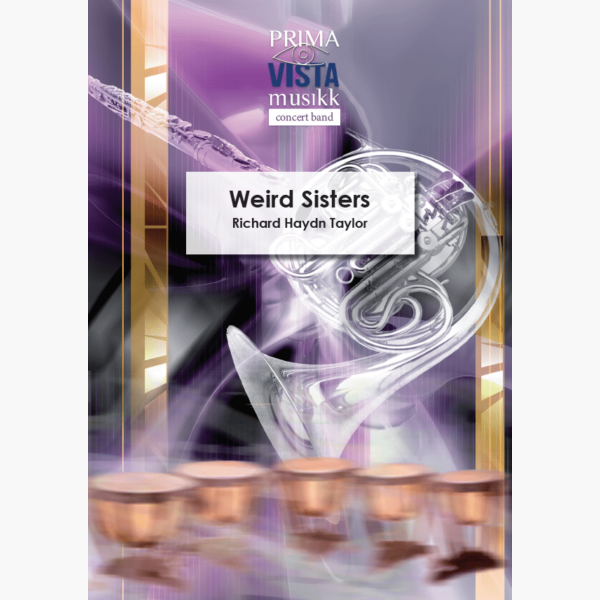
Weird Sisters - Richard Haydn Taylor
Weird Sisters 'something wicked this way comes' celebrates the 400th anniversary of William Shakespeare's death and takes its inspiration from Macbeth: Act 4, scene 1. The three witches (Weird Sisters) are stirring the bubbling cauldron, ready for Macbeth's arrival. The...
Estimated dispatch 5-7 days
-
Athabasca - Peter Meechan
The stunning Athabasca Glacier, in the Columbia Icefield in the Canadian Rockies, provided the inspiration for this work. After having visited the Glacier in 2016, I knew that it would find a place in my music - the sheer magnitude of it was stunning, the visual was breath-taking, and the rate at which it is receding (5 meters per year) completely devastating.Now sadly collapsed, beneath the Glacier there were great, expansive ice caves - thankfully they were photographed by explorers, and it is these photos that provided the inspiration for the work; an imaginary walk through these fragile, beautiful structures; what music would sound like in them, what talking would sound like in them; and what moments of listening would sound like in them.When writing the piece I also wanted to try and acknowledge the diminishing nature of the Glacier. Whilst not being something you can visibly notice by simply observing for a short time, it is still happening in front of very eyes. This is represented by the tempos in the piece - almost doubling from the original tempo to the fastest tempo of the work (around 2/3rds of the way through), and - hopefully - almost imperceptibly.When commissioned by Ray Baril and the Edmonton Winds to write a new work for them, the Alberta connection between the group and the Glacier was impossible to resist.Peter Meechan 2018
Estimated dispatch 5-14 working days
-
Dreams Unseen - Peter Meechan
A number of traumatic global events over the past year have tested humanity. The global pandemic, racism, human rights issues, the discovery of thousands of unmarked Canadian Indigenous children's graves and climate change are testing humans' willingness to listen, hope and seek change. This three-movement work is a journey through silence, resistance and hope.Dreams Unseen begs the question, "Are we listening?"As people around the world endure and cope with significant loss, isolation, uncertainty and fear, Dreams Unseen contemplates the journey through uncertain times and is fraught with the complexities of today. As we continue to endure loss and uncertainty, we must have faith in resilience, goodwill and hope for a brighter future.Jacquie Dawson, August 2021Note from the composerWhen composing Dreams Unseen I was faced with a variety of decisions and complexities. Initially commissioned with the idea of conveying joy and hope as we emerged, or hoped to emerge, from a pandemic, too much happened around us in the world - locally, globally, and personally - that made the initial goal of the piece something that didn't represent so much that I saw.This made the selection of texts particularly difficult.As time passed, the texts originally selected became less and less appropriate to what I wanted to say, and, as the unmarked graves of murdered Indigenous children were uncovered throughout Canada on a daily basis, I felt compelled to move away from joy and the promise of hope to instead write about listening, to put hope in a more fragile, truthful context, to be grateful for those who never gave up, those who stood up in the face of all that was happening - the scientists, the leaders, people we've never met, people we know. It felt that the only way I could say all that I wanted to say as a composer was to write my own words.The first movement, In Silence, I ask us not to just hear, but to listen. It is only once we understand the truth that we can truly begin the process of reconciliation. The second movement, In Resistance, is my amazement at those who stood up in these times of adversity - specifically the scientists who saved our lives and those who continue to fight for what it right in the face of a seemingly impossible situation. I continue to believe that, because of those people, love will win, and lyrically I wanted to pay homage to that; The Beatles "In My Life" and Dr. King's "I Have A Dream" speech are both referenced.The final movement, In Hope, also takes existing words as an inspiration. The Rodgers and Hammerstein song "You'll Never Walk Alone" has been a song so close to my heart throughout my life, in the good times and difficult times alike. None of these times have been more difficult than losing a friend during the pandemic. His fight with cancer was driven by hope. A wonderful musician and human, he would also turn to "You'll Never Walk Alone" - so I chose this final movement to pay homage to the song, to my dearly missed friend, and to the idea that hope - for a better future, for a win against an almost unstoppable disease, for those whose voice is so often not heard to be listened to, and that Dr. King's words will come true - is everything.Pete Meechan, August 2021With funds from:Desautels Faculty of Music at the University of Manitoba - Jacquie Dawson, Director of BandsUniversity of Kansas - Paul Popiel, Director of BandsAnd the following commissioning partners:Arizona State University - Jason Caslor, Director of BandsGeorgia State University - Robert Ambrose, Director of BandsMarietta College - Nils Landsberg, Director of BandsNew Mexico State University - Michael Mapp, Director of BandsOregon State University - Erik Leung, Director of BandsThe Desert Winds - Charles Maguire, Artistic DirectorUniversity of Colorado Boulder - Donald McKinney, Director of BandsUniversity of Missouri - Brian Silvey, Director of Bands, and Amy Knopps, Associate Director of BandsUniversity of North Florida - Erin Bodnar, Director of BandsUniversity of Texas - Jerry Junkin, Director of BandsUniversity of Toronto - Gillian Mackay, Director of Winds ConductingValdosta State University - Ben Harper, Director of BandsWright State University - Shelley Jagow, Director of Bands
Estimated dispatch 5-14 working days
 View Music