
Results
-
 £53.50
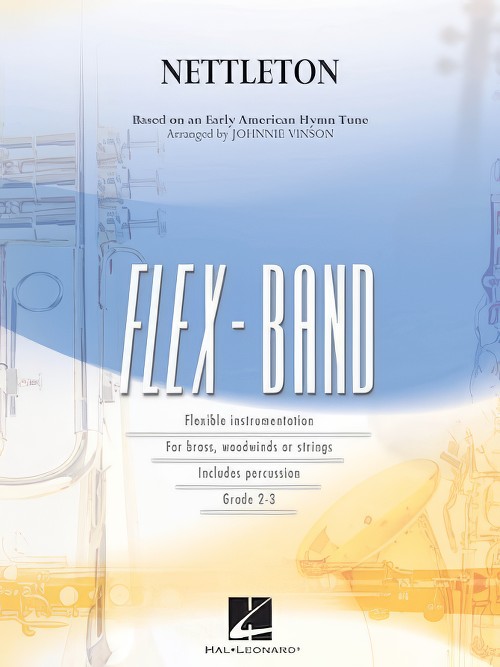
Nettleton (Early American Hymn Tune) (Flexible Ensemble - Score and Parts) - Vinson, Johnnie
Suitable for contest or festival use, this early American hymn tune features a wonderful flowing melody and a nice variety of dynamic contrasts. Even in this setting for flexible instrumentation, every part has something interesting to play.Duration: 3:30
Estimated dispatch 7-14 working days
-
 £82.95
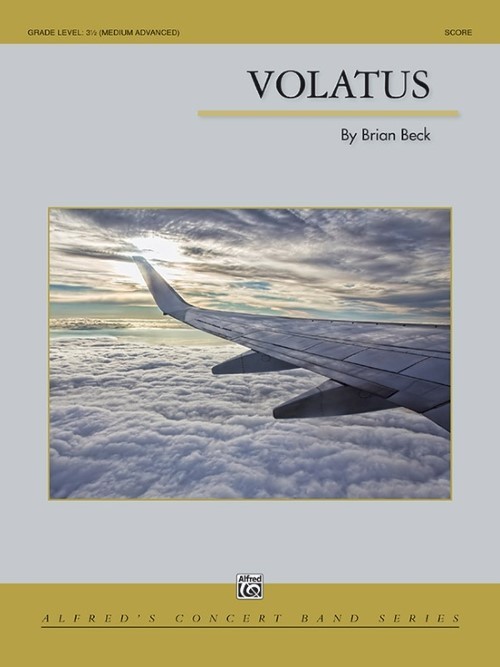
Volatus (Concert Band - Score and Parts) - Beck, Brian
From the Latin word for flight, Volatus captures the art of soaring above the clouds. The higher one climbs, the more there is to see. Lift-off begins with stately brass motives and sparkling percussion, then it is up, up, and away with woodwind flourishes. With angular harmonies, driving rhythms in mixed meters, and static percussive effects, this piece has something for everyone to enjoy.Duration: 2:40
Estimated dispatch 7-14 working days
-
 £53.95
Predators of the Deep (Concert Band - Score and Parts) - Kennedy, Edward
Predators of the Deep depicts one's primal inner fears of entering deep water and the awareness that there just may be something lurking below the surface seeking out its next prey. This exciting and programmatic work will captivate the imagination of your audience and students and will make a great starter or finishing piece for your next concert.Duration: 2:15
Estimated dispatch 7-14 working days
-
 £57.50
Eye of the Hawk (Concert Band - Score and Parts) - Botti, Susan
Eye of the Hawk was inspired by the beautiful and majestic Hudson Valley. I wanted to base the piece on something that would resonate with the band who would be premiering it... my local, exceptional, middle school band. The hawk became our spirit animal, and represented to me many of the qualities that are inherent in a young person of that age: bold, instinctive, elegant, a fierce creature who owns the sky. The music conveys power, freedom, and confidence. Just like the students.- Susan Botti
Estimated dispatch 7-14 working days
-
 £54.95
Spider Legs (Concert Band - Score and Parts) - Wiffin, Rob
Spider Legs is a vibrant Latin dance number. Although I have used Latin rhythms in pieces in recent years this is the first time I have returned wholeheartedly to one of my favourite types of music since I wrote Tiptoe Tune in 2001. Typically I wrote it when I should have been writing something else but I really enjoyed going back to these rhythms. Stylistically Spider Legs can best be described I suppose as 'Merengue House' but perhaps it is better without any description! It was composed in 2014, shortly after the birth of my granddaughter Emma Louisa who was nicknamed 'Spider Legs' at the time and the name seemed to fit the music so well that I could not resist it.
Estimated dispatch 7-14 working days
-
£10.95
Spider Legs (Concert Band - Score Only) - Wiffin, Rob
Spider Legs is a vibrant Latin dance number. Although I have used Latin rhythms in pieces in recent years this is the first time I have returned wholeheartedly to one of my favourite types of music since I wrote Tiptoe Tune in 2001. Typically I wrote it when I should have been writing something else but I really enjoyed going back to these rhythms. Stylistically Spider Legs can best be described I suppose as 'Merengue House' but perhaps it is better without any description! It was composed in 2014, shortly after the birth of my granddaughter Emma Louisa who was nicknamed 'Spider Legs' at the time and the name seemed to fit the music so well that I could not resist it.
Estimated dispatch 7-14 working days
-
 £76.99
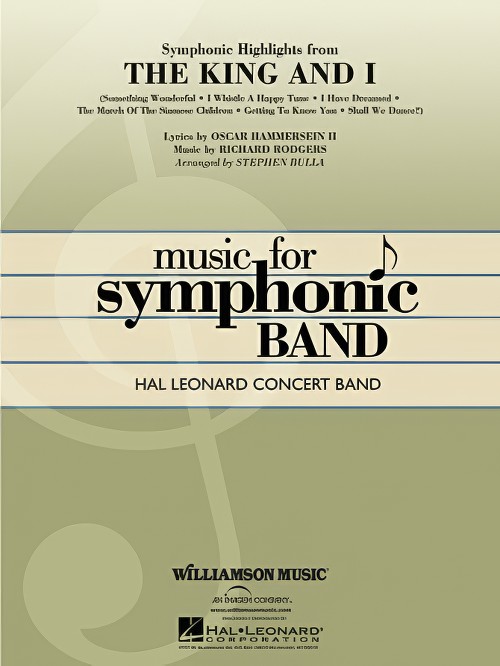
The King and I, Symphonic Highlights from (Concert Band - Score and Parts) - Hammerstein & Rodgers - Bulla, Stephen
Opening on Broadway in 1951, and garnering multiple awards for the 2015 revival, few musicals can boast as many lasting and memorable songs as this Rodgers and Hammerstein masterpiece. Drawing on the classic orchestrations by Robert Russell Bennett, here is a fabulous medley for the symphonic stage.Includes:Something WonderfulI Whistle a Happy TuneI Have DreamedThe March of the Siamese ChildrenGetting to Know YouShall We Dance?
Estimated dispatch 7-14 working days
-
 £69.99
Ducks on the Road (Concert Band - Score and Parts) - Tinner, Gilbert
Attention drivers and cyclists, theres something happening on the road - the ducks are on the move! Quacking and waddling along the street they dominate the traffic scene. To the left, to the right, in their own good time! Its not so far to the next pond after all... As entertaining as its story is this new piece by the renown Swiss composer Gilbert Tinner that he dedicated to the 2015 YAMAHA Bl?serKlassenkongress. Designed for the needs of a German Bl?serKlasse, it is suitable for any youth concert band. The rock style and some funny special effects make this grade 1,5 composition attractive to any audience!
Estimated dispatch 7-14 working days
-
 £42.50
Illusions (Concert Band - Score and Parts) - Oare, Michael
An illusion can be defined as something that seems different than it really is. In this unique piece for very young players, Michael Oare uses shifting tonal centres to intentionally deceive the listener in order to create a musical illusion. It provides an opportunity for careful use of notes from the chromatic scale in a striking and fun setting!Duration: 1:55
Estimated dispatch 7-14 working days
-
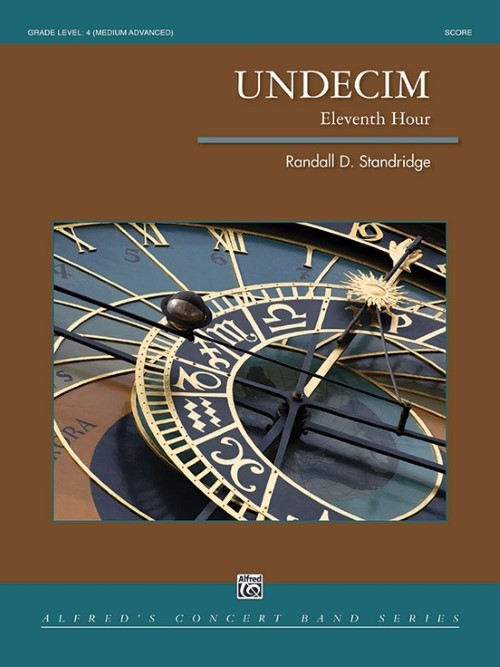 £87.50
Undecim (Concert Band - Score and Parts) - Standridge, Randall D.
Undecim is Latin for eleven, referring both to the eleventh hour (the last opportunity to get something done) and the high-energy opening metric feel of the piece (7/8 + 2/4 = 11 eighth notes). This high-energy opener is the perfect way to begin your next concert!Duration: 3.15
Estimated dispatch 7-14 working days
 View Music