
Results
-
 £90.00
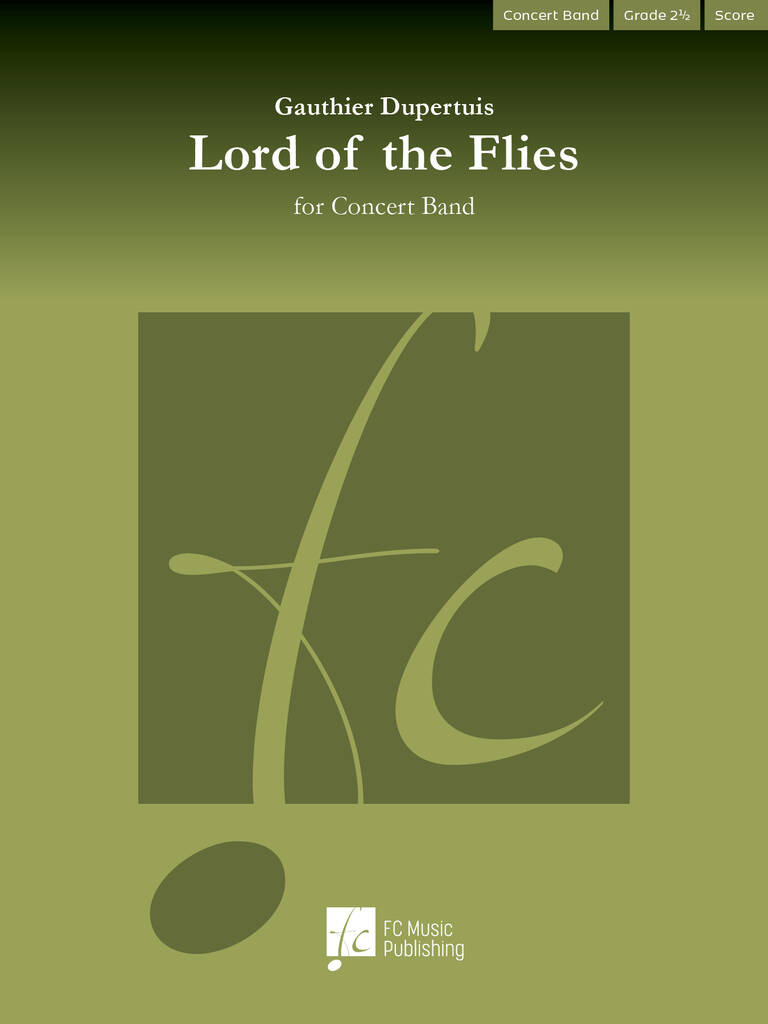
Lord of the Flies - Gauthier Dupertuis
The title of this work by Gauthier Dupertuis refers to the novel Lord of the Flies by William Golding, published in 1954. Lord of the Flies is intended to be a small symphonic poem describing different episodes of the book: the despair of the children stranded on the island, the use of the unifying conch and symbol of democracy, the adventures, and the formation of the camp and finally the savagery of the clan of Jack which undeniably leads to chaos. The finale is mysterious and half-tone, imbued with both the relief of having been rescued, and a deep sadness linked to the tragic events that have occurred on the island.All the main themes and elements developed in the work come from the idea "d-e-f", exposed from the first bars. The orchestration is intended to be variable in geometry and avoids the main technical difficulties related to the instruments. However, the composer wanted to find as many colors as possible and avoided confining himself to too "simple" harmonies.Lord of the Flies: a piece accessible to most concert bands.
Estimated dispatch 7-14 working days
-
 £72.99
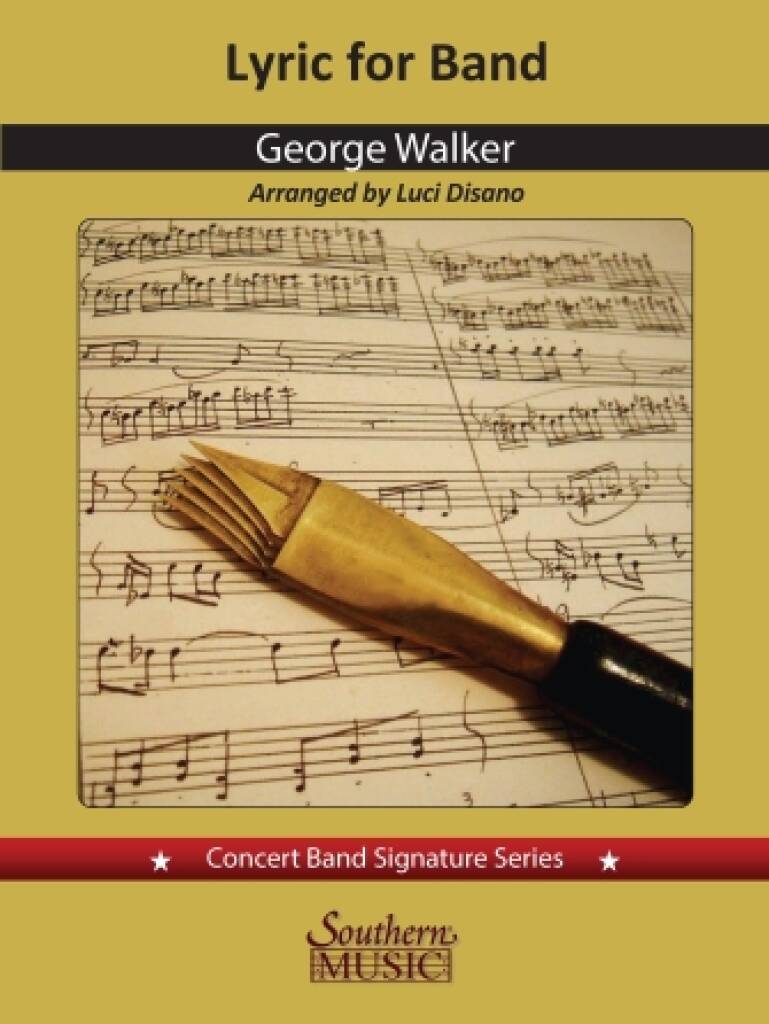
Lyric for Band - George Walker
In 1946, George Walker was still doing graduate work at the Curtis institute when he composed Lyric for Strings, which would prove over the coming decades to become one of the most performed and enduring string orchestra works of the 20th Century. This first-ever edition for symphonic wind band was arranged by Dr. Luci Disano and premiered by The President's Own United States Marine Band on August 24, 2022. George Walker (June 27, 1922 - August 23, 2018) began his groundbreaking career as a young piano virtuoso and was admitted to Oberlin College on a scholarship following his first public recital at the age of 14. Graduating with the highest honors in his Conservatory class, he was admitted to the Curtis Institute of Music, becoming the first black graduate of this renowned music school. His works demonstrate a wide range of artistic excellence in genres ranging from instrumental and vocal solos and chamber music to compositions for orchestra and other large ensembles. He is the first black composer to be awarded the Pulitzer Prize.
Estimated dispatch 7-14 working days
-
 £76.99
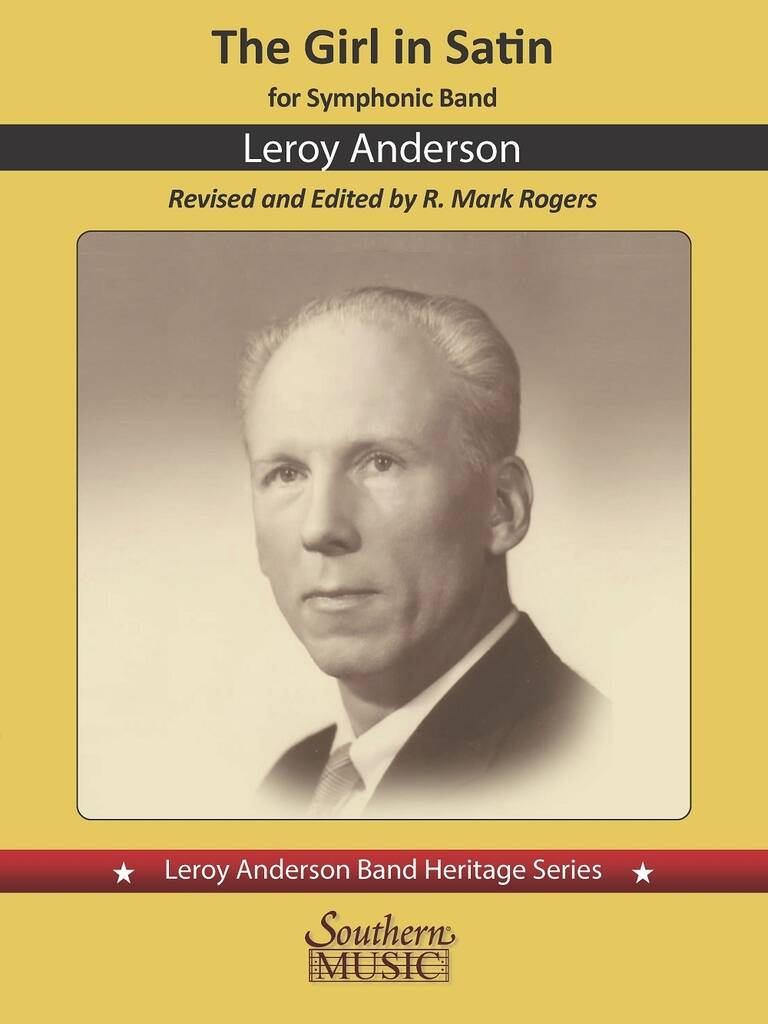
Girl in Satin - Leroy Anderson
This reimagined band edition by Mark Rogers breathes new life into an absolute gem by Leroy Anderson. This publication features the first full score offered with the parts - as well as an alternate transposition in C to avoid some of the technical difficulties bands may encounter with the composer's original key.
Estimated dispatch 7-14 working days
-
 £228.70
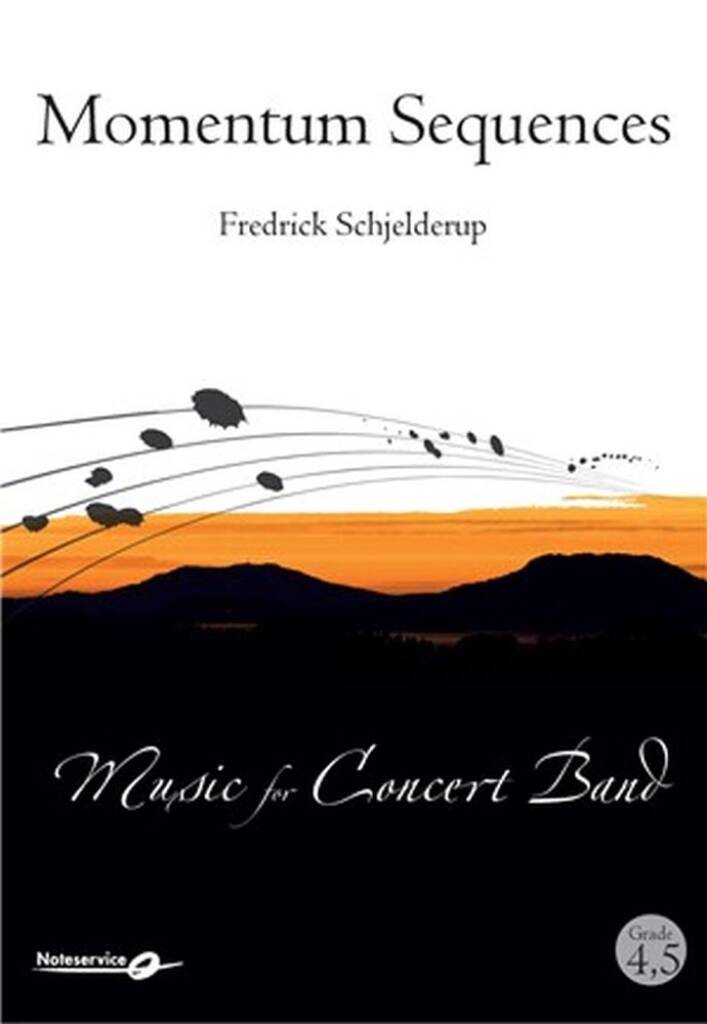
Momentum Sequences - Fredrick Schjelderup
Momentum Sequences was commissioned by Skjold Skoles Musikkorps (Norway) for their 60th Anniversary in 2021.The title of the term Momentum can be explained by an event that creates extra energy, or the driving force of a moving object. In this case, both the driving force,The energy and the object can be translated to the music, the conductor and the band.The piece is divided in three movements; I.Signals, II.Light and III.Finale which builds up the Momentum of the piece' character and theme.
Estimated dispatch 7-14 working days
-
 £149.40
Interlude for Band - John Brakstad
"Interlude for Band" is an arrangement based on the theme from "Affinity and Fellowship"."Affinity and Fellowship" was commissioned by Nord-Odal Concert Band, and published by Warner/Chappell Music Norway (Noteservice)."Interlude for Band" is a piece with elements of ensemble, including an important solo part.Independent of the chosen tempo, let the music flow forward, but give time for the triplets to sound.
Estimated dispatch 7-14 working days
-
 £149.40
Grevling i taket - Øystein Dolmen og Gustav Lorentzen
This is an arrangement which has to be performed a bit humorous in the spirit of the original.It starts with a kazoo-like opening, played on the mouthpieces. At C, flutes and clarinets should stand up. Maybe the musicians can play it by heart?Two bars before D, the tempo increase. On E, the trumpet players should stand (and play by heart)?New, even higher tempo two bars before F. The trombonists should stand up in bar 103 to prepare for a terrific tempo. But G will be played like a laidback reggae-version. The saxophonists can stand up simultaneous with the glissando in bar 120.The tempo at H should be high and fresh and with several sections standing. In bar 158 should almost all players sit. At bar 160 everyone should stand up.In bar 162, all players should turn to the audience during the crescendo.
Estimated dispatch 7-14 working days
-
 £106.99
Glorioso! - Philip Sparke
The name of this glorious overture speaks for itself: this work is vivacious and sparkling! Majestic fanfare playing enriched by florid woodwind decorations alternates with lively themes full of fierce energy, but there is also lyricism to be found in a lovely cantabile passage. An appealing flashy coda closes the work. This composition will be thoroughly enjoyed by musicians as well as the audience.
Estimated dispatch 7-14 working days
-
 £124.99
Legend of the Bell - Bert Appermont
This work was inspired by the legend of the Klokkeven, in which a church bell plays the leading part. It forms a connecting thread throughout the composition. The work consists of three continuous movements, each with its own atmosphere and character. In The Black Robber, we hear dark sounds in the brass and fast chromatic motifs. The Swamp contains mysterious low parallel fifths, imploring solos and chafing dissonant harmonies. Finally, in The Bell sweetly musing solos are hopefully accompanied by the church bell ringing from a distance. After a number of changes in tempo, the music ends in a grand tutti.
Estimated dispatch 7-14 working days
-
 £95.99
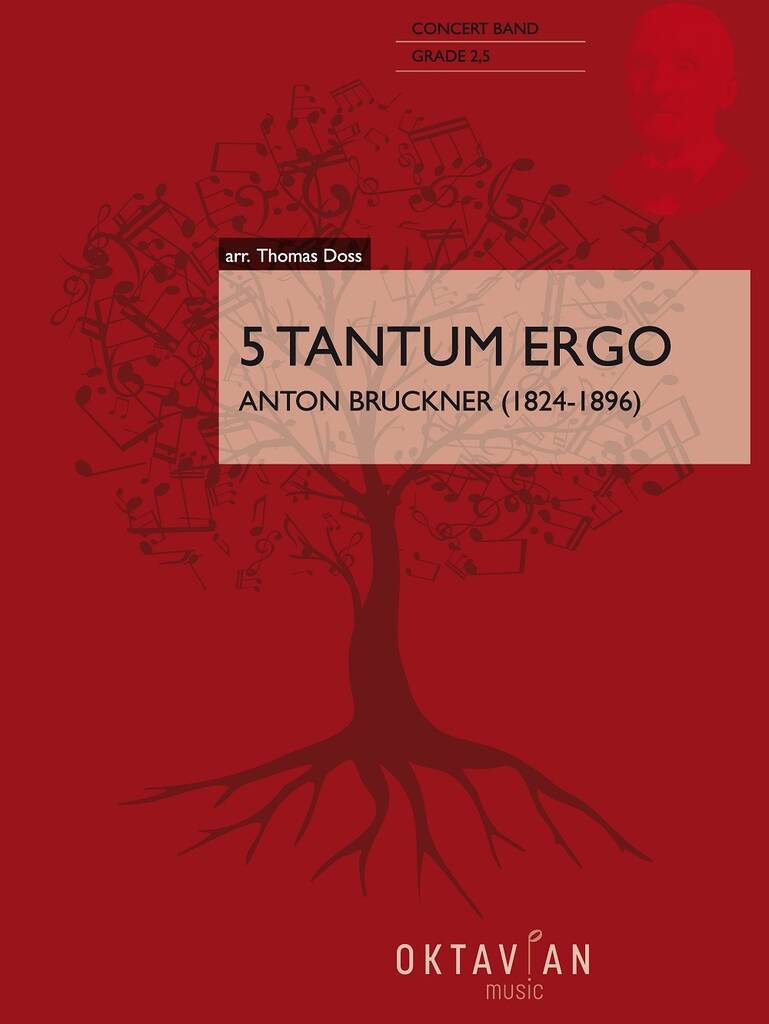
5 Tantum Ergo - Anton Bruckner
Anton Bruckner (b. 4.9.1824, Ansfelden, d. 11.10.1896, Vienna) didn't have it easy. Throughout his life, the Austrian composer was plagued by self-doubt. Anton Bruckner came from a simple, rural background. After the death of his father, he was accepted as a choirboy at the monastery of Sankt Florian in 1837. After several years as a school assistant and his own organ and piano studies, he first worked as organist in St. Florian, then from 1855 as cathedral organist in Linz. Introduced to music theory and instrumentation by Simon Sechter and Otto Kitzler, he discovered Richard Wagner as an artistic role model, whom he admired throughout his life and also visited several times in Bayreuth.In 1868 Anton Bruckner became professor of basso continuo, counterpoint and organ at the Vienna Conservatory; ten years later court organist; and in 1891 finally honorary doctor of the University of Vienna. He was considered an important organ virtuoso of his era, but had to wait a long time for recognition as a composer. It was not until Symphony No.7 in E major, composed between 1881 and 1883, with the famous Adagio written under the effects of Wagner's death, that he achieved the recognition he had hoped for, even if he was reluctant to accept it given his inclination towards scepticism and self-criticism.Anton Bruckner was a loner who did not want to follow a particular school or doctrine. He composed numerous sacred vocal works, such as his three masses, the Missa Solemnis in B flat minor (1854), the Te Deum (1881-84) and numerous motets. As a symphonic composer, he wrote a total of nine symphonies and many symphonic studies from 1863 onwards, tending to revise completed versions several times over. Bruckner's orchestral works were long considered unplayable, but in fact were merely exceptionally bold for the tonal language of their time, uniting traditions from Beethoven through Wagner to folk music, on the threshold between late Romanticism and Modernism.Hymns for four-part mixed choir a cappella (1846, St. Florian)No. 1 in E flat major (WAB 41/3): Quite SlowNo. 2 in C major (WAB 41/4): AndanteNo. 3 in B flat major (WAB 41/1): SlowNo. 4 in A flat major (WAB 41/2): SlowHymn for five-part (2 S, A, T, B) mixed choir and organNo. 5 in D major: SolemnlyThey are simple works, completely subordinate to their liturgical use, which nevertheless already show numerous characteristics of personal expression. These small pieces were able to stand up to the harsh scrutiny of the mature master: in 1888, Bruckner subjected them to a revision in which he made only minor corrections.
Estimated dispatch 7-14 working days
-
 £105.80
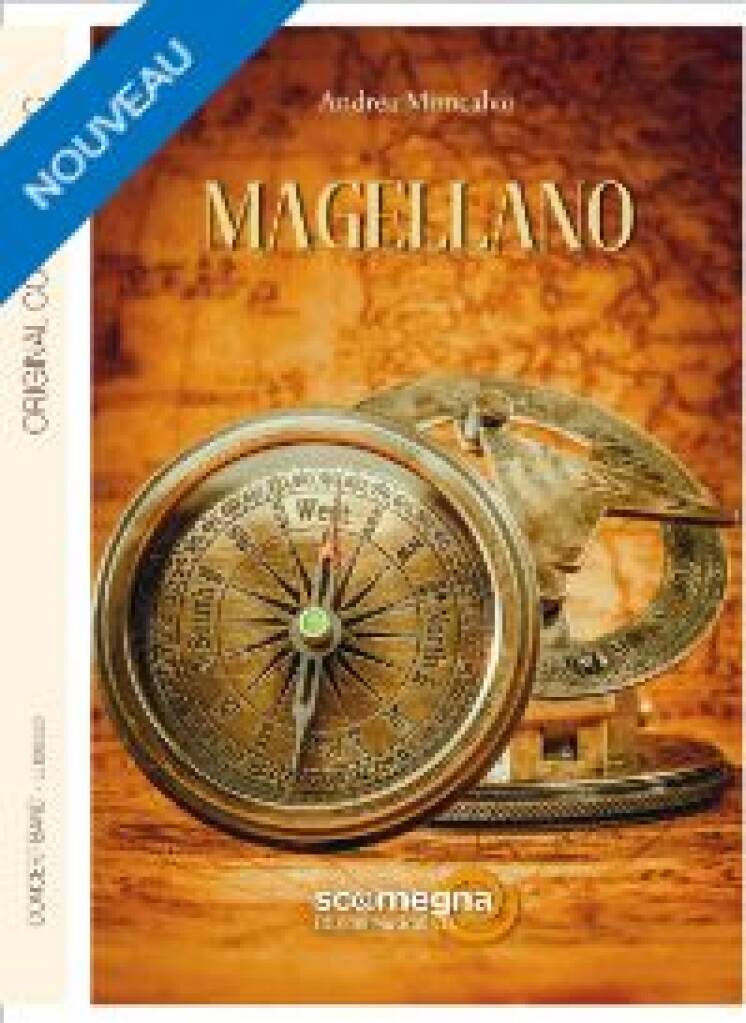
Magellano - Andrea Moncalvo
This composition was written on the occasion of the 500th anniversary of the death of Ferdinand Magellan, a Portuguese explorer (1480 - 1521), who embarked on what would have become the first circumnavigation of the globe. Unfortunately, he did not complete it because, in 1521, he was killed in the region that is today the Philippines. This adventure triggered various images in the author's mind; evocations that the composer elaborated in this piece, which is in a tripartite form (A B A) and is introduced and concluded by a solemn fanfare evoking the departure of the expedition, consisting of 5 ships with a total of 234 crewmen. The first part (Allegro) presents a main theme with a cantabile character that describes the fleet that, intrepid, plows the ocean. This initial melody is then contrasted by a more rhythmic and syncopated theme in a minor key, which instead refers to the indigenous peoples they have encountered during the journey. The central section (Adagio) is an oasis of reflection because, as in other great adventures, this too has tragic aspects: mutinies, shipwrecks, clashes with indigenous peoples, up to the disappearance of those who had desired and planned this enterprise. The last part proposes the themes of the first section but in reverse order, to describe the return to the homeland. The solemn fanfare welcomes the arrival of the Victoria, the only surviving ship with only 18 men on board, which returns to the port of departure after completing the circumnavigation of the earth in 2 years, 11 months, and 17 days.
Estimated dispatch 7-14 working days
 View Music