
Results
-
£154.99
Symphonic Variations - Jacob de Haan
This composition is based on a passacaglia theme, in which artistic perfection, symphonic drama and oriental melody lines play a role. The passacaglia is originally a dance made up of a series of variations above a bass line constantly present as an ostinato. It is not in this sense that the "Symphonic Variations" are in the passacaglia form but in the sense of the open form of the variations. Jacob de Haan, himself originally an organist, took his inspiration for this piece from the famous passacaglia for organ in C-minor by J.S. Bach. Following the introduction of the passacaglia theme (in the bass) the entry by the trumpets and trombones forms the majestic start to amusical adventure, in which this theme (often fragmentary) returns in variations. Then there follow two faster movements with dramatic contrasts and virtuose passages. Particularly striking here is the use of two characteristic intervals from the beginning of the theme namely the minor second and the augmented fourth. An apause in the composition comes in the slow bridge where a syncopated bourdon (perfect fifth) is constantly repeated. The tension grows in dynamics and harmony, and the oriental-flavour becomes obvious in the melody. We arrive at a faster movement via an accelerando, in which a perpetuum mobile based on the passacaglia theme is central. Finally the whole flows into a martial theme, in which the ostinato accompaniment n the descant derives from the passacaglia theme.
Estimated dispatch 7-14 working days
-
£122.50
Down From The Shimmering Sky - James Curnow
A concert "centerpiece", this major work from James Curnow explores the spiritual perspectives of the First Nations of the Pacific Northwest in North America. The five movements investigate the "Cosmos" and its four "Worlds". With such complete contrasts as "The Undersea World" and the ceremonial dance in "The Mortal World", an authentic First Nations melody in "The Spirit World" and the ethos of "The Sky World", the wonders are many. Your performance of "Down From The Shimmering Sky" will be meaningful and memorable for musicians and audience alike. This is a landmark piece for concert band.
Estimated dispatch 7-14 working days
-
 £126.50
Cyprian Suite - Carol Barnett
Cyprian Suite" is a spirited journey through varied musical moods, with each of four movements based on a different Cypriot folk song. The opening Servikos" a playful and rhythmic dance in Serbian style. A tender lullaby, Aya Marina", is followed by the good-natured Exomolghisis", a setting of a humorous song about a confession. The concluding Agapis Tin", a song of unrequited love, begins pensively and builds to a dramatic conclusion.
Estimated dispatch 7-14 working days
-
 £140.80
The Highlands - Kees Vlak
This work - distinguished in Italy - recalls the atmosphere of the Scottish Highlands. There are three movements which are linked to each other: 'At Daybreak', 'Bagpipers' Dance' and 'Wild Horses'.
Estimated dispatch 7-14 working days
-
 £174.99
Mexican Pictures - Franco Cesarini
Your band will love getting acquainted with Mexican Pictures, a suite in four movements based on Mexican folk music. The first movement, El Butaquito, is based on a very lively folk-song of the same name and is characterised by its many contrasting rhythms. The second movement, Romance Mejicano, creates a peaceful and romantic atmosphere. The title of the third movement, Ballaviejo, means 'Antique Dance', in which the word antique refers to the rhythms that were taken to America by Africa's black population. La Charreada, the final movement, depicts the popular Mexican Rodeo, where the action in the arena is usually supported by instrumental ensembles, the so-called 'Mariacchi'.
Estimated dispatch 7-14 working days
-
£144.99
Ukrainian Rhapsody - Franco Cesarini
Folk music plays an important role in the life of the Ukrainian people. Their country covers an area of over 600.000 square kilometres and has more than fifty million inhabitants. In the north there are vast woods, in the west one finds the picturesque Carpatian mountains and valleys, and in the centre and the south Ukraine has its famous steppes with fertile black soil. The river Dnjepr divides the country in two, forming a natural frontier between the western and eastern regions, which each have their own distinctively different musical folklore. This diversity forms the musical basis for Ukrainian Rhapsody. The work consists of three movements: the first one, in a moderatetempo, without a pause flows into a slow but very expressive middle movement, resulting in a powerful climax. The composition ends with the Gopak: a rousing dance.
Estimated dispatch 7-14 working days
-
£109.99
Irish Sketches - Luc Gistel
As its title suggests this composition is a musical evocation of Ireland. The original themes of this work are strongly influenced by traditional Irish folk music. Each of the three movements reflects part of the Irish character. Following a solemn introduction the first movement springs into life showing the cheery side of the Irish character. The second movement is a ballad with a simple, natural and peaceful melody that inspires a feeling of fullness.The final movement introduces a lively Irish dance in 6/8 time. This joyous piece is a must for your concert band repertoire.
Estimated dispatch 7-14 working days
-
 £289.99
Bulgarian Dances (part II) - Franco Cesarini
Bulgarian folk music has a long tradition and numerous typical characteristics, such as particular dissonances and complex, irregular rhythms. In Bulgarian Dances (Part II) (which can be performed together with the previously published title Bulgarian Dances) Franco Cesarini has preserved the original spirit of Bulgarian folk music, yet has imbued it with a symphonic character and brought it into the concert hall. The three different movements give us a meditative, moving folksong and a lively dance, before a distinctly symphonic part leads to a glittering finale.
Estimated dispatch 7-14 working days
-
 £273.50
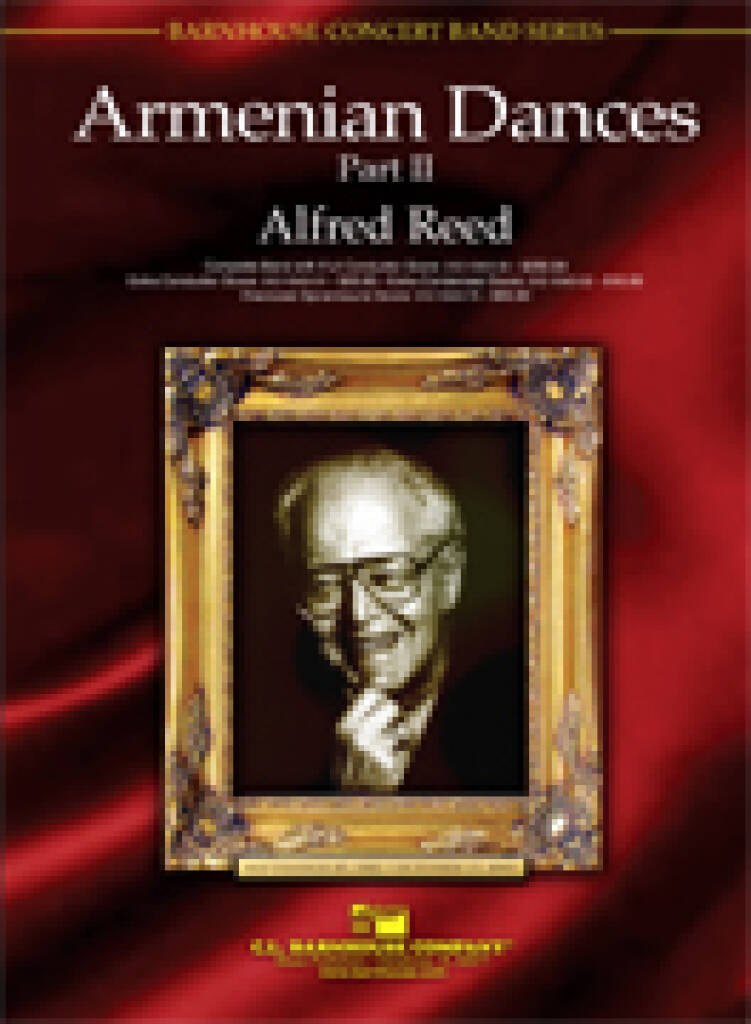
Armenian Dances Part II - Alfred Reed
Armenian Dances, Part II is the final three movements of the complete suite. Included are "The Peasant's Plea", "Wedding Dance" and "Songs from Lori". Imaginatively developed from the Armenian folk song collections of Gomidas Vertabed.
Estimated dispatch 7-14 working days
-
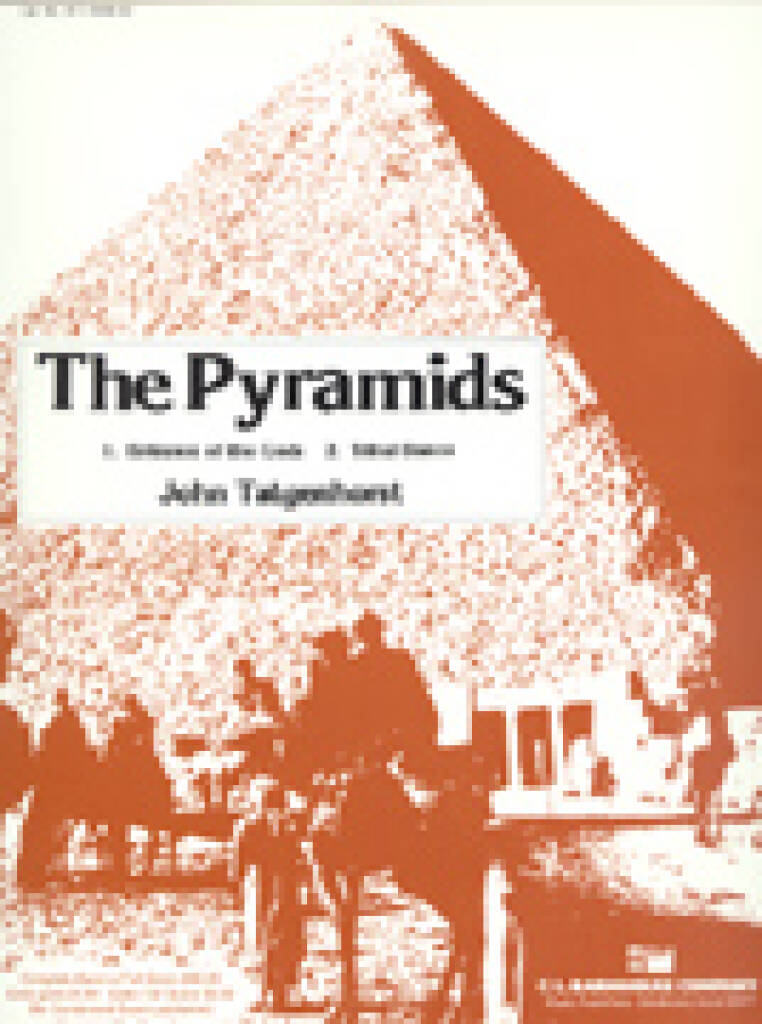 £96.50
The Pyramids - Tatgenhorst
Highly descriptive contest music in two movements. "Entrance of the Gods'' is a study in contrasts with bold, powerful tutti phrases followed by soft, lyrical woodwinds and low brass passages. "Tribal Dance'' features many rhythmic woodwind lines accented by sharp brass accents and a variety of percussion sounds.
Estimated dispatch 7-14 working days
 View Music