
Results
-
 £55.50
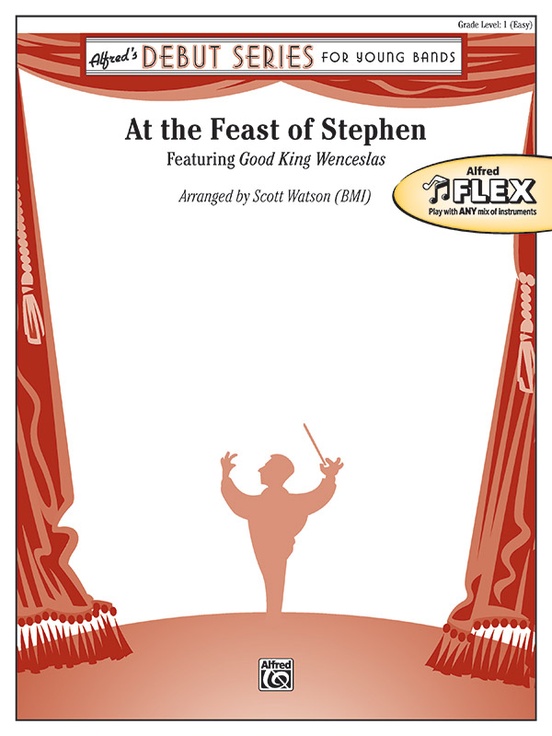
At the Feast of Stephen (Flexible Ensemble - Score and Parts) - Watson, Scott
This version of At the Feast of Stephen by Scott Watson is part of our Alfred FLEX offerings and is designed with maximum flexibility for use by any mix of instruments---wind, strings, and percussion, including like- or mixed-ensembles with as few as 4 players. The suggested instrumentation and a customizable Teacher Map will help you plan out how to best assign parts to suit your ensemble's needs. The 4-part instrumentation will support balanced instrumentation of the lower voices. It also comes with supplemental parts for maximum flexibility. With the purchase of this piece, permission is granted to photocopy the parts as needed for your ensemble. A percussion accompaniment track is also available as a free download. String parts have been carefully edited with extra fingerings and appropriate bowings to support students in mixed ensembles playing in less familiar keys. This novel setting of the traditional carol Good King Wenceslas will musically transport you and your students to the royal Christmas banquet hall of a medieval king! The old carol tells the story of a legendary 10th-century monarch, Duke Wenceslas of Bohemia, who went out in the severe cold to give charity to the poor on December 26, also known as St. Stephen's Day. The well-known 13th-century tune, as well as additional original material in period style, vividly conjures a lively celebration of Christmas in the high Middle Ages. Come now ye lords and ladies to the Feast of Stephen and upon your instruments faire make most merry this Yuletide! Duration: 2.30
Estimated dispatch 7-14 working days
-
 £53.95
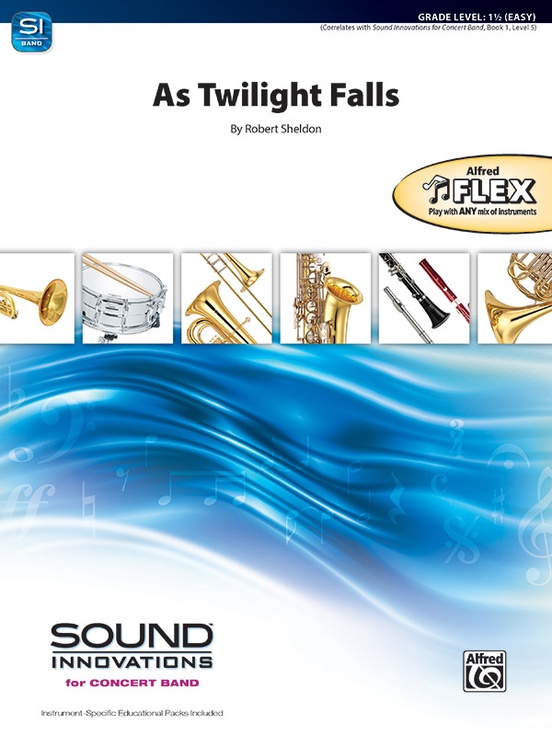
As Twilight Falls (Flexible Ensemble - Score and Parts) - Sheldon, Robert
This version of As Twilight Falls by Robert Sheldon is part of our Alfred FLEX offerings and is designed with maximum flexibility for use by any mix of instruments---wind, strings, and percussion, including like- or mixed-ensembles with as few as 5 players. The suggested instrumentation and a customizable Teacher Map will help you plan out how to best assign parts to suit your ensemble's needs. It also comes with supplemental parts for maximum flexibility. With the purchase of this piece, permission is granted to photocopy the parts as needed for your ensemble. A percussion accompaniment track is also available as a free download. String parts have been carefully edited with extra fingerings and appropriate bowings to support students in mixed ensembles playing in less familiar keys. The sense of peace and tranquility of twilight on a summer's evening inspires this lovely, lyrical offering. An excellent teaching opportunity for phrasing and expression, As Twilight Falls provides a moment of contrast at any young band's concert performance and is now available in Alfred's 5-part FLEX format. Duration: 2.15
Estimated dispatch 7-14 working days
-
 £58.50
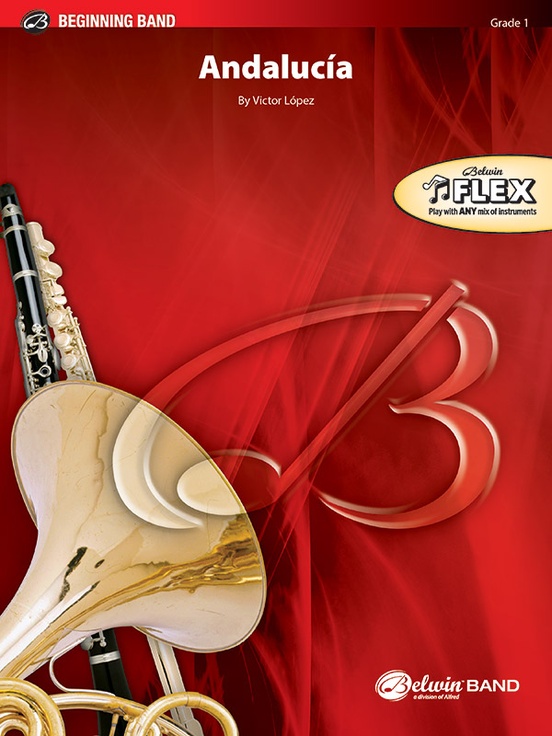
Andalucia (Flexible Ensemble - Score and Parts) - Lopez, Victor
This version of Andaluc?a by Victor Lopez is part of our Belwin FLEX offerings and is designed with maximum flexibility for use by any mix of instruments---wind, strings, and percussion, including like- or mixed-ensembles with as few as 4 players. The suggested instrumentation and a customizable Teacher Map will help you plan out how to best assign parts to suit your ensemble's needs. The 4-part instrumentation will support balanced instrumentation of the lower voices. It also comes with supplemental parts for maximum flexibility. With the purchase of this piece, permission is granted to photocopy the parts as needed for your ensemble. A percussion accompaniment track is also available as a free download. String parts have been carefully edited with extra fingerings and appropriate bowings to support students in mixed ensembles playing in less familiar keys. Andalucia has always been a very musical land, and the Moors that occupied Andaluc?a for nearly 800 years have contributed greatly to its unique music and exotic dances. Victor Lopez has utilized Andalucia as his inspiration to provide us with an original composition that blends both the flamenco and traditional march styles. Full of fire and energy! Duration: 2.00
Estimated dispatch 7-14 working days
-
 £53.95
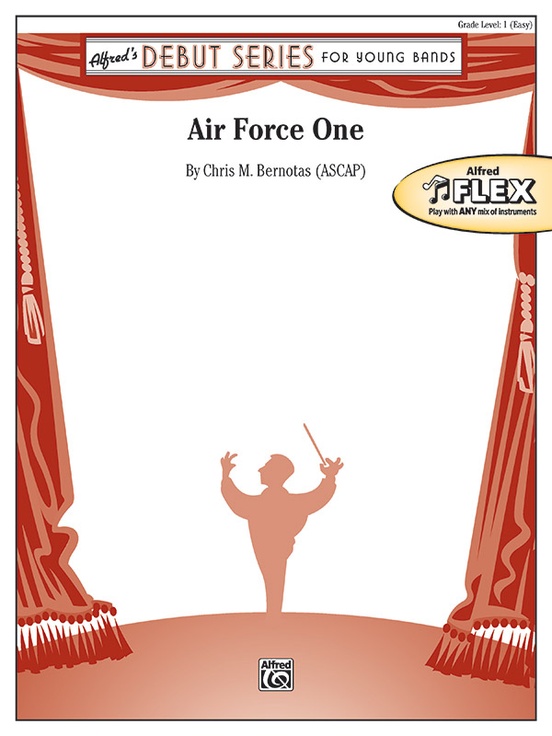
Air Force One (Flexible Ensemble - Score and Parts) - Bernotas, Chris M.
This version of Air Force One by Chris M. Bernotas is part of our Alfred FLEX offerings and is designed with maximum flexibility for use by any mix of instruments---wind, strings, and percussion, including like- or mixed-ensembles with as few as 5 players. The suggested instrumentation and a customizable Teacher Map will help you plan out how to best assign parts to suit your ensemble's needs. The 5-part instrumentation will support balanced instrumentation of the lower voices. It also comes with supplemental parts for maximum flexibility. With the purchase of this piece, permission is granted to photocopy the parts as needed for your ensemble. A percussion accompaniment track is also available as a free download. String parts have been carefully edited with extra fingerings and appropriate bowings to support students in mixed ensembles playing in less familiar keys. Air Force One evokes the proud spirit that is symbolized by the Presidential aircraft. With its rhythmic drive and uplifting melody, this will quickly become a favorite of your students and audience alike. Now scored in a 5-part FLEX format, this piece has engaging rhythms, memorable melodies, and exciting percussion parts! Duration: 2.15
Estimated dispatch 7-14 working days
-
 £137.99
The Baltic Way (Concert Band - Score and Parts) - De Haan, Jan
In 1989, the demonstration named the Baltic Way, also known as the Baltic Chain, was held in the Baltic states of Estonia, Latvia and Lithuania by its citizens in a call for independence from the Soviet Union. On 23rd August 1989, some two million participants formed a human chain, hand-in-hand all the way from the Estonian capital of Tallinn its Latvian counterpart, Riga, through to the Lithuanian capital of Vilnius - six hundred kilometres long. It became the longest human chain ever created and turned out to be the final push needed for much sought-after independence. This historic event became the source of inspiration for this composition. The introduction of the first movement, 'Struggle for Independence', is based on a nocturne for piano by the renowned Lithuanian composer and painter Mikalojus Konstantinas Ciurlionis (1875-1911), thematic material from which has been incorporated throughout the whole composition. The melancholic beginning is followed by a powerful theme which reflects the resolve of the Baltic people. The sudden aggressive, dissonant chords and a dominant and, in rhythmic terms, contrary bass drum announce that the resistance is not going smoothly. Just for a moment, we hear the anthem of the Soviet Union in the lower brass, but this is relentlessly pushed to the background by the rest of the band playing the Lithuanian national anthem, 'Tautiska giesm?' (Lithuania, our homeland). The second movement, 'Decades of Suffering', echoes life under the Soviet Union's thumb. In the pursuit of independence, a peaceful protest is planned in which a human chain is formed across the Baltic states of Estonia, Latvia and Lithuania. This 'Chain of Freedom' is depicted in the final movement of the work. Duration: 10.30
Estimated dispatch 7-14 working days
-
 £53.95
Dragon Dance (Flexible Ensemble - Score and Parts) - Story, Michael
This version of Dragon Dance by Michael Story is part of our Belwin FLEX offerings and is designed with maximum flexibility for use by any mix of instruments---wind, strings, and percussion, including like- or mixed-ensembles with as few as 3 players. The suggested instrumentation and a customizable Teacher Map will help you plan out how to best assign parts to suit your ensemble's needs. The 3-part instrumentation will support balanced instrumentation of the lower voices. It also comes with supplemental parts for maximum flexibility. With the purchase of this piece, permission is granted to photocopy the parts as needed for your ensemble. A percussion accompaniment track is also available as a free download. String parts have been carefully edited with extra fingerings and appropriate bowings to support students in mixed ensembles playing in less familiar keys. The Dragon Dance is a popular event in traditional Chinese culture, especially during Chinese New Year celebrations. Originating during the Han Dynasty (206 B.C.-200 A.D), the dance is carried out by a team of performers that carry the dragon on poles, fluidly mimicking its supposed movements. Drums, cymbals, and gongs usually provide the musical accompaniment to this beautiful and colorful performance. Duration: 1.30
Estimated dispatch 7-14 working days
-
 £191.30
Nepotism (Movement II from Symphony No.1, The Borgias) (Concert Band - Score and Parts) - Schwarz, Otto M.
A sinister legend hangs over the Borgia family, a legend of corruption, abuse of power, orgies, sex and murder. These rumours proliferated especially during the papacy of Alexander VI, a descendant of the family, who was even called the Antichrist. On his death, contemporary witnesses reported that the devil himself prowled around the death chamber and a black dog run along the corridors of the Vatican as his emissary. One might say that this Borgia pope, who ruled together with his family with the greatest brutality, became demonised. Unscrupulousness, poison-toting, incest and other malice are to this day the hallmarks of this pontiffNepotism: Rodrigo Borgia was elected Pope on 11 August 1492. From the very start, the new pope was prepared to use any means to eliminate his opponents, either through the infamous Borgia poison or by excommunication and execution. His son Cesare, who wanted little to do with the church, was appointed cardinal against his will. Alessandro Farnese, broth of Giulia Farnese, the Pope's mistress, also became a cardinal. Numerous Spaniards were brought into the country and were appointed to ecclesiastical posts. This infuriated the opponents of Alexander VI. The Dominican Girolamo Savonarola from Florence demanded the removal of the Pope. He was tortured and banned. Giuliano della Rovere wanted to convene councils to depose the Pope, which Alexander managed to prevent through artful political manoeuvrings. Through great brutality, brilliant political skill and power games, this pope was able to achieve his goal of leaving for his children a great legacy. Alexander VI constantly changed his allies and always acted unscrupulously to improve his financial situation and expand his sphere of influence. At the centre of the second movement of this work is the medieval hymn Dies Irae (Day of Wrath), which acts as a warning in the background condemning the Pope's actions.Duration: 9.15
Estimated dispatch 7-14 working days
-
 £191.30
Alexander VI (Movement I from Symphony No.1, The Borgias) (Concert Band - Score and Parts) - Schwarz, Otto M.
The Borgia family is the subject of a so-called black legend, a pejorative term that has been used since the Middle Ages to refer to Spain and Spaniards. The Borgias' black legend is one of corruption, abuse of power, orgies, sex and murder. These rumours spread especially during the reign of Pope Alexander VI, a member of the family. Alexander was even referred to as the Antichrist. According to eyewitnesses, when he died Satan prowled the death chamber and a black dog, an envoy of the Devil, ran up and down the aisles of the Vatican. The brutal rule of Pope Alexander and his family led to a kind of demonization of the Borgia family. But it is precisely the lack of scruples, the brewing of poisons, the incest and various cruelties that continue to hold a certain fascination for us.Alexander VI: Rodrigo Borgia was born in 1431 near Valencia. He studied law in Bologna and, through his uncle Pope Calixtus III, he rose through the church hierarchy. As vice-chancellor of the Holy Roman Catholic church, he became one of the richest men in Europe. As a cardinal he fathered four children who he later legitimised when he became pope. His election to the papacy was funded by the sale of offices, extortion and bribes of all kinds. Through an alliance with Ascanio Sforza he was elected pope on August 11 1492 and named himself from then on Alexander VI, an allusion to Alexander the Great.Duration: 9.30
Estimated dispatch 7-14 working days
-
 £179.90
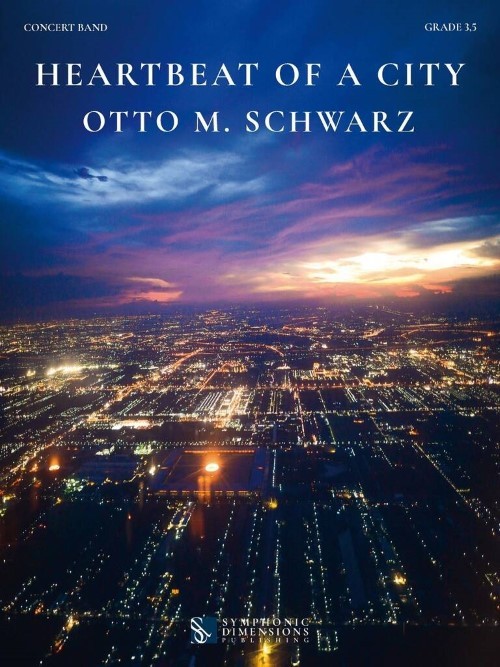
Heartbeat of a City (Concert Band - Score and Parts) - Schwarz, Otto M.
A city is founded, it has a heart that beats. But visible achievements such as buildings and infrastructure merely bear witness to what its true heart is made of, the people who have lived, and still live, in the city. The pulse of the city, brought to life by its heartbeat, changes over time. Who hasn't seen those time-lapse images showing twinkling lines of car lights as people make their way to work, while others stand at traffic lights, only moving as if at the push of a button? These are like life flowing in the veins, driven by a strong heart. Leonardo da Vinci had already imagined the rivers as the blood vessels of the Earth. In any city, though, it's not the rivers but the movement and activities of the people who live there. The heart doesn't always beat steadily, however, but its rhythm can be influenced by joy, fear, and many other things. Every city has its own pulse. This is also true of the university city of Marburg, where people from over 100 nations now live together in a cosmopolitan and tolerant community. This work describes the city from its founding in 1222, and the charity of Saint Elizabeth, all the way to the present day.Duration: 9.15
Estimated dispatch 7-14 working days
-
 £99.99
Hidden Light (Loyalty Among Friends) (Concert Band - Score and Parts) - Houben, Kevin
Hidden Light (Loyalty Among Friends), was composed on the occasion of the 75 year membership of Mr Leo Knoben at the Royal Brass Band 'Eendracht Waubach'(NL). From pride and admiration for this exceptional jubilee , but also out of gratitude for his many years of commitment as musician and member of the board, the association chose to have a memorable work written. That assignment resulted in the wonderful choral Hidden Light, for which composer Kevin Houben based himself on the following emotions and oppositions: small vs majestic, submissive vs royal and simplicity vs glory. The work starts in a very modest, dark atmosphere, after which the composition develops into a grand and lofty sound with broad melodies, exploring the full richness and colors of the 'symphonic' wind band. The interesting variety in orchestration - the small, intimate setting at the beginning and the following broad, majestic tutti passages - makes the work very varied, grateful to perform and to listen to. With Hidden Light Kevin Houben has again created an expressive and powerful composition that is highly reflective in nature. This emotional work is a tribute to an exceptional man who has been there for 'his' orchestra all his life, with a warm heart for 'his' musicians. Each musician will recognise the connection and the passion for music in this piece. Duration: 5.30
Estimated dispatch 7-14 working days
 View Music