
Results
-
 £99.99
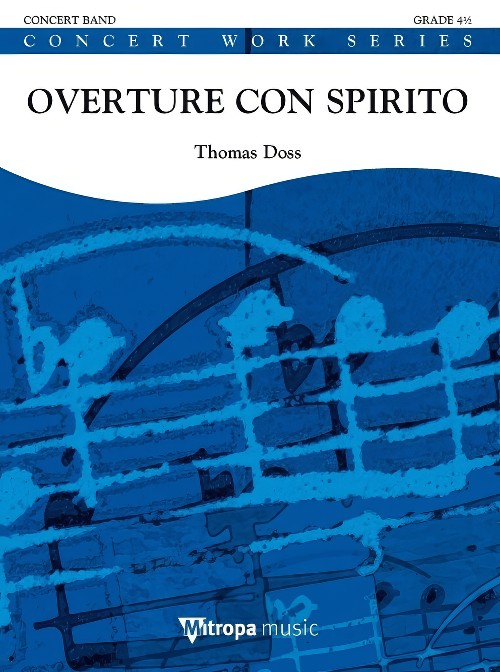
Overture Con Spirito (Concert Band - Score and Parts) - Doss, Thomas
This work was commissioned by the Musikverein Prechtal e. V. (Germany) for its 100th anniversary in the year of 2021. The composition opens with a powerful rhythmic motif, which soon develops into the main theme of this brisk overture. The unwavering, joyful melodies and a positive atmosphere give the work a high-spirited energy. The strong pulse has the music firmly in its grasp and only quietens gradually in a pensive middle movement that seems to emanate from another world. This atmospheric passage can evoke dreamy thoughts and a variety of visions. But then the liveliness of the previous motifs returns, to take us back to the vivacious here and now, full of optimism and determination for the hundred years to come. On to a wonderful future! Duration: 8.45
Estimated dispatch 7-14 working days
-
 £72.99
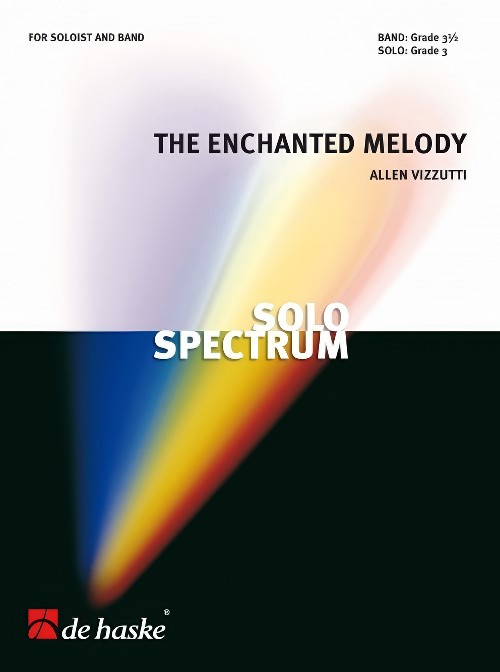
The Enchanted Melody (Flexible Solo with Concert Band - Score and Parts) - Vizzutti, Allen
Solo parts available in C, Bb, Eb and F.The Enchanted Melody was written for young instrumental soloists. It is carefully orchestrated with beauty and colour in mind. All of the parts are important and fun to play. The piece is designed to offer varied musical elements on which ensembles can work to attain higher skill levels without being overly technical or difficult. The solo part will offer some challenge without advanced demands regarding range, technique or endurance. The flowing melody lines and beautiful harmonies will be most pleasing and bring a smile.
Estimated dispatch 7-14 working days
-
 £50.50
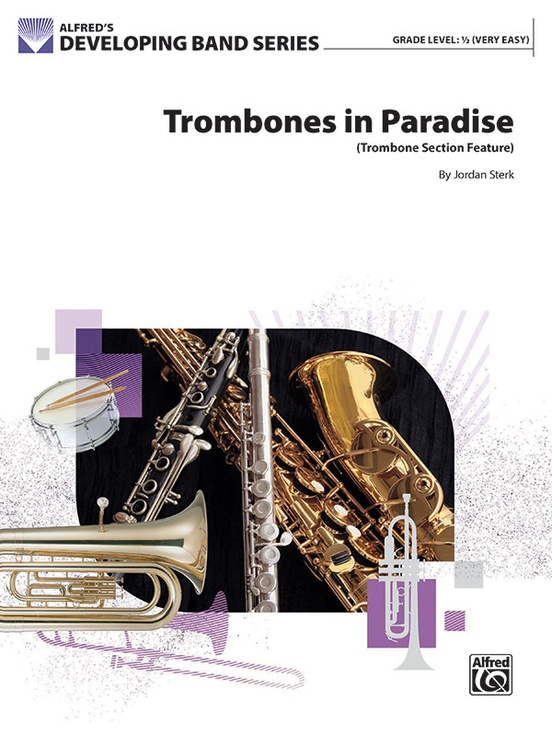
Trombones in Paradise (Trombone Section Feature with Concert Band - Score and Parts) - Sterk, Jordan
Trombones in Paradise by Jordan Sterk will give your trombone section an opportunity to shine in this bright and fun feature piece. Using only the first six notes of the B-flat concert scale and only "natural" glissandos for the trombones, this piece is sure to come together quickly and be enjoyed by your young students. Your entire band will love learning one of their first syncopated rhythms based around the 3-2 son clave, a staple rhythm of Afro-Cuban and Latin music. Less common young band Latin percussion instruments such as maracas and claves provide additional parts for your percussionists and add an authentic flair to the music. Duration: 1.45
Estimated dispatch 7-14 working days
-
 £171.00
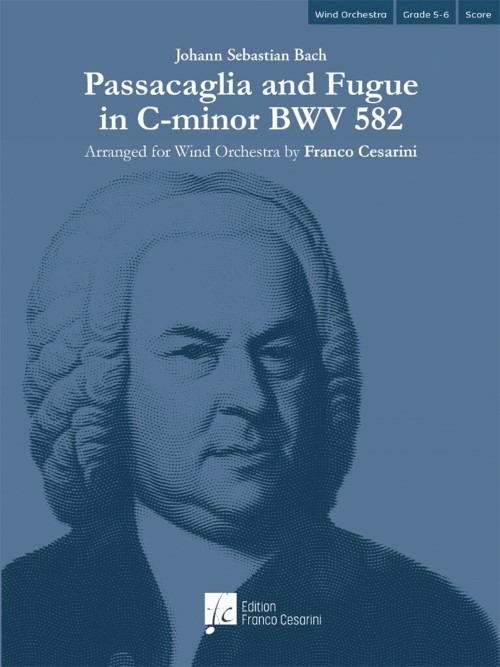
Passacaglia and Fugue in C minor BWV 852 (Concert Band - Score and Parts) - Bach, Johann Sebastian - Cesarini, Franco
The Passacaglia is a set of instrumental variations based on an ostinato bass. Bach's Passacaglia and Fugue in C-minor for organ represents the pinnacle of what had been achieved in this compositional form at that time. In Franco Cesarini's arrangement for large wind orchestra, the particularly careful interpretation of the original piece enables him to exploit all the sound colors at his disposal, and in this sumptuous guise Bach's work also takes on a grandiose dimension, albeit tinged with late-Romanticism. The exposition of the beautiful theme begins in the bass part, immediately creating a solemn and serious atmosphere which is accentuated by the intensely pathetic character of the first variations. Up to the tenth variation it remains confined to the bass, but in subsequent ones it also passes to the soprano and alto register. The integrity of the theme is also embellished with elegant arpeggios, in whose lower and higher extensions the theme can be distinguished. Towards the end it returns to the bass in an impressive thickening of the polyphonic texture that swiftly re-establishes the key of C-minor. The "Thema fugatum" which follows immediately does not constitute a Fugue in its own right, rather it is nothing but the twenty-first and most extensive variation of the Passacaglia. This time Bach uses only the first half of the theme, superimposing a rhythmic countersubject that considerably enlivens the entire development of the composition. The polyphonic discourse becomes increasingly dense, until the building tension peaks in a powerful "Neapolitan sixth" chord, followed by a sudden pause. This culminating moment then leads to the coda and final cadence on a bright C-major chord. Duration: 12.45
Estimated dispatch 7-14 working days
-
 £159.99
Guardian Angels (Concert Band - Score and Parts) - Houben, Kevin
Guardian Angels gives a musical expression to the legend of Reverend Louis Henri Bahler referring to the use of Psalm 34. North-west Veluwe and in particular Oldebroek (The Netherlands) has a very rich religious tradition which is demonstrated by its monumental churches. They tell the story of a stirring history in which Reverend Bahler played a crucial role. Inspired by his arrival as a pastor in 1870 in the neighbouring Oosterwolde, two big religious communities came into existence with their characteristic churches but this rivalry also resulted in great social unrest. This composition reflects on this striking personality and in particular on the story of the Angel Guard. 'One evening Reverend Bahler has given a sermon in Oldebroek and he walks over the Church path through the pastures to Oosterwolde. On this dark and stormy evening Bahler's opponents are waiting for the pastor in ambush. They want to drown him in a watercourse near the Church path but abandon their plan because Bahler is accompanied by two men. The next day it comes to an encounter between Bahler and his opponents. They repent their, fortunately unexecuted, plan. Bahler firmly believes that on the previous night he walked alone over the Church path, and was not accompanied by two men. It was concluded that it must have been the angels who had protected Bahler.' Psalm 34 is central to this composition and this because of its powerful melody but also because the lyrics of verse 4 of the rhymed version fit in well with the special legend of Reverend Bahler: The Lord's angel gathered round him An invincible heavenly guard, Who tries God's will, around him So he's well guard(ed) A second melodious and harmonic cell is a musical transformation of the name 'Bahler'. This cell is varied in major and minor third chords and sometimes used as the main idea or apotheosis, but also serves as an accompanying cell or as a bridge between other melodic and rhythmic constructions. The composition was made possible by contributions of: Mr Evert van de Poll, owner of the Van Gelder Groep, Het Prins Bernhard Cultuurfonds Gelderland en Het Feteris Oosterbaan Fonds. Duration: 16.30
Estimated dispatch 7-14 working days
-
 £53.95
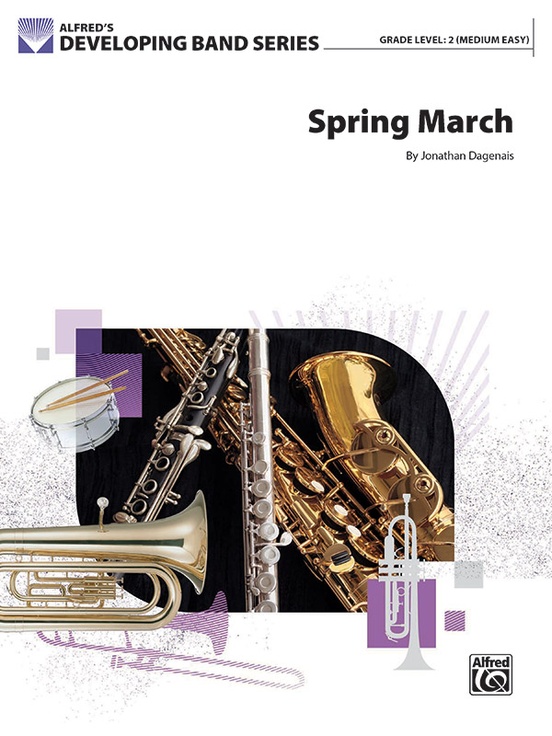
Spring March (Concert Band - Score and Parts) - Dagenais, Jonathan
Spring March by Jonathan Dagenais was written for the Saint-Edmond High School music program in Quebec, Canada. Spring March is a short, lively, and exciting concert march for beginner bands. With several thematic and humorous elements, this piece is a fun way to work on lightness of style, functional balance, tempo stability, and is perfect for teaching cut time and the traditional march form and structure. There are clear stylistic contrasts between all the different sections of the piece and the beautiful lyrical trio section offers a great opportunity to work on phrasing and support. With efficient and exciting percussion parts, the piece also offers interesting lines and melodies for every instrument. Duration: 3.00
Estimated dispatch 7-14 working days
-
 £102.80
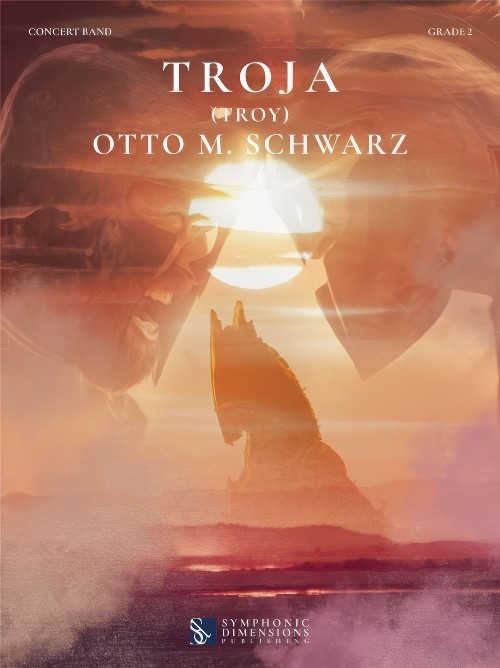
Troja (Troy) (Concert Band - Score and Parts) - Schwarz, Otto M.
The Greek poet Homer wrote about Troy and the Trojan War, which probably took place in what is now Asia Minor, in his Iliad in the 8th century B.C. Nowadays, the term Trojan generally refers to a malware program that is used to gain unauthorised access to computers. This use comes from the legendary Trojan Horse, which saw the turning point in the battle between Greeks and Trojans through the cunning of Odysseus. Let us return to the beginning of the story: Paris, son of the king of Troy, is tasked by Zeus with judging the beauty of the three goddesses Aphrodite, Pallas Athena, and Hera. Aphrodite, the goddess of love, flatters Paris by promising him the most beautiful woman in the world. Soon afterwards, on a journey to Greece, Paris meets the beautiful Helen, who immediately falls in love with him. Since however she is the wife of Spartan king Menelaus, she eventually lets herself be kidnapped by Paris voluntarily. The Greeks then form a large army and go to war against Troy to retrieve Helen, leading to a ten-year siege of the city. The city is eventually conquered not through combat, however, but through Odysseus' cunning ploy. He has the idea of building an enormous wooden horse with warriors hidden inside. The horse is placed at the gates of the city. Thus, the Trojans are tricked into giving up the siege when, despite various warnings, they bring the horse into the city to dedicate it to the goddess Athena. At night, the soldiers climb out of the horse and open the gate for the Greek army. The troops storm the city and burn it to the ground. The royal family and all the Trojan warriors are killed, only Aeneas, the son of Aphrodite, escapes. Later, following many years' wanderings he and his acolytes will become known as the founders of the Roman people. There are various accounts of the fate of the beautiful Helen. She is said to have returned to Sparta with Menelaus and to have ruled there until the end of her life. Or maybe not...Duration: 6.00
Estimated dispatch 7-14 working days
-
 £87.50
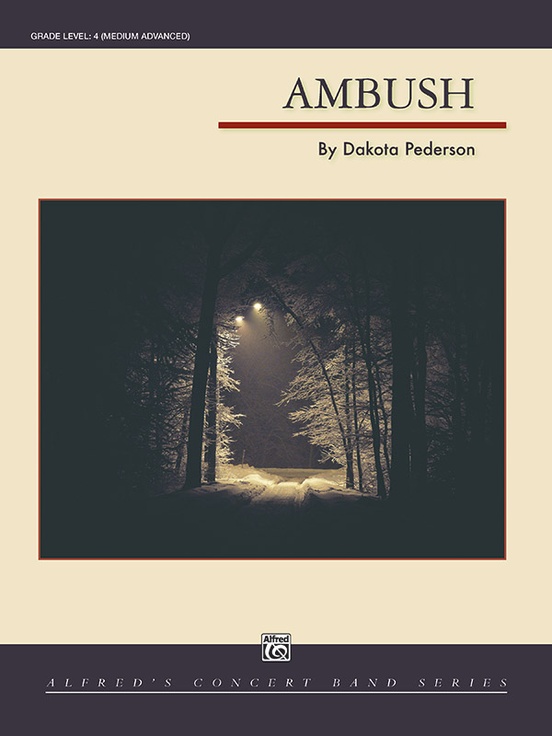
Ambush (Concert Band - Score and Parts) - Pederson, Dakota
Ambush by Dakota Pederson is a work that describes the fight of war and recounts a flanking ambush set out by soldiers as they close in on a victory. A fiery chord opens the work and is followed by a relentless melody, which is expressed through precise articulation. The work challenges performers to focus on articulation and expression, while giving the percussion section a driving rhythm to maintain the energy. Strong harmonies in the brass and bold melodies throughout make this piece a fierce statement of war and victory. Duration: 4.15
Estimated dispatch 7-14 working days
-
 £159.99
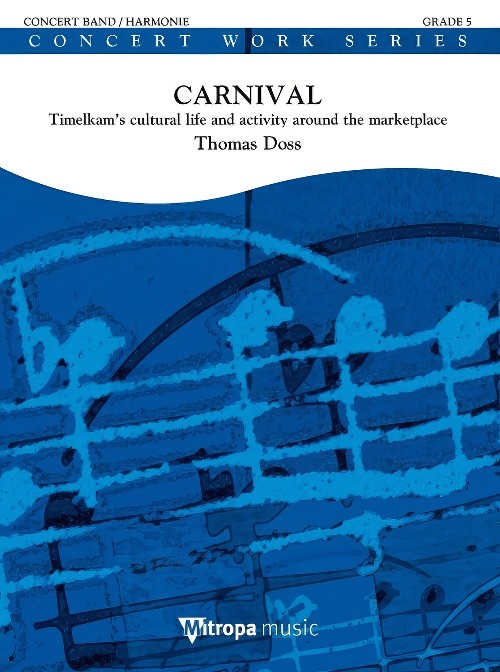
Carnival (Concert Band - Score and Parts) - Doss, Thomas
This work was commissioned by Marktmusik Timelkam to celebrate its 170th anniversary. It describes the cultural life and hustle and bustle of the band's home base, the Austrian town of Timelkam. Carnival pictures a festive procession starting at the marketplace and lasting well into the night. The work features many carnivalesque elements and is a joy for players to perform. There is a lot of merry activity going on in the music; people cheerily chatting in the inn; singing and dancing together and having fun. There is also room for a melancholy mood, accompanied by reminiscences about eternal goodbyes and searching for love. With the added musical representation of children's playing and pranks, a beautiful sunrise as well as a depiction of the churches and societies in town, this composition is not just an account of a carnival parade but a small portrayal of life.Duration: 11.30
Estimated dispatch 7-14 working days
-
 £52.95
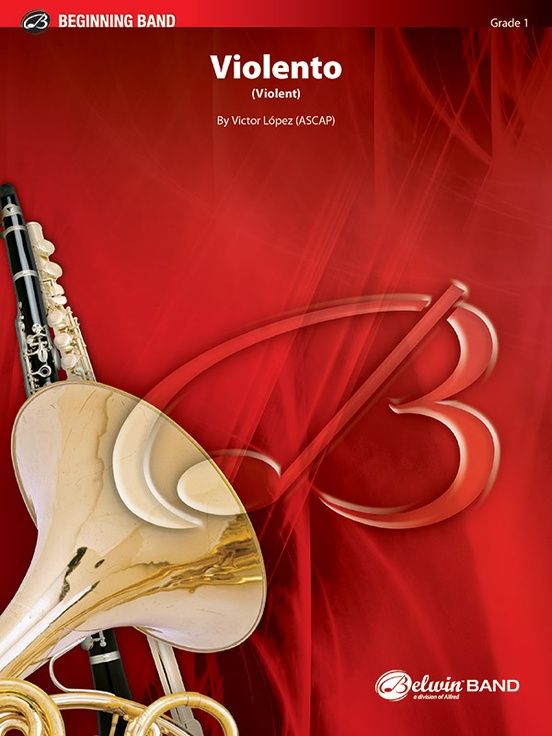
Violento (Concert Band - Score and Parts) - Lopez, Victor
Give your students the opportunity of playing a piece for beginning band that is upbeat and full of excitement! Violento is an original beginning band composition by veteran composer Victor Lopez. This exciting work is a forceful and rhythmically driven composition that sounds more difficult than written. A mixture of the danzon, Cuba's unique genre of song and dance, and basic rhythmic interplay give this piece a unique touch. The inclusive, simple, and repetitious rhythmic patterns will certainly make an energetic statement at your next concert. Duration: 2.00
Estimated dispatch 7-14 working days
 View Music